Magnetic Properties
3 previous year questions.
High-Yield Trend
Chapter Questions 3 MCQs
Consider an atomic gas with number density , in the ground state at 300 K. The valence electronic configuration of atoms is . The paramagnetic susceptibility of the gas . The value of (rounded off to two decimal places) is .
(Given: Magnetic permeability of free space , Bohr magneton , Boltzmann constant )
As shown in the figure, inverse magnetic susceptibility is plotted as a function of temperature (T) for three different materials in paramagnetic states. 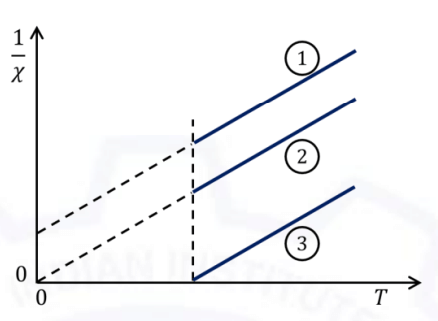
(Curie temperature of ferromagnetic material = , Néel temperature of antiferromagnetic material = )
Choose the correct statement from the following
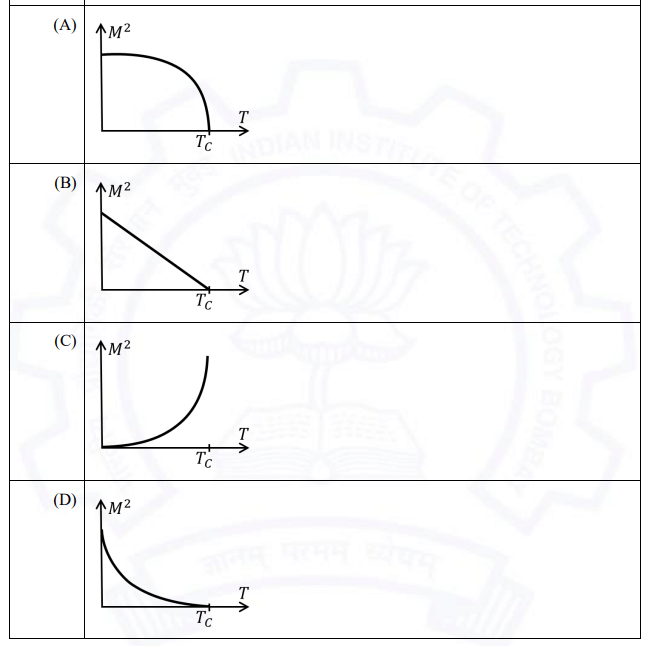
The free energy of a ferromagnet is given by where , , and are positive constants, is the magnetization, is the temperature, and is the Curie temperature. The relation between and is best depicted by
About Magnetic Properties - GATE-PH
Magnetic Properties is a vital chapter for GATE-PH aspirants. Mastering the concepts covered in this chapter is essential for securing a top rank.
By rigorously practicing the previous year questions associated with this chapter, you can identify high-yield topics, understand the examiner's perspective, and boost your confidence during the actual exam.
Frequently Asked Questions
Why focus on Magnetic Properties PYQs?
Analyzing PYQs for this specific chapter reveals the most frequently tested concepts and the typical complexity of questions, allowing you to tailor your study plan efficiently.
How to best use this analysis?
Review the topic breakdown to see which sub-topics within Magnetic Properties carry the most weight. Then, tackle the questions iteratively to solidify your understanding.