AMUEEE SERIES Physics
Projectile Motion
5 previous year questions.
Volume: 5 Ques
Yield: Medium
High-Yield Trend
1
2009 2
2005 2
1998 Chapter Questions 5 MCQs
01
PYQ 1998
easy
physics ID: amueee-1
An aeroplane is flying horizontally with a velocity of 216 km/h and at a height of 1960 m. When it is vertically above a point A on the ground, a bomb is released from it. The bomb strikes the ground at point B. The distance AB is (ignoring air resistance)
1
1200m
2
0.33 km
3
3.33km
4
33 km.
02
PYQ 1998
medium
physics ID: amueee-1
A ball is thrown with a kinetic energy E at an angle of with the horizontal in the earths gravitational field. The change in its potential energy at the highest point of its flight with respect to the starting point will be
1
2
3
4
03
PYQ 2005
medium
physics ID: amueee-2
A projectile is fired at with momentum . Neglecting friction, the change in kinetic energy, when it returns back to the ground, will be
1
zero
2
0.3
3
0.6
4
1
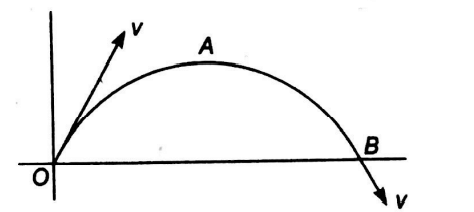
04
PYQ 2005
medium
physics ID: amueee-2
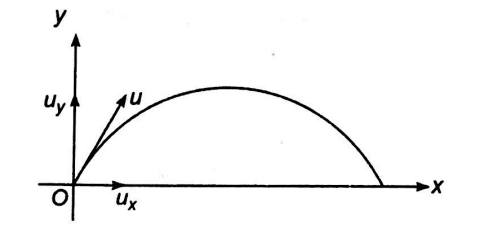
A particle is moving under the influence of a force which is fixed in magnitude and acting at an angle in the direction of motion. The path described by the particle is
1
a circle
2
an ellipse
3
a parabola
4
a straight line
05
PYQ 2009
medium
physics ID: amueee-2
A ball is projected vertically upwards with a certain initial speed. Another ball of the same mass is projected at an angle of with the vertical with the same initial speed. At highest points of their journey, the ratio of their potential energies will be
1
1:01
2
2:01
3
3:02
4
4:01
About Projectile Motion - AMUEEE
Projectile Motion is a vital chapter for AMUEEE aspirants. Mastering the concepts covered in this chapter is essential for securing a top rank.
By rigorously practicing the previous year questions associated with this chapter, you can identify high-yield topics, understand the examiner's perspective, and boost your confidence during the actual exam.
Frequently Asked Questions
Why focus on Projectile Motion PYQs?
Analyzing PYQs for this specific chapter reveals the most frequently tested concepts and the typical complexity of questions, allowing you to tailor your study plan efficiently.
How to best use this analysis?
Review the topic breakdown to see which sub-topics within Projectile Motion carry the most weight. Then, tackle the questions iteratively to solidify your understanding.