Plant Ecology
20 previous year questions.
High-Yield Trend
Chapter Questions 20 MCQs
Identify A, B, C plants in a series based on these characters of roots:
A. Roots at lower nodes of stem
B. Roots absorb water and food from host plant
C. Root forming nodules
Choose the correct statement:
I. Continuous decline in pollinator activity could mean rising of fruits and seeds production.
II. Conversion of wild lands for domestic use is the cause of disruption of pollinators.
III. Submerged macrophytes enrich the dissolved oxygen in water.
Match the following:
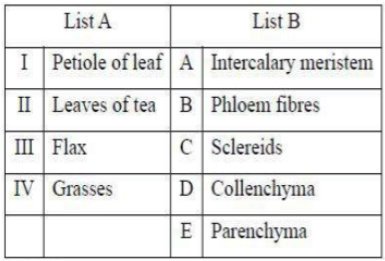
These are placentation types based on the attachment of ovules within the ovary:
- Ridge
- Inner wall of the ovary
- Base of the ovary
A. Root elongation is the arithmetic growth
B. Geometric growth shows sigmoid growth curve
C. Turgidity helps the cells in extension growth
D. Natural cytokinins are synthesised in older parts of the plant
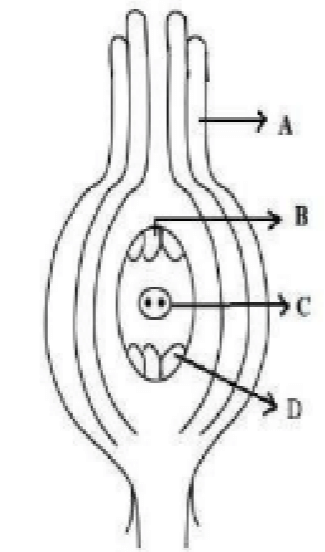
A mother plant having 16 chromosomes produced ovules and underwent megasporogenesis, then the ploidy of the nucleus of A, B, C, D is:
Reason [R]: Biotic community is slow and undergo changes with the passage of time.
Assertion [A]: The species that invade a bare area are pioneer species
Reason [R]: In primary succession, lichens or Phytoplanktons invade rocks and water respectively
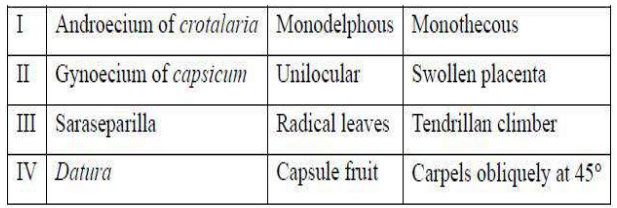
Choose the correct combinations based on their Taxonomical features
Choose the incorrect statements related to internal organization of plants:
I. Stomata regulate the process of photosynthesis and gaseous exchange.
II. In bicollateral vascular bundles, xylem and phloem are situated at the same radius of vascular bundles.
III. Monocot root has more xylem bundles compared to Dicot root.
Choose the incorrect statement related to life cycles:
I. Sporophyte generation is represented by a single-celled zygote.
II. Gametophyte is multicellular in Pteridophytes and Gymnosperms.
III. Life cycle is diphlaplontic in Bryophytes.
IV. Life cycle is haplodiplontic in Pteridophytes.
Study the table and find the correct combination:
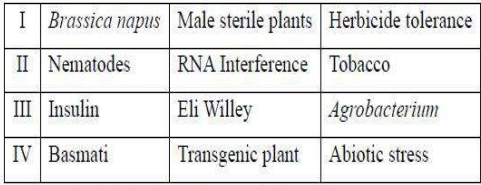
,
,
,
,
Reason (R): DNA fragments are separated by gel electrophoresis technique.
About Plant Ecology - AP-EAMCET
Plant Ecology is a vital chapter for AP-EAMCET aspirants. Mastering the concepts covered in this chapter is essential for securing a top rank.
By rigorously practicing the previous year questions associated with this chapter, you can identify high-yield topics, understand the examiner's perspective, and boost your confidence during the actual exam.
Frequently Asked Questions
Why focus on Plant Ecology PYQs?
Analyzing PYQs for this specific chapter reveals the most frequently tested concepts and the typical complexity of questions, allowing you to tailor your study plan efficiently.
How to best use this analysis?
Review the topic breakdown to see which sub-topics within Plant Ecology carry the most weight. Then, tackle the questions iteratively to solidify your understanding.