As per prescribed syllabus, Suryabhedan Pranayam is recommended for:
1
Obesity
2
Asthma
3
Hypertension
4
Back pain
Official Solution
Correct Option:
(2)
To solve the problem, we need to identify the specific condition for which Suryabhedan Pranayam is recommended as per the CBSE Class XII syllabus.
1. Understanding Suryabhedan Pranayam: Suryabhedan Pranayam involves breathing in through the right nostril and exhaling through the left. It is known to activate the 'Surya' or Pingala Nadi which is associated with energy, heat, and stimulation of metabolism. It helps to generate internal heat and remove Vata (air) disorders.
2. Evaluating the Options: - (A) Obesity: While Suryabhedan can stimulate metabolism, it's not specifically prescribed for treating obesity. - (B) Hypertension: This pranayam generates heat and energy; it is not advised for people with high blood pressure. - (C) Asthma: Yes, it is recommended for asthma. Suryabhedan helps in clearing nasal passages, increases oxygen intake, and strengthens respiratory function. - (D) Back pain: It’s not directly connected to spinal or muscular pain treatment.
3. Conclusion from Syllabus Context: As per the CBSE Class XII - 2025 syllabus, Suryabhedan Pranayam is specifically recommended for individuals suffering from Asthma due to its respiratory and energizing benefits.
Final Answer: (B) Asthma
02
PYQ 2025
medium
physical-educationID: cbse-cla
Describe the procedure and benefits of Mandukasana and Makrasana to control hypertension.
Official Solution
Correct Option:
(1)
To solve the problem, we need to describe the procedure and benefits of Mandukasana (Frog Pose) and Makrasana (Crocodile Pose) with specific reference to controlling hypertension.
1. Mandukasana (Frog Pose)
Procedure:
Sit in Vajrasana (kneeling position with legs folded under the thighs).
Make fists of both hands, with the thumb tucked inside the fingers.
Place both fists on the navel area (abdomen), keeping the spine straight.
Inhale deeply. While exhaling, bend forward from the waist, pressing the fists into the abdomen.
Ensure your forehead touches the floor or as low as possible without strain.
Hold the position for 10–30 seconds while breathing normally.
Inhale and slowly return to the starting position.
Repeat 2–3 times based on comfort.
Benefits for Hypertension:
Improves digestion and stimulates abdominal organs which helps relieve stress-related issues.
Reduces stress by calming the mind and activating the parasympathetic nervous system.
Regulates hormonal imbalances that may contribute to high blood pressure.
2. Makrasana (Crocodile Pose)
Procedure:
Lie flat on your stomach on a yoga mat.
Spread your legs slightly apart and turn the toes outwards.
Bend both arms at the elbows and place the right palm on top of the left palm.
Rest your forehead gently on your hands, keeping the entire body relaxed.
Close your eyes and breathe slowly and deeply through the nose.
Maintain this position for 2–5 minutes or longer if comfortable.
Benefits for Hypertension:
Deeply relaxes the spine and nervous system, reducing tension.
Lowers stress hormones like cortisol and adrenaline which raise blood pressure.
Promotes mindful breathing and helps stabilize the heart rate.
Improves circulation without exerting pressure on the heart.
Final Answer: Mandukasana and Makrasana are yogic postures that help manage hypertension by calming the nervous system, improving breathing, and reducing stress. Mandukasana stimulates abdominal organs and relieves tension, while Makrasana is ideal for deep relaxation and stabilizing the heart rate—both contributing to lower blood pressure naturally.
03
PYQ 2025
easy
physical-educationID: cbse-cla
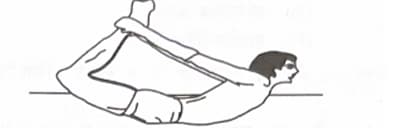
Identify the asana:
1
Chakrasana
2
Halasana
3
Dhanurasana
4
Ushtrasana
Official Solution
Correct Option:
(3)
To solve the problem, we need to identify the yoga asana depicted in the image.
1. Observing the Posture:
In the given image, the person is lying on their stomach, bending their knees backward, reaching their arms behind to grasp their ankles, and lifting both the upper body and thighs off the floor. This posture creates a bow-like shape.
2. Recognizing the Asana:
This classic posture is known as Dhanurasana, or the Bow Pose. In Sanskrit, “Dhanur” means bow, and “asana” means posture. The body resembles a stretched bow in the final position of this asana.
3. Benefits of Dhanurasana:
- Strengthens the back and abdominal muscles
- Opens up the chest, neck, and shoulders
- Stimulates the organs of the abdomen and neck
- Improves posture and flexibility of the spine
Final Answer:
The asana shown in the image is Dhanurasana (Bow Pose).
04
PYQ 2026
medium
physical-educationID: cbse-cla
Define a balanced diet and mention its importance.
Official Solution
Correct Option:
(1)
Concept: Nutrition plays a vital role in maintaining health and physical performance. A balanced diet ensures the body receives adequate nutrients for proper functioning. Definition of Balanced Diet: A balanced diet is a diet that provides all essential nutrients — carbohydrates, proteins, fats, vitamins, minerals, fiber, and water — in the right proportions to meet the body’s needs. Components of a Balanced Diet: Carbohydrates – energy source Proteins – growth and repair Fats – stored energy and insulation Vitamins and minerals – body regulation Fiber – digestive health Water – metabolic activities Importance of a Balanced Diet: Provides Energy: Supplies fuel for daily activities and physical exercise. Supports Growth and Development: Essential for children, adolescents, and athletes. Boosts Immunity: Helps the body resist infections and diseases. Maintains Healthy Body Weight: Prevents obesity and malnutrition. Improves Overall Health: Enhances physical and mental performance.
05
PYQ 2026
medium
physical-educationID: cbse-cla
Which of the following asanas is used for curing obesity?
1
Sukhasana
2
Shavasana
3
Vajrasana
4
Shalabhasana
Official Solution
Correct Option:
(4)
Concept: Different yoga asanas provide specific health benefits. Some asanas are particularly useful for reducing body fat and improving metabolism. Explanation of Options: Sukhasana: A meditative posture mainly used for relaxation and concentration. Shavasana: A resting pose used for relaxation and stress relief. Vajrasana: Helps in digestion but not primarily used for obesity reduction. Shalabhasana (Locust Pose): Strengthens abdominal muscles and helps in reducing excess fat.
Why Shalabhasana? Tones abdominal and lower body muscles Improves metabolism Helps reduce belly fat
06
PYQ 2026
hard
physical-educationID: cbse-cla
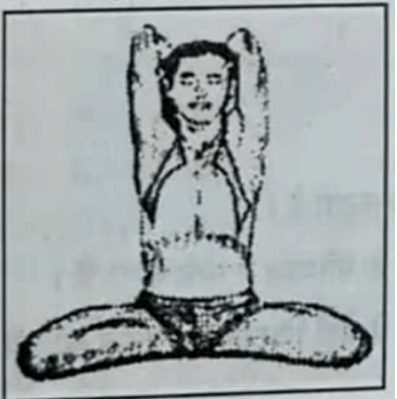
Identify the asana:
1
Ardh Matsyendrasana
2
Dhanurasana
3
Uttan Mandukasana
4
Yogmudra
Official Solution
Correct Option:
(4)
Step 1: Understanding the Concept:
Yogmudra (or Yoga Mudrasana) is a psychological and physical posture that involves folding the body forward while in a seated meditative pose, symbolizing surrender and internal focus. Step 2: Detailed Explanation:
1. For the visually impaired question: Yog Mudra is performed by sitting in Padmasana (Lotus Pose).
2. The practitioner then clasps their wrists behind the back.
3. While exhaling, they bend forward until the forehead touches the floor.
4. This helps in massaging abdominal organs and calming the nervous system. Step 3: Final Answer:
The asana is Yogmudra. For the description: (B) Sit in Padmasana, clasp wrists behind the back, bend forward and touch the forehead to the floor.
07
PYQ 2026
medium
physical-educationID: cbse-cla
Gagan wants to prevent himself from asthma and hypertension. Identify the asanas to prevent him from these life style diseases.
1
Uttan Mandukasana, Vakrasana
2
Supta Vajarasana, Vakrasana
3
Chakrasana, Uttan Mandukasana
4
Vakrasana, Chakrasana
Official Solution
Correct Option:
(3)
Step 1: Understanding the Concept:
Asthma requires asanas that improve lung capacity and chest expansion. Hypertension (high blood pressure) requires asanas that improve circulation and reduce stress through deep stretches. Step 2: Detailed Explanation:
1. Chakrasana is effective for Asthma as it fully expands the ribcage and lungs, improving respiratory efficiency.
2. Uttan Mandukasana (Stretched Frog Pose) is highly beneficial for both. It helps in respiratory disorders by expanding the diaphragm and aids in relieving stress and improving circulation, which helps manage Hypertension.
3. Vakrasana is more specific to Diabetes management as it focuses on abdominal twisting. Step 3: Final Answer:
The correct asanas are Chakrasana and Uttan Mandukasana.
08
PYQ 2026
medium
physical-educationID: cbse-cla
Which one of the following positions is related to Yog Mudra?
1
Sit in Padmasana, clasp wrists over the head, bend forward and touch the forehead to the floor
2
Sit in Padmasana, clasp wrists behind the back, bend forward and touch the forehead to the floor
3
Sit in Vajrasana, clasp wrists behind the back, bend forward and touch the forehead to the floor
4
Sit in Vajrasana, clasp wrists over the head, bend forward and touch the forehead to the floor
Official Solution
Correct Option:
(2)
Step 1: Understanding the Concept:
Yog Mudra (specifically Yoga Mudrasana) is a forward-bending seated asana that combines the benefits of Padmasana (Lotus Pose) with a deep stretch for the back and a massage for the abdominal organs. Step 2: Key Formula or Approach:
The procedure involves:
1. Choosing the correct base (Asana).
2. Choosing the correct hand placement (Mudra/Lock).
3. Executing the movement (Forward bend). Step 3: Detailed Explanation:
1. The Base: The traditional posture requires sitting in Padmasana (Lotus Pose). While some variations use Sukhasana or Vajrasana, the formal "Yog Mudra" in physical education curriculum is defined by the Lotus position.
2. The Hand Lock: One hand holds the wrist of the other behind the back. This pulls the shoulders back and opens the chest before the descent.
3. The Movement: The practitioner exhales and bends forward from the hips, attempting to touch the forehead to the floor. This creates a "seal" (Mudra) that directs energy inward. Step 4: Final Answer:
The position related to Yog Mudra is sitting in Padmasana, clasping wrists behind the back, and bending forward to touch the forehead to the floor.
09
PYQ 2026
medium
physical-educationID: cbse-cla
Enlist the asanas for obesity. Explain the procedure of any one asana for it.
Official Solution
Correct Option:
(1)
Step 1: Understanding the Concept:
Obesity is managed by asanas that stimulate the digestive system, improve metabolism, and stretch the abdominal region. Step 2: Detailed Explanation:
1. List of Asanas: Vajrasana, Hastasana, Trikonasana, Ardh Matsyendrasana, and Paschimottanasana.
2. Procedure for Vajrasana (Thunderbolt Pose): Step 1: Kneel down on the floor with your knees, ankles, and toes touching each other. Step 2: Lower your body so that your buttocks rest on your heels and your thighs rest on your calves. Step 3: Keep your spine, neck, and head straight. Place your palms on your knees. Step 4: Breathe normally and hold the position for 5–10 minutes. Step 3: Final Answer:
Key asanas include Trikonasana and Vajrasana; Vajrasana is performed by sitting on the heels with a straight spine.
10
PYQ 2026
medium
physical-educationID: cbse-cla
Write any four benefits of Nadi-Shodhan pranayama.
Official Solution
Correct Option:
(1)
Step 1: Understanding the Concept:
Nadi-Shodhan, also known as Alternate Nostril Breathing, is a breathing technique aimed at purifying the "nadis" (energy channels) and balancing the left and right hemispheres of the brain. Step 2: Detailed Explanation:
The four key benefits are:
1. Reduces Stress and Anxiety: It calms the nervous system and lowers cortisol levels.
2. Improves Respiratory Health: It enhances lung capacity and ensures a better supply of oxygen to the blood.
3. Balances Energy: It balances the Ida and Pingala nadis (the logical and creative sides of the brain), leading to mental clarity.
4. Heart Health: Regular practice helps in lowering high blood pressure and improving cardiovascular efficiency. Step 3: Final Answer:
The benefits include stress reduction, improved respiratory efficiency, mental clarity/balance, and better cardiovascular health.
11
PYQ 2026
medium
physical-educationID: cbse-cla
Which of the following asanas are practised to correct "Kyphosis"?
1
Chakrasana, Trikonasana, Adhomukhasana
2
Dhanurasana, Bhujangasana, Halasana
3
Bhujangasana, Trikonasana, Chakrasana
4
Dhanurasana, Chakrasana, Bhujangasana
Official Solution
Correct Option:
(4)
Step 1: Understanding the Concept:
Kyphosis is an abnormal outward curvature of the upper back (hunchback). To correct it, asanas that involve backward bending and chest expansion are required to counteract the forward slouch. Step 2: Detailed Explanation:
1. Dhanurasana (Bow Pose): Stretches the entire front of the body and improves spinal flexibility.
2. Chakrasana (Wheel Pose): Provides a deep backward bend that opens the chest and corrects the rounded shoulders.
3. Bhujangasana (Cobra Pose): Specifically strengthens the upper back muscles and pushes the thoracic spine inward.
4. Asanas like Halasana are forward bends and would actually worsen Kyphosis. Step 3: Final Answer:
Dhanurasana, Chakrasana, and Bhujangasana are used to correct Kyphosis.
About Yoga Lifestyle - CBSE-CLASS-XII
Yoga Lifestyle is a vital chapter for CBSE-CLASS-XII aspirants. Mastering the concepts covered in this chapter is essential for securing a top rank.
By rigorously practicing the previous year questions associated with this chapter, you can identify high-yield topics, understand the examiner's perspective, and boost your confidence during the actual exam.
Frequently Asked Questions
Why focus on Yoga Lifestyle PYQs?
Analyzing PYQs for this specific chapter reveals the most frequently tested concepts and the typical complexity of questions, allowing you to tailor your study plan efficiently.
How to best use this analysis?
Review the topic breakdown to see which sub-topics within Yoga Lifestyle carry the most weight. Then, tackle the questions iteratively to solidify your understanding.