Electronic Devices
13 previous year questions.
High-Yield Trend
Chapter Questions 13 MCQs
Match List-I with List-II:
| List-I (Effects) | List-II (Electronic Devices) |
|---|---|
| (A) Channel length modulation | (I) Zener diode |
| (B) Channel width modulation | (II) BJTs |
| (C) Early effect | (III) JFETs |
| (D) Tunneling effect | (IV) MOSFETs |
Choose the correct answer:
(A) Its memory size is 64 KB
(B) It is a 40-pin IC
(C) Its clock frequency lies between 3 to 5 MHz
(D) It has 16 bit of each data and address lines.
Choose the correct answer from the options given below:
(B) Stability factor (S) is the maximum for a voltage divider bias circuit.
(C) The operational amplifier works as a comparator circuit in open loop configuration.
(D) Biasing is done to set the quiescent point of the transistor in the middle of the DC load line.
Choose the correct statements from the options given below:
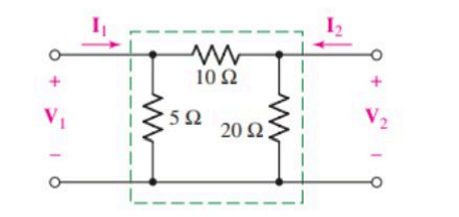
Match List-I with List-II
| List-I (Data Bus Status Output) | List-II (Status Signals) |
|---|---|
| (A) Memory read | (I) 0, 1, 1 |
| (B) Op-code fetch | (II) 0, 1, 0 |
| (C) INTR acknowledge | (III) 0, 0, 1 |
| (D) Memory write | (IV) 1, 1, 1 |
(A) Effective base width reduces.
(B) Emitter injection efficiency and base transport factor increase.
(C) and decrease.
(D) Emitter injection efficiency and base transport factor decrease.
Choose the correct answer:
Match List-I with List-II:
| List-I (Amplifiers) | List-II (Characteristics) |
|---|---|
| (A) CE Amplifier | (I) Current buffer circuit |
| (B) CB Amplifier | (II) Voltage buffer circuit |
| (C) CC Amplifier | (III) High current gain |
| (D) Darlington Amplifier | (IV) High power gain |
Choose the correct answer:
About Electronic Devices - CUET-PG
Electronic Devices is a vital chapter for CUET-PG aspirants. Mastering the concepts covered in this chapter is essential for securing a top rank.
By rigorously practicing the previous year questions associated with this chapter, you can identify high-yield topics, understand the examiner's perspective, and boost your confidence during the actual exam.
Frequently Asked Questions
Why focus on Electronic Devices PYQs?
Analyzing PYQs for this specific chapter reveals the most frequently tested concepts and the typical complexity of questions, allowing you to tailor your study plan efficiently.
How to best use this analysis?
Review the topic breakdown to see which sub-topics within Electronic Devices carry the most weight. Then, tackle the questions iteratively to solidify your understanding.