UP-BOARD-XII SERIES Chemistry
Chemistry Of Organic Compounds
31 previous year questions.
Volume: 31 Ques
Yield: High
High-Yield Trend
17
2025 14
2024 Chapter Questions 31 MCQs
01
PYQ 2024
medium
chemistry ID: up-board
State important applications of phenol.
02
PYQ 2024
medium
chemistry ID: up-board
Explain the mechanism of nucleophilic addition reaction in aldehydes and ketones by an example. Write chemical equations of the reaction of Aldol and Cross Aldol condensation.
03
PYQ 2024
medium
chemistry ID: up-board

1
Correct Answer:
2
Correct Answer:
3
Correct Answer:
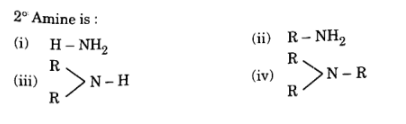
4
Correct Answer: (
04
PYQ 2024
easy
chemistry ID: up-board
and water react to form:
05
PYQ 2024
easy
chemistry ID: up-board
Describe the mechanism of bimolecular nucleophilic substitution reactions ( ) in haloalkanes.
06
PYQ 2024
easy
chemistry ID: up-board
Explain the acidic nature of phenol.
07
PYQ 2024
medium
chemistry ID: up-board
Write I.U.P.A.C. names of the following compounds:
08
PYQ 2024
medium
chemistry ID: up-board
Explain the importance of complex compounds in qualitative analysis with a suitable example.
09
PYQ 2024
medium
chemistry ID: up-board
Write resonating structures of arylamines. Explain why arylamines exhibit basic properties. Write chemical equations of the reaction of preparation of amine from nitro and nitrile compounds.
10
PYQ 2024
medium
chemistry ID: up-board
Differentiate between elimination and substitution reactions in haloalkanes by an example.
11
PYQ 2024
medium
chemistry ID: up-board
Write chemical equations of the following reactions:
12
PYQ 2024
medium
chemistry ID: up-board
Write I.U.P.A.C. names of the following:
(i)
(ii)
(iii)
(iv)
13
PYQ 2024
medium
chemistry ID: up-board
An aromatic compound on treatment with aqueous ammonia and heating forms compound , which on heating with and KOH forms a compound of molecular formula . Write the structures and names of the compounds , , and .
14
PYQ 2024
medium
chemistry ID: up-board
Explain by giving the example of chlorobenzene that chlorine is ortho- and para-directing in electrophilic aromatic substitution reactions.
15
PYQ 2025
easy
chemistry ID: up-board
Hydrogen atom of chloroform is acidic in nature.
16
PYQ 2025
easy
chemistry ID: up-board
Explain optical activity, chirality, retention, inversion and racemisation in Haloalkane.
17
PYQ 2025
easy
chemistry ID: up-board
Write structures of the following compounds: (i) 2-Chloro-3-methylpentane
(ii) 1,4-dibromobut-2-ene
(iii) 1-Bromo-2,2-dimethylpropane
(iv) 1-Bromo-2-methylbut-2-ene
(v) 1-Chloro-2-methylbenzene
(ii) 1,4-dibromobut-2-ene
(iii) 1-Bromo-2,2-dimethylpropane
(iv) 1-Bromo-2-methylbut-2-ene
(v) 1-Chloro-2-methylbenzene
18
PYQ 2025
medium
chemistry ID: up-board
Write the uses of carbon tetrachloride and chloroform.
19
PYQ 2025
medium
chemistry ID: up-board
Write the following in order:
(i) Decreasing order of value: .
(ii) Decreasing order of basic strength: .
(iii) Increasing order of basic strength: Aniline; p-nitroaniline; and paratoludine.
(iv) Solubility order in water: .
(v) Increasing order of boiling point: .
(i) Decreasing order of value: .
(ii) Decreasing order of basic strength: .
(iii) Increasing order of basic strength: Aniline; p-nitroaniline; and paratoludine.
(iv) Solubility order in water: .
(v) Increasing order of boiling point: .
20
PYQ 2025
medium
chemistry ID: up-board
Write the structure of the product for the reaction:
21
PYQ 2025
medium
chemistry ID: up-board
How can these conversions be done? Give chemical equations only.
(i) Propan-2-ol from propene (ii) Benzyl alcohol from benzyl chloride (iii) Propan-1-ol from ethyl magnesium chloride (iv) 2-methyl propan-2-ol from methyl magnesium bromide (v) Picric acid from phenol
22
PYQ 2025
medium
chemistry ID: up-board
How will you synthesize the following? Give chemical equations only.
(i) 1-phenylethanol from a suitable alkene (ii) Cyclohexylmethanol with the help of alkyl halide by reaction. (iii) Pentan-1-ol from a suitable alkyl halide.
23
PYQ 2025
medium
chemistry ID: up-board
Write structural formula and IUPAC name of the following:
(i) sec-butyl chloride
(ii) isopentyl bromide
(iii) tert-butyl chloride
(iv) isobutyl chloride
(v) neopentyl chloride
(i) sec-butyl chloride
(ii) isopentyl bromide
(iii) tert-butyl chloride
(iv) isobutyl chloride
(v) neopentyl chloride
24
PYQ 2025
medium
chemistry ID: up-board
Give the structures of A, B, and C in the following reaction sequences:
(i)
(ii)
(iii)
25
PYQ 2025
medium
chemistry ID: up-board
Hydrogen atom of chloroform is acidic in nature.
26
PYQ 2025
medium
chemistry ID: up-board
Write structural formula and IUPAC name of the following:
(i) sec-butyl chloride
(ii) isopentyl bromide
(iii) tert-butyl chloride
(iv) isobutyl chloride
(v) neopentyl chloride
(i) sec-butyl chloride
(ii) isopentyl bromide
(iii) tert-butyl chloride
(iv) isobutyl chloride
(v) neopentyl chloride
27
PYQ 2025
medium
chemistry ID: up-board
Differentiate between the following:
(i) Propanal and Propanone,
(ii) Phenol and Benzoic acid.
(i) Propanal and Propanone,
(ii) Phenol and Benzoic acid.
28
PYQ 2025
medium
chemistry ID: up-board
Write IUPAC names of the following:
29
PYQ 2025
medium
chemistry ID: up-board
Differentiate between the following:
(i) Propanal and Propanone,
(ii) Phenol and Benzoic acid.
(i) Propanal and Propanone,
(ii) Phenol and Benzoic acid.
30
PYQ 2025
medium
chemistry ID: up-board
Explain the following reactions with examples: (i) Kolbe reaction
(ii) ReimerβTiemann reaction
(iii) Williamson Ether synthesis
(ii) ReimerβTiemann reaction
(iii) Williamson Ether synthesis
31
PYQ 2025
medium
chemistry ID: up-board
An organic compound (A) has molecular formula C H O. It gives an orange-red precipitate with 2,4-dinitrophenylhydrazine (2,4-DNP) and a yellow precipitate on heating with iodine in the presence of NaOH. It does not reduce Tollensβ reagent or Fehlingβs solution and does not decolourise Br -water/Baeyerβs reagent. On strong oxidation with chromic acid it forms a carboxylic acid (B) of formula C H O . Identify (A) and (B).