AMUEEE SERIES Chemistry
Coordination Compounds
25 previous year questions.
Volume: 25 Ques
Yield: High
High-Yield Trend
3
2018 1
2016 6
2013 4
2012 5
2011 6
2010 Chapter Questions 25 MCQs
01
PYQ 2010
easy
chemistry ID: amueee-2
Which of the following is an outer orbital complex ?
1
2
3
4
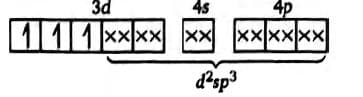
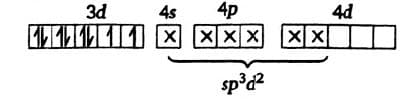
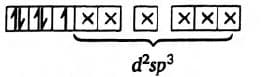
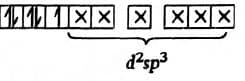
02
PYQ 2010
medium
chemistry ID: amueee-2
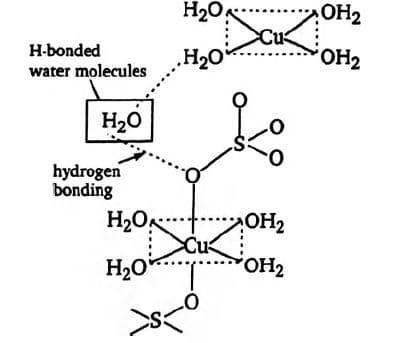
How many hydrogen bonded water molecule are associated with ?
1
2
3
4
03
PYQ 2010
easy
chemistry ID: amueee-2
Which of the following is Vaska?s compound ?
04
PYQ 2010
easy
chemistry ID: amueee-2
Which of the following configuration can undergo distortion ?
05
PYQ 2010
medium
chemistry ID: amueee-2
What is the magnetic moment of ion in ?
1
2
3
4
None of these
06
PYQ 2010
medium
chemistry ID: amueee-2
The most stable complex among the following is
1
2
3
4
07
PYQ 2011
easy
chemistry ID: amueee-2
The hybridisation states of , and species are respectively
08
PYQ 2011
medium
chemistry ID: amueee-2
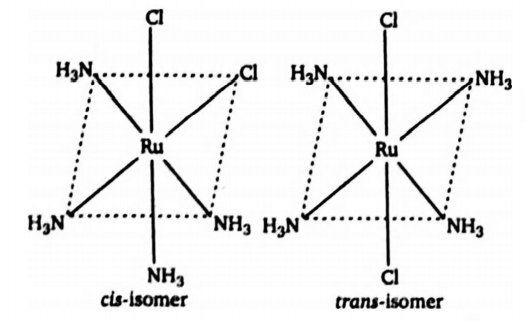
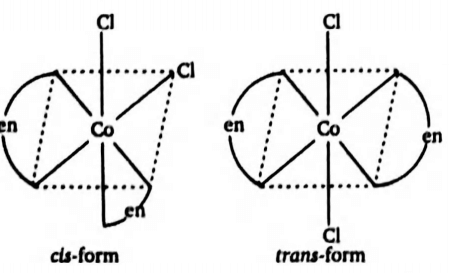
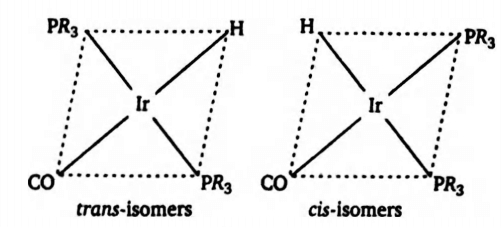
Which of the following has the largest number of isomers?
1
2
3
4
 undefined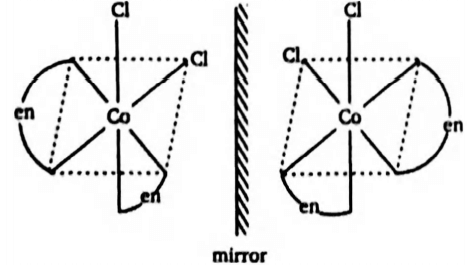
09
PYQ 2011
medium
chemistry ID: amueee-2
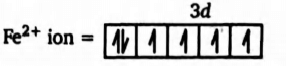
Which of the following is an outer orbital complex?
1
2
3
4

10
PYQ 2011
medium
chemistry ID: amueee-2
Which one of the following is heteroleptic complex?
1
2
3
4
11
PYQ 2011
medium
chemistry ID: amueee-2
Weak field ligands form high spin complexes due to (where is crystal field splitting and = pairing energy)
1
2
3
4
12
PYQ 2012
medium
chemistry ID: amueee-2
Which of the following is not a - bonded complex?
1
Zeise's salt
2
Ferrocene
3
Dibenzene chromium
4
Tetramethyl lead
13
PYQ 2012
easy
chemistry ID: amueee-2
Compounds, and , shows the following type of isomerism
1
hydrate isomerism
2
ionisation isomerism
3
linkage isomerism
4
coordination position isomerism
14
PYQ 2012
medium
chemistry ID: amueee-2
Effective atomic number of the central metal ion, , in the complex is: (The atomic no. of is )
1
74
2
90
3
86
4
84
15
PYQ 2012
medium
chemistry ID: amueee-2
, a complex ion of cobalt (III), absorbs radiations in violet region of the visible light. Its aqueous solution, therefore, appears
1
pink
2
orange
3
blue
4
yellow
16
PYQ 2013
medium
chemistry ID: amueee-2
What is the oxidation state of in
1
2
2
3
3
1
4
4
17
PYQ 2013
medium
chemistry ID: amueee-2
The structure of paramagnetic nickel complex, is
1
tetrahedral
2
square planar
3
trigonal bipyramidal
4
distorted octahedral
18
PYQ 2013
medium
chemistry ID: amueee-2
Wilkinson's catalyst is used for
1
epoxidation
2
hydrogenation
3
polymerisation
4
substitution
19
PYQ 2013
medium
chemistry ID: amueee-2
Predict the correct shape of .
1
Pyramidal,
2
Octahedral,
3
Tetrahedral,
4
None of these
20
PYQ 2013
medium
chemistry ID: amueee-2
and are examples of which type of isomerism ?
1
Linkage
2
Geometrical
3
Ionisation
4
Optical
21
PYQ 2013
medium
chemistry ID: amueee-2
The unpaired electron in is
1
1
2
2
3
3
4
0
22
PYQ 2016
medium
chemistry ID: amueee-2
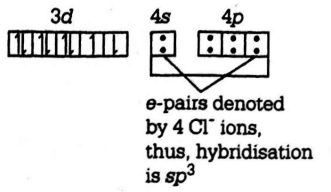
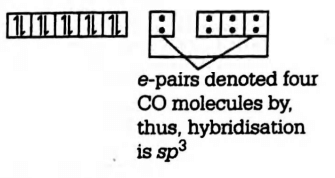
For complexes and which one of the following statement is true
1
is diamagnetic while is paramagnetic and both the complexes have square planar geometry
2
is paramagnetic while is diamagnetic and both the complexes have tetrahedral geometry
3
is paramagnetic while is diamagnetic and both the complexes have square planar geometry
4
is diamagnetic while is paramagnetic and both the complexes have tetrahedral geometry
23
PYQ 2018
easy
chemistry ID: amueee-2
The value is
1
2
3
4
24
PYQ 2018
medium
chemistry ID: amueee-2
Which of the following complexes is optically active?
1
2
3
4
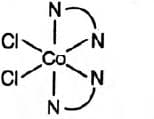
25
PYQ 2018
medium
chemistry ID: amueee-2
The crystal field splitting energy for is about What would be the value of ?
1
2
3
4
About Coordination Compounds - AMUEEE
Coordination Compounds is a vital chapter for AMUEEE aspirants. Mastering the concepts covered in this chapter is essential for securing a top rank.
By rigorously practicing the previous year questions associated with this chapter, you can identify high-yield topics, understand the examiner's perspective, and boost your confidence during the actual exam.
Frequently Asked Questions
Why focus on Coordination Compounds PYQs?
Analyzing PYQs for this specific chapter reveals the most frequently tested concepts and the typical complexity of questions, allowing you to tailor your study plan efficiently.
How to best use this analysis?
Review the topic breakdown to see which sub-topics within Coordination Compounds carry the most weight. Then, tackle the questions iteratively to solidify your understanding.