Occurrence Of Metals
6 previous year questions.
High-Yield Trend
Chapter Questions 6 MCQs
Study the reaction scheme shown below and identify the reactants A, B and C. 
Study the reaction given below and answer the questions that follow:
NaNO₃ + H₂SO₄ → NaHSO₄ + HNO₃ (below 200°C)
(a) Give one reason for maintaining the temperature below 200°C.
(b) Why is concentrated Sulphuric acid used in the above reaction?
• To a part of the solution Y, he added silver nitrate solution and obtained a white precipitate which was soluble in ammonium hydroxide solution.
• To the remaining solution he added a few drops of sodium hydroxide solution and obtained a pale blue precipitate.
Based on the observations made by Alex, identify:
(a) the anion and
(b) the cation present in salt Y.
Given below is the industrial process for the manufacture of ammonia gas. Study the schematic diagram to answer the following questions.
(a) Name the process.
(b) Which catalyst is used in the above process?
(c) In the above diagrammatic setup, how is ammonia gas separated from the unreacted gases to obtain liquid ammonia?
(d) Which two properties of ammonia gas can be demonstrated by the Fountain Experiment? 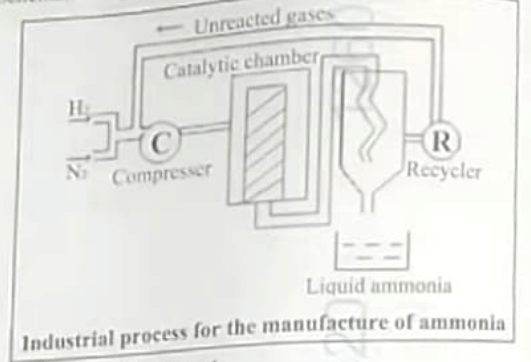
About Occurrence Of Metals - ICSE-CLASS-X-BOARD
Occurrence Of Metals is a vital chapter for ICSE-CLASS-X-BOARD aspirants. Mastering the concepts covered in this chapter is essential for securing a top rank.
By rigorously practicing the previous year questions associated with this chapter, you can identify high-yield topics, understand the examiner's perspective, and boost your confidence during the actual exam.
Frequently Asked Questions
Why focus on Occurrence Of Metals PYQs?
Analyzing PYQs for this specific chapter reveals the most frequently tested concepts and the typical complexity of questions, allowing you to tailor your study plan efficiently.
How to best use this analysis?
Review the topic breakdown to see which sub-topics within Occurrence Of Metals carry the most weight. Then, tackle the questions iteratively to solidify your understanding.