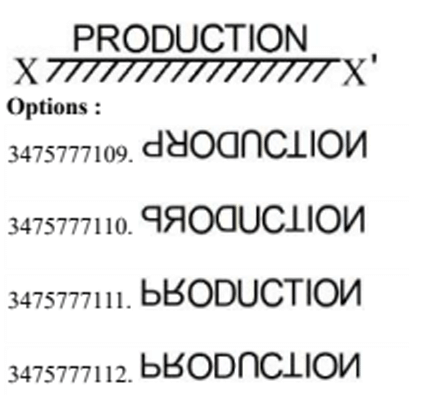
What is the mirror image of the word \textbf{PRODUCTION along the axis?}
Official Solution
Correct Option: (1)
02
PYQ 2025
hard
aptitudeID: jee-main
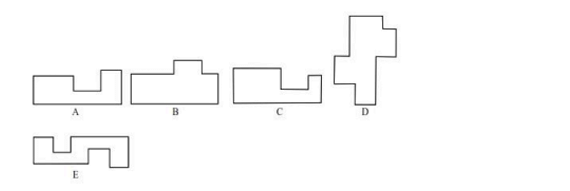
Five diagrams and are given. Three out of these, when put together, form a square. Identify the correct set of diagrams.
1
2
3
4
Official Solution
Correct Option: (2)
Concept: In figure-assembly problems, the combined shapes must form a perfect square with: No gaps, No overlaps, Straight outer boundaries. Each selected piece must complement the others so that all protrusions and indentations cancel out. Explanation: Diagram provides the vertical extension needed for the square. Diagrams and together balance the horizontal protrusions and fill the remaining gaps. When combined, and fit together to form a complete square with straight edges on all sides. The other combinations either leave gaps or produce an irregular boundary. Hence, the three diagrams that form a square are:
03
PYQ 2025
hard
aptitudeID: jee-main
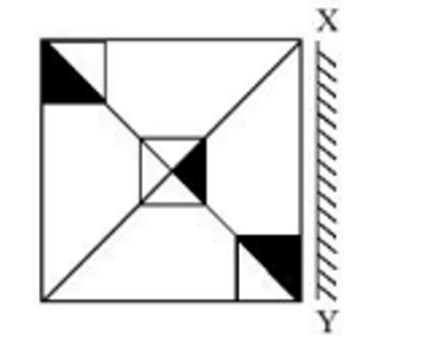
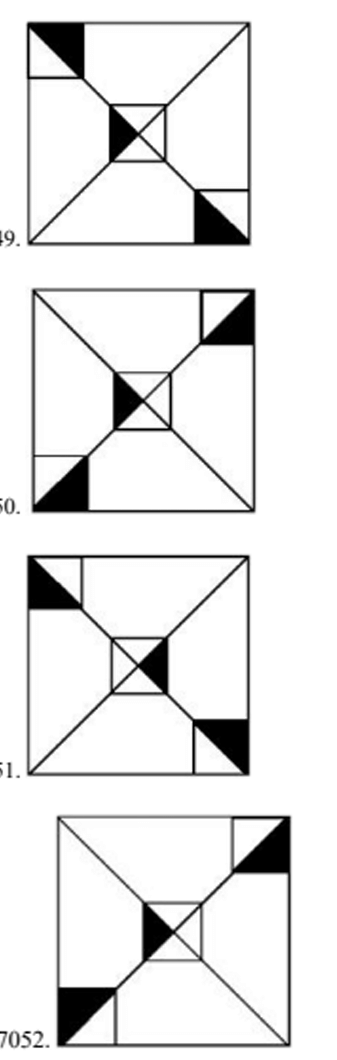
Identify the correct mirror image of the given figure along the -axis.
1
Option 1
2
Option 2
3
Option 3
4
Option 4
Official Solution
Correct Option: (3)
Concept: A mirror image along a given axis is obtained by reflecting the figure across that axis. When a figure is reflected, the relative positions of all parts reverse with respect to the mirror line, while their shapes and sizes remain unchanged. For a mirror placed along the -axis, the leftβright orientation of the figure is reversed. Explanation: Observe the positions of the shaded (black) triangular parts in the original figure. After reflection across the -axis, each shaded region must appear at the symmetric position on the opposite side of the axis. The internal diagonal lines and the central small square must also appear as mirror images, not rotated or rearranged. Among the given options, only Option (C) correctly shows: Proper leftβright reversal of the shaded regions, Correct symmetry of the diagonals, Exact mirror placement of the central shape.
04
PYQ 2025
medium
aptitudeID: jee-main
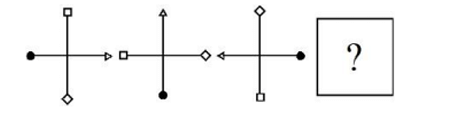
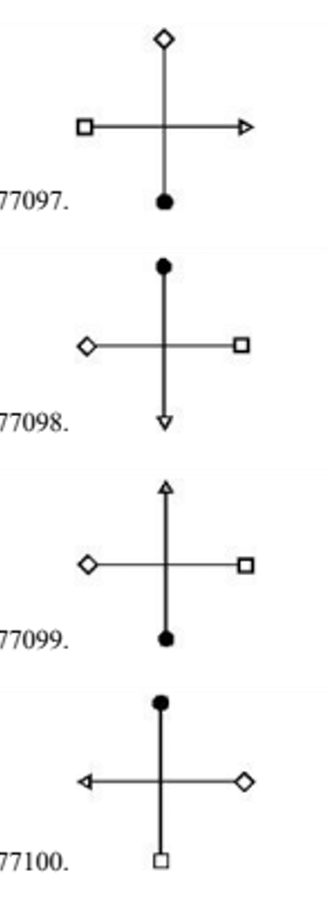
Choose the figure that will correctly replace the question mark in the given series.
1
Figure 1
2
Figure 2
3
Figure 3
4
Figure 4
Official Solution
Correct Option: (3)
Concept:
This is a figure-series completion problem based on: Rotation of the entire figure, Cyclic movement of symbols (filled circle, hollow square, diamond, arrow), Consistent clockwise shifting of elements. Step 1: Observe the pattern of rotation Each successive figure is obtained by rotating the previous figure by clockwise. Step 2: Track the symbols Across the series: The arrow rotates clockwise each step. The filled circle, hollow square, and diamond also shift positions accordingly while maintaining their relative order. Step 3: Predict the next figure Applying another clockwise rotation to the last given figure: The arrow points upward, The filled circle appears at the bottom, The diamond shifts to the left, The hollow square moves to the right. Step 4: Match with options Only Option (C) satisfies all these conditions simultaneously. Final Answer:
05
PYQ 2025
hard
aptitudeID: jee-main
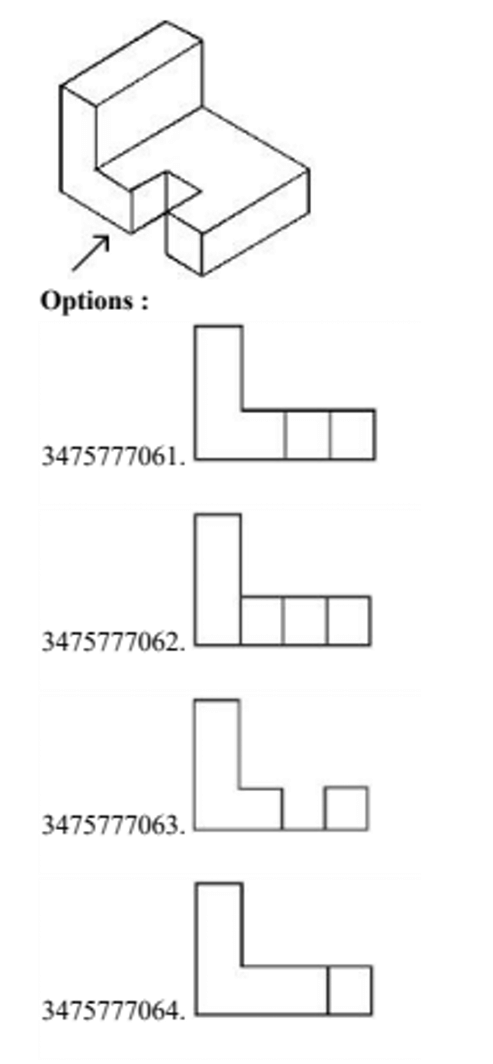
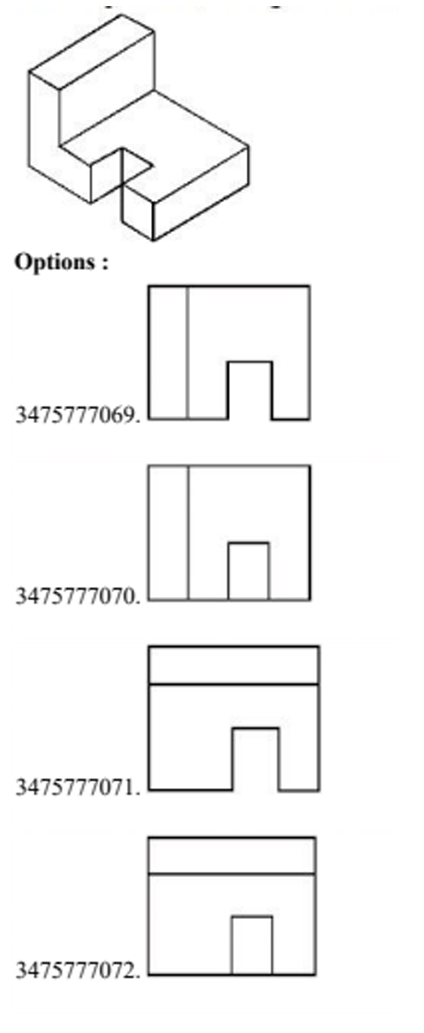
The question figure shows the 3D view of an object. Identify the correct view when looking in the direction of the arrow.
1
Option 1
2
Option 2
3
Option 3
4
Option 4
Official Solution
Correct Option: (2)
Concept: In 3D-to-2D visualization problems, the required view is obtained by projecting the object onto a plane perpendicular to the given direction. Only the faces visible from the arrow direction are considered; depth details collapse into a single outline. Relative heights and horizontal extensions must remain consistent with the original object. Step-by-step analysis: The arrow indicates a viewing direction from the lower-left side of the object. From this direction, the vertical block on the left remains fully visible. The horizontal base extends to the right with three equal segments visible. The inner cut or recess does not appear separately in the projection and merges into the outline. Comparison with options: Option (A): Length and segmentation do not match the base. Option (B): Correctly shows the tall left vertical face and the three-unit horizontal extension. Option (C): Shows a disconnected or misplaced segment. Option (D): Misses one horizontal division. Thus, the correct view corresponding to the given direction is Option (B).
06
PYQ 2025
medium
aptitudeID: jee-main
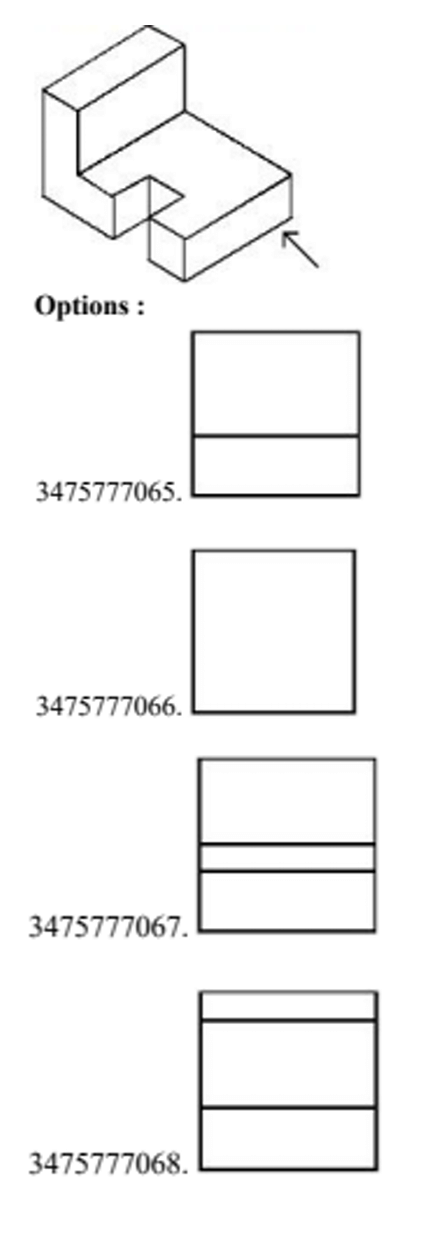
The question figure shows the 3D view of an object. Identify the correct view when looking in the direction of the arrow.
1
Option 1
2
Option 2
3
Option 3
4
Option 4
Official Solution
Correct Option: (4)
Concept: When viewing a 3D object from a given direction, depth collapses and only height and width remain visible. Internal steps or levels appear as horizontal divisions in the front/side view. The number and position of horizontal lines indicate changes in height. Step-by-step analysis: The arrow indicates viewing the object from the right-hand side. From this direction, the object shows: One full vertical rectangular outline, Two distinct height changes due to the stepped structure. Hence, the correct projection must show two horizontal dividing lines inside a rectangle. Comparison with options: Option (A): Shows only one horizontal division β incomplete. Option (B): Shows no internal division β incorrect. Option (C): Horizontal divisions are incorrectly placed. Option (D): Correctly shows two horizontal divisions corresponding to the stepped heights. Therefore, the correct view when looking in the direction of the arrow is Option (D).
07
PYQ 2025
medium
aptitudeID: jee-main
The question figure shows the 3D view of an object. Identify the correct top view.
1
Option 1
2
Option 2
3
Option 3
4
Option 4
Official Solution
Correct Option: (3)
Concept: A top view shows the outline and cut-outs visible when the object is viewed from directly above. Heights are ignored; only the horizontal footprint matters. Recesses or steps that are open at the top must appear as cut-outs in the top view. Step-by-step analysis: The object has an overall rectangular base. There is a central rectangular cut-out open from the top, which must appear clearly in the top view. A raised block is present at the back portion of the object; from the top, this appears as a horizontal strip. Comparison with options: Option (A): Shows incorrect placement of the raised portion. Option (B): The cut-out size and position do not match the object. Option (C): Correctly shows: The full rectangular outline, The horizontal strip due to the raised block, The central rectangular cut-out. Option (D): The cut-out does not align with the object's structure. Hence, the correct top view of the given 3D object is Option (C).
08
PYQ 2025
medium
aptitudeID: jee-main
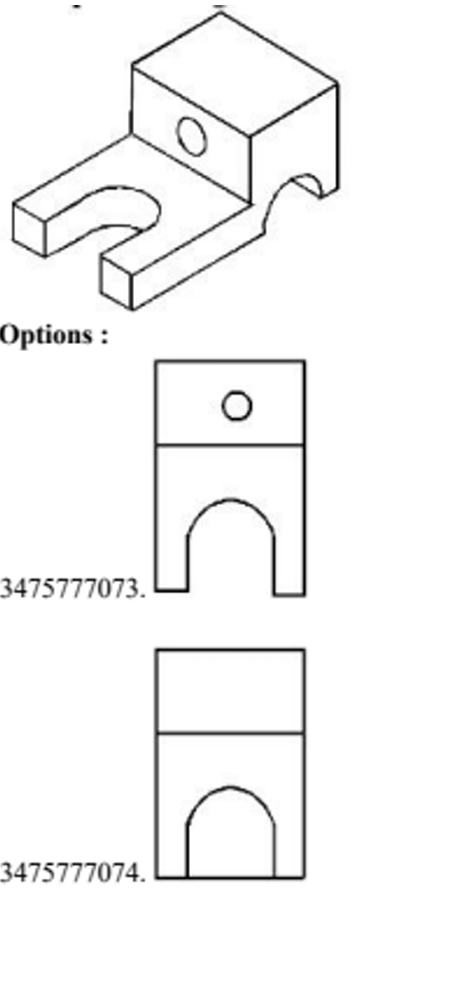
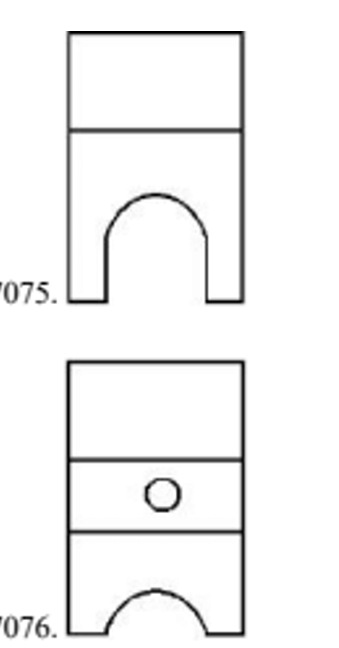
The question figure shows the 3D view of an object. Identify the correct top view of the object.
1
Option 1
2
Option 2
3
Option 3
4
Option 4
Official Solution
Correct Option: (4)
Concept: A top view shows only those features visible from directly above. Vertical features like holes appear as circles in the top view. Curved cut-outs that are open on the front but not on the top do \emph{not} appear as curved shapes in the top view. Step-by-step analysis: The object has a rectangular top surface. There is a cylindrical hole drilled vertically through the upper block, which must appear as a circle in the top view. The front portion has a curved opening, but since it is not open from the top, it does not affect the top view outline. The stepped nature of the object creates a horizontal division in the top view. Comparison with options: Option (A): Shows the circle but places the curved cut-out incorrectly. Option (B): Missing the circular hole. Option (C): Also missing the circular hole. Option (D): Correctly shows: Rectangular outline, Horizontal division due to the step, Circular hole at the correct position. Hence, the correct top view of the given 3D object is Option (D).
09
PYQ 2025
medium
aptitudeID: jee-main
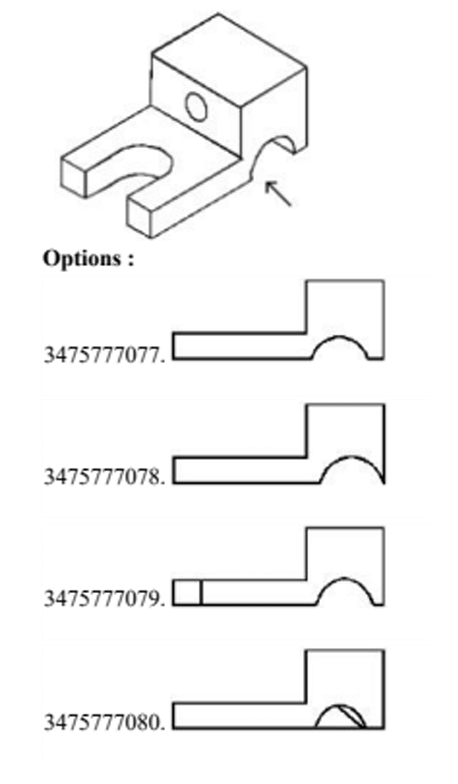
The question figure shows the 3D view of an object. Identify the correct view when looking in the direction of the arrow.
1
Option 1
2
Option 2
3
Option 3
4
Option 4
Official Solution
Correct Option: (2)
Concept: When viewing an object from a given direction, only the faces directly visible from that direction appear in the projection. Internal holes or features appear only if they are exposed in the viewing direction. Curved cut-outs appear as curved boundaries only if the cut is open towards the observer. Step-by-step analysis: The arrow indicates viewing the object from the right-hand side. From this direction, the rectangular vertical face on the right is clearly visible. The semi-circular cut-out on the right side is open toward the observer and must appear as a curved notch. The cylindrical hole on the upper block is not visible from this direction, so it should not appear in the view. The long horizontal arm extends to the left and appears as a straight rectangular projection. Comparison with options: Option (A): Missing correct curvature alignment. Option (B): Correctly shows the stepped profile and the semi-circular cut-out without showing the top hole. Option (C): Incorrect extra internal division. Option (D): Shows an incorrect triangular/arched feature. Hence, the correct view when looking in the direction of the arrow is Option (B).
10
PYQ 2025
medium
aptitudeID: jee-main
A person walks km towards the north, then turns to his left and walks km, and then again turns to his left and walks km. How far is he from his starting point now?
1
kilometers
2
kilometers
3
kilometers
4
kilometers
Official Solution
Correct Option: (4)
Concept:
Such problems are based on direction sense and displacement. The shortest distance from the starting point to the final position is found using simple geometry or coordinate representation. Step 1: Trace the path The person starts from point . He walks km north to point . Turning left, he walks km west to point . Turning left again, he walks km south to point . Step 2: Determine the final position The northward and southward movements cancel each other:
So the person is directly west of the starting point by km. Step 3: Find the distance from the starting point Final Answer:
11
PYQ 2025
medium
aptitudeID: jee-main
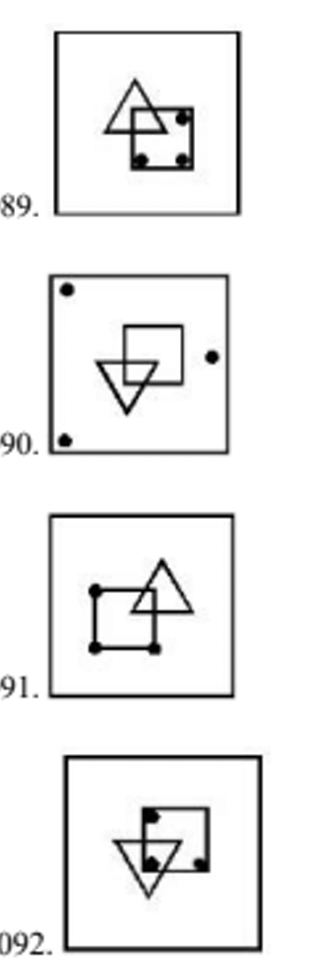
Identify the figure which is odd from the rest of the figures.
1
Figure 1
2
Figure 2
3
Figure 3
4
Figure 4
Official Solution
Correct Option: (2)
Concept:
Odd-one-out questions are based on identifying a common pattern shared by most figures and spotting the one that violates it. The pattern may involve: Orientation of shapes, Relative position of dots, Direction of arrows or triangles, Consistency in arrangement. Observation: In Figures 1, 3, and 4: The triangle and square follow a consistent relative orientation. The dots are placed at corresponding corners with respect to the square. In Figure 2: The triangle is inverted in a manner inconsistent with the others. The placement of dots does not follow the same positional pattern seen in the remaining figures. Conclusion:
Since Figure 2 does not follow the common structural and positional pattern shared by the other figures, it is the odd one out. Final Answer:
12
PYQ 2025
medium
aptitudeID: jee-main
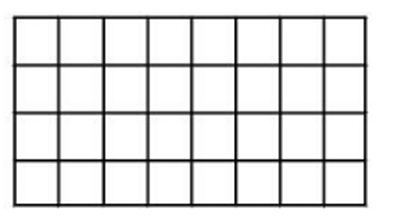
How many squares are there in the given figure?
1
2
3
4
Official Solution
Correct Option: (4)
Concept:
To count the total number of squares in a rectangular grid, we must count: All the smallest unit squares, All larger squares formed by combining smaller ones. If a grid has rows and columns, the total number of squares is:
Step 1: Identify the grid size From the figure:
Step 2: Count squares of different sizes squares: squares: squares: squares: Step 3: Add all squares Final Answer:
13
PYQ 2025
medium
aptitudeID: jee-main
A man is facing East, turns clockwise, then anticlockwise, and then another clockwise. In which direction is he facing?
1
West
2
East
3
North
4
South
Official Solution
Correct Option: (2)
Concept:
Direction-sense problems are solved by tracking each turn step by step, remembering: Clockwise turn = right turn Anticlockwise turn = left turn Step 1: Initial direction The man starts facing East. Step 2: First turn He turns clockwise (right):
Step 3: Second turn He turns anticlockwise (left):
Step 4: Third turn He turns another clockwise:
Conclusion: After all the turns, the man is facing East. Final Answer:
14
PYQ 2025
medium
aptitudeID: jee-main
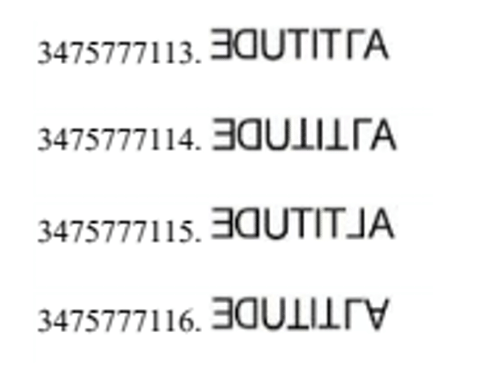
Identify the mirror image of the given word \textbf{ALTITUDE along the axis.}
1
Option 1
2
Option 2
3
Option 3
4
Option 4
Official Solution
Correct Option: (1)
Concept: A mirror along the axis represents a vertical mirror. In a vertical mirror image: The order of letters is reversed (right-to-left), Each letter is laterally inverted. Step-by-step analysis: The original word is ALTITUDE. Reversing the order of letters gives: EDUTITLA. Each letter must also appear as its leftβright mirror image. Among the given options, only Option (A) shows: Correct reversed order of letters, and Proper lateral (leftβright) mirroring of each letter. Conclusion:
Therefore, the correct mirror image of the word ALTITUDE along the axis is Option (A). Final Answer: