Rotational Motion
3 previous year questions.
High-Yield Trend
Chapter Questions 3 MCQs
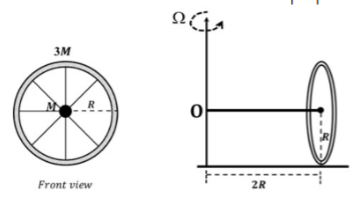
A wheel of mass and radius is made of a thin uniform distribution of mass at the rim and a point mass at the center. The spokes of the wheel are massless. The center of mass of the wheel is connected to a horizontal massless rod of length , with one end fixed at , as shown in the figure. The wheel rolls without slipping on horizontal ground with angular speed . If is the total angular momentum of the wheel about , then the magnitude . The value of (in integer) is: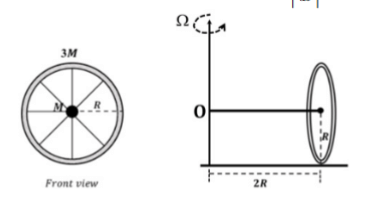
A wheel of mass and radius is made of a thin uniform distribution of mass at the rim and a point mass at the center. The spokes of the wheel are massless. The center of mass of the wheel is connected to a horizontal massless rod of length , with one end fixed at , as shown in the figure. The wheel rolls without slipping on horizontal ground with angular speed . If is the total angular momentum of the wheel about , then the magnitude . The value of (in integer) is:
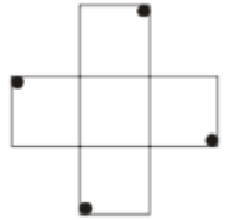
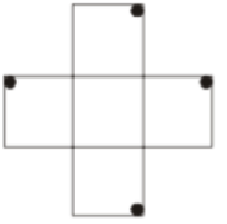
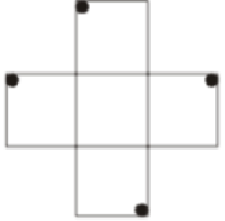
An object is said to have an n-fold rotational symmetry if the object, rotated by an angle of , is identical to the original.
Which one of the following objects exhibits 4-fold rotational symmetry about an axis perpendicular to the plane of the screen?

About Rotational Motion - GATE-PH
Rotational Motion is a vital chapter for GATE-PH aspirants. Mastering the concepts covered in this chapter is essential for securing a top rank.
By rigorously practicing the previous year questions associated with this chapter, you can identify high-yield topics, understand the examiner's perspective, and boost your confidence during the actual exam.
Frequently Asked Questions
Why focus on Rotational Motion PYQs?
Analyzing PYQs for this specific chapter reveals the most frequently tested concepts and the typical complexity of questions, allowing you to tailor your study plan efficiently.
How to best use this analysis?
Review the topic breakdown to see which sub-topics within Rotational Motion carry the most weight. Then, tackle the questions iteratively to solidify your understanding.