Spectroscopy
20 previous year questions.
High-Yield Trend
Chapter Questions 20 MCQs
The CORRECT order of carbonyl stretching frequencies for the following compounds is 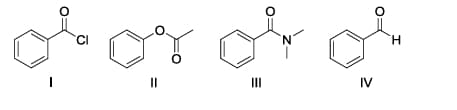
Among the following hydrocarbon(s), how many of them would give rise to three groups of proton NMR peaks with 2:2:3 integration ratio? 
The magnitude of crystal field stabilization energy (CFSE) of octahedral complex is 7680 cm . The wavelength at the maximum absorption ( ) of this complex is ............ nm (rounded up to the nearest integer).
For molecule, the fundamental vibrational frequency can be taken as 4400 cm . The zero-point energy of the molecule is ................ kJ/mol (rounded up to two decimal places).
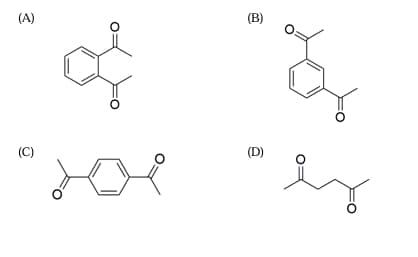
The compound(s) which will have only two signals in the NMR spectrum in 3:2 ratio is(are)
The force constant for H Cl and D Cl are the same and both can be considered as harmonic oscillators. H Cl has a fundamental vibrational transition at 2886 cm . The ratio of the zero-point energy of H Cl to that of D Cl is
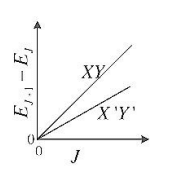
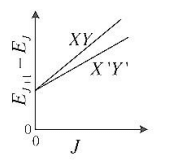
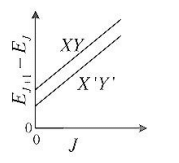 undefined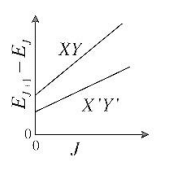
is _________.
(round off to the nearest integer)
[Given: Rydberg constant = 13.61 eV]
(round off to two decimal places)
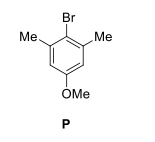
[Given: Planck’s constant = 6.62x10⁻³⁴ J s; 1 eV = 1.6x10⁻¹⁹ J]
(round off to two decimal places)
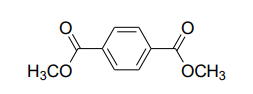
the number of signals expected in the 1H NMR spectrum is _________.
lesser than the stretching frequency in free CO.

is _______ Å. (rounded off to three decimal places)
[Given: h=6.626×10 −34 J s; c=2.998×10⁸ m s−1 ; 1 MeV=1.602×10⁻¹³ J]
[Given: Both experiments are performed in the same spectrophotometric cell.]
About Spectroscopy - IIT-JAM-CY
Spectroscopy is a vital chapter for IIT-JAM-CY aspirants. Mastering the concepts covered in this chapter is essential for securing a top rank.
By rigorously practicing the previous year questions associated with this chapter, you can identify high-yield topics, understand the examiner's perspective, and boost your confidence during the actual exam.
Frequently Asked Questions
Why focus on Spectroscopy PYQs?
Analyzing PYQs for this specific chapter reveals the most frequently tested concepts and the typical complexity of questions, allowing you to tailor your study plan efficiently.
How to best use this analysis?
Review the topic breakdown to see which sub-topics within Spectroscopy carry the most weight. Then, tackle the questions iteratively to solidify your understanding.