World War I And World War Ii Renaissance Cold War Other Wars
10 previous year questions.
Volume: 10 Ques
Yield: Medium
High-Yield Trend
3
2025
7
2024
Chapter Questions
10 MCQs
01
PYQ 2024
medium
historyID: maharash
The headquarters of SEATO was located at_________ .
1
Thailand
2
Philippines
3
Pakistan
4
United Kingdom
Official Solution
Correct Option: (1)
Step 1: The Southeast Asia Treaty Organization (SEATO) was an international organization formed in 1954 to prevent the spread of communism in Southeast Asia.
Step 2: The headquarters of SEATO was located in Bangkok, Thailand, making option (A) the correct answer.
02
PYQ 2024
medium
historyID: maharash
The first atom bomb was dropped on the city of ________during the aerial attack of America on Japan.
1
Nagasaki
2
Hiroshima
3
Pearl Harbour
4
Stalingrad
Official Solution
Correct Option: (2)
Step 1: The first atomic bomb, known as "Little Boy," was dropped by the U.S. on Hiroshima on August 6, 1945.
Step 2: Among the given options, Hiroshima is the correct choice as it was the first city targeted by an atomic bomb.
03
PYQ 2024
medium
historyID: maharash
Write causes of the First World War: Immediate Cause
Official Solution
Correct Option: (1)
The immediate cause of the First World War was the assassination of Archduke Franz Ferdinand of Austria-Hungary. This event triggered a series of diplomatic and military actions that ultimately led to the outbreak of the war.
Assassination of Archduke Franz Ferdinand: On June 28, 1914, Archduke Franz Ferdinand, the heir to the Austro-Hungarian throne, and his wife, Sophie, were assassinated in Sarajevo by Gavrilo Princip, a member of the Serbian nationalist group, the Black Hand. This assassination is considered the immediate cause of the war.
Austria-Hungaryβs Response: Austria-Hungary, with the backing of Germany, issued an ultimatum to Serbia, demanding strict measures to suppress anti-Austrian sentiments. Serbia, backed by Russia, rejected some of the terms, and Austria-Hungary declared war on Serbia on July 28, 1914.
The Domino Effect of Alliances: The declaration of war triggered the system of alliances in Europe. Russia, allied with Serbia, mobilized its forces against Austria-Hungary. Germany, allied with Austria-Hungary, declared war on Russia. France, allied with Russia, was drawn into the conflict, and Germanyβs invasion of Belgium brought Britain into the war.
Escalation into a World War: Within a matter of days, what had started as a localized conflict between Austria-Hungary and Serbia escalated into a global war, as the alliance system dragged in most of the European powers and their colonies, eventually involving nations from around the world.
In conclusion, while the assassination of Archduke Franz Ferdinand was the immediate cause, the system of alliances, nationalism, and militarization had already created the conditions for a large-scale conflict.
04
PYQ 2024
medium
historyID: maharash
Write causes of the First World War: Imperialistic Policy
Official Solution
Correct Option: (1)
Imperialism was one of the leading causes of the First World War. European powers sought to expand their empires by acquiring colonies in Africa, Asia, and the Pacific. The competition for imperial dominance increased tensions among the major European powers.
Expansion of European Empires: European nations, such as Britain, France, Germany, and Italy, were heavily involved in the βScramble for Africaβ and the acquisition of overseas colonies. As these nations expanded their empires, they came into direct conflict over territories, particularly in Africa and Asia.
Economic Exploitation: Colonies provided raw materials, markets for manufactured goods, and economic advantages. This economic rivalry led to increased competition and conflict between the imperialist powers, especially when it came to securing profitable colonies.
National Prestige and Rivalry: Colonial expansion was also a symbol of national prestige. Nations sought to demonstrate their power by acquiring more territories. The imperialistic policies of these nations, particularly in Africa, created competition and resentment between European countries, further escalating tensions in Europe.
Instability in Colonies: The rise of nationalist movements in the colonies, demanding independence and autonomy, also destabilized the imperialist powers. This unrest in the colonies contributed to the overall climate of distrust and rivalry among European nations.
In conclusion, imperialistic policies created rivalries and increased the tensions between European powers, which ultimately contributed to the outbreak of the First World War.
05
PYQ 2024
medium
historyID: maharash
Write causes of the First World War: Competition for Armament
Official Solution
Correct Option: (1)
The competition for armament, also known as the arms race, was one of the main causes of the First World War. European powers engaged in a race to build and maintain powerful militaries, creating an environment of mistrust and fear that contributed to the war.
Military Expansion and Modernization: In the years leading up to the First World War, European powers significantly increased their military spending. Germany, Britain, and France, in particular, invested heavily in the development of advanced weaponry, including battleships, artillery, and military technology. This arms buildup escalated tensions between the powers, as each nation sought to outmatch the others.
Naval Arms Race: One of the most notable examples of the arms race was the naval competition between Britain and Germany. Britain, with its historically dominant navy, faced the challenge of Germanyβs rapid expansion of its naval forces. This naval arms race intensified hostilities between the two powers and contributed to the overall climate of distrust.
Increased Militarization and Preparedness: The arms race led to a belief among the European powers that war was inevitable. As countries built up their military strength, they adopted military strategies that prioritized rapid mobilization. The widespread belief that military conflict could be resolved quickly made nations more likely to engage in war when tensions arose.
Influence on Foreign Policy: As military strength became a measure of national power, European countries increasingly used their military capabilities as leverage in diplomacy. Nations, such as Germany and Austria-Hungary, adopted aggressive foreign policies, knowing that they had the military power to back their demands.
In conclusion, the intense competition for armament and the arms race between European nations contributed to an atmosphere of hostility and insecurity, making war more likely.
06
PYQ 2024
medium
historyID: maharash
Write short notes Bandung Conference
Official Solution
Correct Option: (1)
The Bandung Conference, held in April 1955 in the Indonesian city of Bandung, was a landmark event in the history of the post-colonial world. The conference was the first large-scale Asian-African conference and was attended by representatives from 29 newly independent nations, primarily from Asia and Africa.
Key Features of the Bandung Conference:
Non-Alignment Movement: One of the key outcomes of the conference was the foundation of the Non-Aligned Movement (NAM). The conference promoted the idea that newly independent nations should not align with either the United States or the Soviet Union during the Cold War, advocating for neutrality and cooperation among themselves.
Unity and Cooperation: The conference sought to foster unity and solidarity among the Asian and African countries in their struggles against colonialism, imperialism, and racial discrimination. It focused on promoting peaceful coexistence and mutual cooperation among the participants.
Social and Economic Development: The Bandung Conference emphasized the importance of economic and social development for newly independent nations. It highlighted the need for cooperation in areas such as trade, education, and scientific advancement, while promoting the concept of economic independence from former colonial powers.
Anti-Colonialism and Anti-Racism: A central theme of the Bandung Conference was the rejection of colonial rule and racial discrimination. The participating nations called for global solidarity against colonial oppression and the protection of human rights and dignity for all races.
The Bandung Conference was a significant event that laid the groundwork for future cooperation among developing nations and marked the beginning of a more assertive stance in global affairs by the global South.
07
PYQ 2024
medium
historyID: maharash
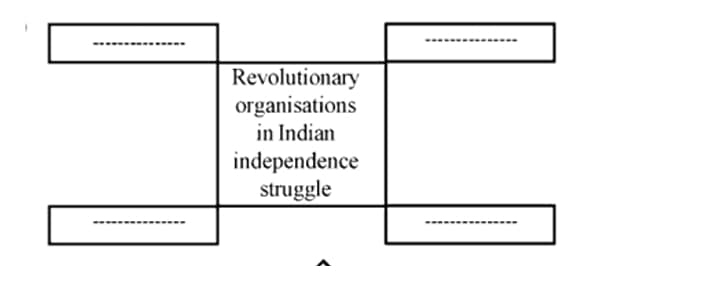
Revolutionary organisations in Indian independence struggle
Official Solution
Correct Option: (1)
The revolutionary organizations in Indian independence struggle are as follows:
Anushilan Samiti
Jugantar
Hindustan Socialist Republican Association (HSRA)
Indian Republican Army
08
PYQ 2025
medium
historyID: maharash
Explain the factors responsible for the Second World War β Failure of League of Nations Organisation
Official Solution
Correct Option: (1)
Explanation: The League of Nations, established after World War I with the aim of maintaining peace and preventing future conflicts, failed to prevent the outbreak of the Second World War. The League lacked the authority and military power to enforce its decisions and relied on collective security, which proved ineffective. Several major powers, including the United States, did not join the League, weakening its ability to act decisively. Additionally, the League failed to prevent the aggressive actions of fascist powers, such as Italy's invasion of Ethiopia and Germany's remilitarization of the Rhineland. The League's inability to curb these acts of aggression led to the erosion of international trust in its ability to maintain peace, directly contributing to the outbreak of World War II.
09
PYQ 2025
medium
historyID: maharash
Explain the factors responsible for the Second World War β Fascism and Nazism
Official Solution
Correct Option: (1)
Fascism, particularly in Italy under Benito Mussolini, and Nazism, under Adolf Hitler in Germany, were key ideologies that directly contributed to the outbreak of the Second World War. Fascist regimes, built on authoritarian rule, extreme nationalism, and militarism, sought territorial expansion and the establishment of totalitarian states. Hitlerβs Nazi regime, in particular, had expansionist ambitions, seeking to establish a Greater Germany and dominate Europe. The aggression displayed by fascist states in Europe, including the invasion of neighboring countries and the establishment of oppressive regimes, led to the breakdown of international peace and security, contributing directly to the outbreak of war in 1939.
10
PYQ 2025
medium
historyID: maharash
Explain the factors responsible for the Second World War β The Treaty of Versailles
Official Solution
Correct Option: (1)
The Treaty of Versailles, signed in 1919, officially ended World War I but created many conditions that contributed to the outbreak of the Second World War. The treaty placed full blame for the war on Germany and imposed severe reparations and territorial losses on the country. The harsh terms of the treaty caused significant resentment in Germany, which led to widespread economic hardship and political instability. This discontent provided fertile ground for extremist ideologies, such as fascism and Nazism, to take root. The punitive measures in the treaty were one of the key factors that paved the way for the rise of Adolf Hitler and his aggressive expansionist policies, which ultimately led to the outbreak of World War II.