**Subject:** Economy India's push towards **"Shree Anna"** (millets) marks a significant shift in addressing nutritional security challenges through indigenous solutions. The country's leadership in declaring **2023 as the International Year of Millets** demonstrates its commitment to promoting these climate-resilient superfoods. ## Millets in India 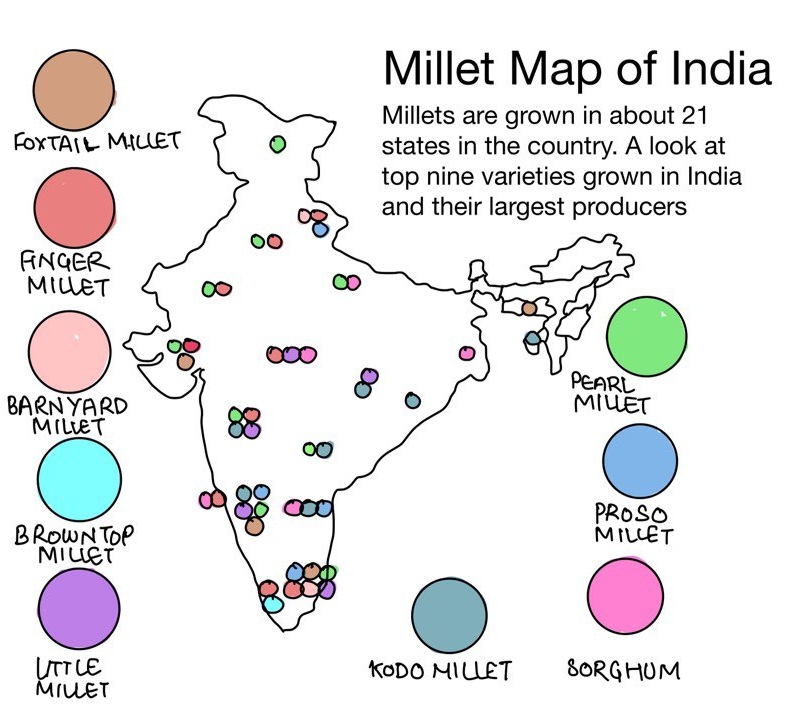
## Health and Nutritional Benefits of Millets - **Nutrient-Rich Profile**: Millets are rich in proteins, minerals, and vitamins, making them effective in combating **malnutrition indicators** (36% stunting and 17% underweight among children under six). - **Disease Prevention**: Scientific studies (2023-25) demonstrate millets' effectiveness in: - Reducing **anemia prevalence**. - Improving **glycemic control**. - Lowering risks of **cardiovascular diseases**. - **Dietary Diversity**: Integration of different millet varieties (**sorghum, pearl millet, finger millet**) enhances nutritional intake and promotes sustainable dietary habits. ## Role in Ensuring Food Security - **Production Leadership**: India contributes **38% of global millet production** (17.25 million metric tons in 2023), positioning it as the world's largest producer. - **Climate Resilience**: - Drought-resistant nature ensures food availability in water-stressed regions. - Low input requirements make them suitable for marginal farmers. ## Government Initiatives and Challenges - **Policy Support**: - Implementation of **PM Dhan-Dhaanya Krishi Yojana** in 100 districts. - Integration into **Mid-Day Meal** schemes and **Public Distribution System**. - **Consumption Challenges**: - Decline in per capita consumption from **15.89 kg (1960) to 4.2 kg (2010)**. - Changing dietary preferences and availability of cheaper alternatives. The revival of millets through initiatives like **"Shree Anna"** and their integration into **public nutrition programs** presents a sustainable solution to India's nutritional challenges while promoting **agricultural biodiversity** and **climate-resilient farming**.