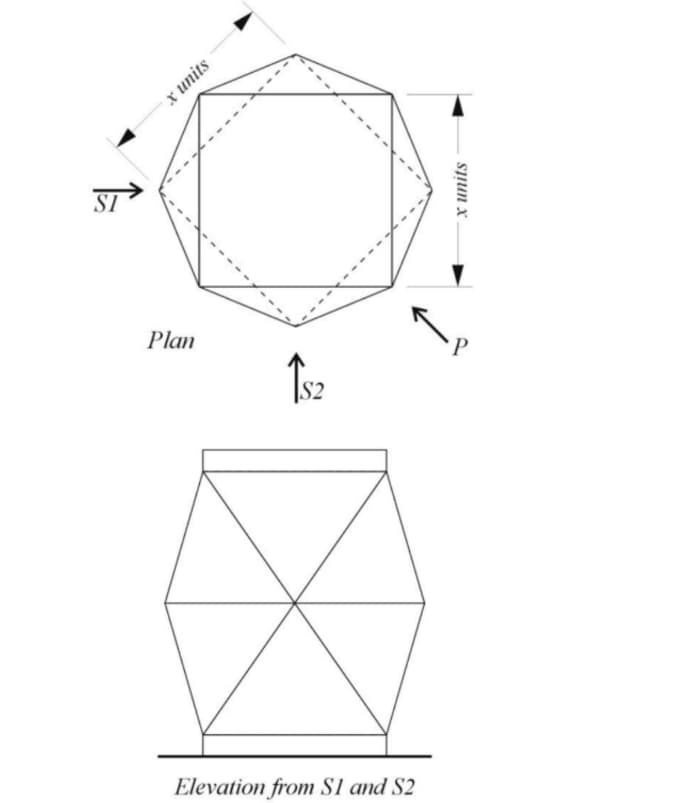
A table lamp designed with simple geometrical forms is shown below in plan, and elevations from S1 and S2. Draw the elevation of the same lamp from the direction P, as indicated in the plan.
Official Solution
Correct Option:
(1)
Step 1: Analyzing the given views.
- The plan view (top-down perspective) illustrates a hexagonal structure.
- The elevations from S1 and S2 indicate a symmetrical geometric design.
Step 2: Determining the elevation from direction P.
- The view from P will preserve the geometric symmetry of the lamp.
- The hexagonal base and top surfaces will be visible as edges in elevation.
- The triangular side components will align with the structural framework.
Step 3: Constructing the elevation from P.
- Extend projection lines from the plan to ensure accurate proportions.
- Maintain symmetry and utilize construction guidelines for precision.
- Incorporate hatching or shading to enhance the three-dimensional representation.
02
PYQ 2024
medium
architectureID: jee-adva
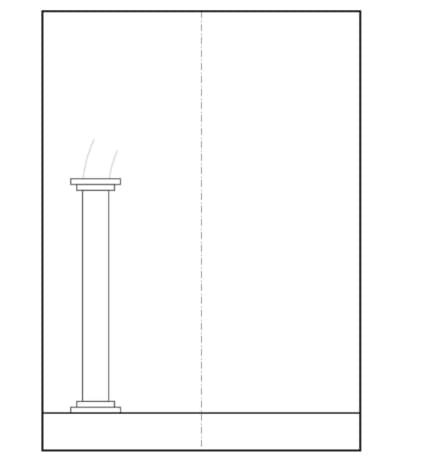
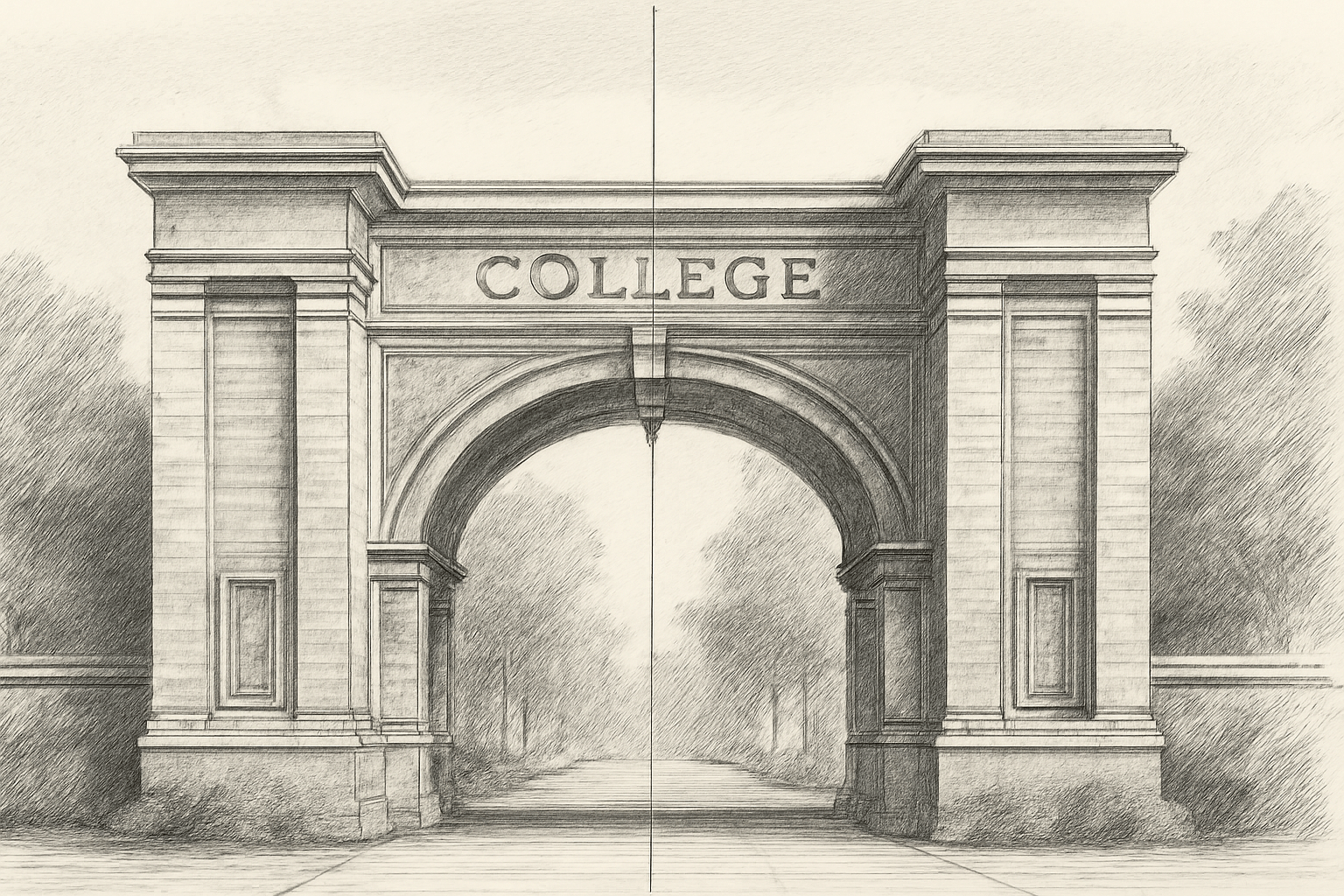
An impressive entrance gateway has to be designed for a college. Make a pencil drawing of the elevation of the gateway, adding appropriate elements of your choice. Also, add shade, patterns, and textures. Some indicative outlines of part of the gateway, and a line of symmetry, are given below.
Official Solution
Correct Option:
(1)
i
Step 1: Identifying key architectural elements for the gateway. - Incorporate design elements such as pillars, arches, decorative motifs, and institutional symbols. - Maintain symmetry and well-balanced proportions for a grand entrance.
Step 2: Sketching the gateway. - Use proper scaling to ensure visual harmony. - Integrate details like columns, engravings, or university emblems. - Enhance aesthetics with decorative lamps, intricate patterns, or contemporary signage.
Step 3: Enhancing realism in the sketch. - Apply shading techniques to create depth and dimension. - Use texture rendering to represent materials like stone, wood, or metal effectively.
03
PYQ 2024
medium
architectureID: jee-adva
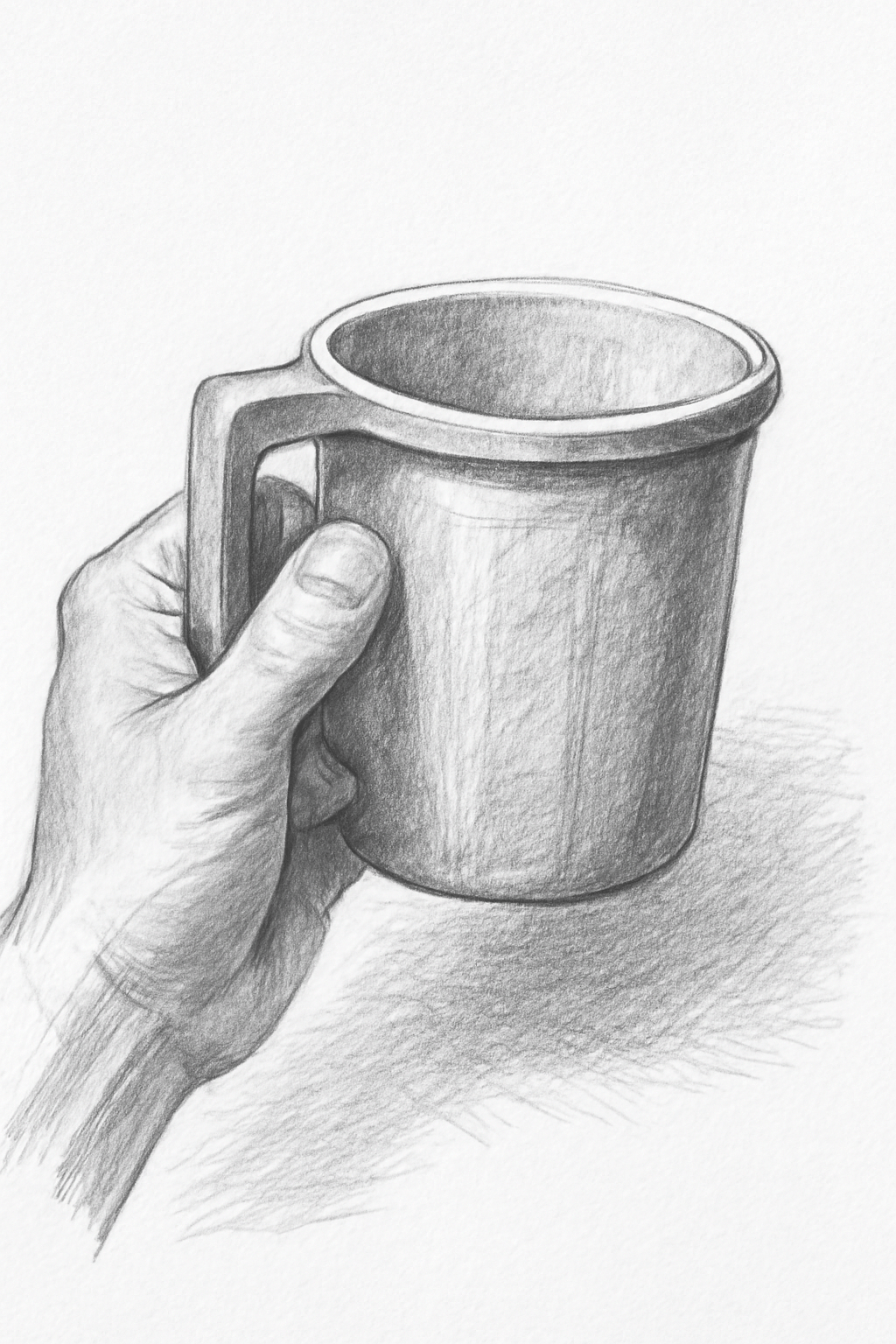
Make a pencil sketch of a mug that is commonly used for bathing. The sketch should also show a hand holding the mug. The drawing should be of appropriate form and proportion, showing various parts, materials, and textures, along with shades and shadows.
Official Solution
Correct Option:
(1)
Step 1: Analyzing the structure of a bathing mug. - The mug generally has a cylindrical or slightly tapered body. - A curved handle is attached to one side to facilitate grip.
Step 2: Sketching the hand holding the mug. - The fingers and thumb should naturally wrap around the handle. - The grip must be proportionate to the size and shape of the mug.
Step 3: Depicting material characteristics. - The mug can be made of plastic, metal, or stainless steel. - Apply texture details and reflective highlights based on the material properties.
Step 4: Enhancing realism. - Utilize shading techniques to create depth and form. - Include cast shadows of the mug and hand to indicate light direction.
04
PYQ 2024
easy
architectureID: jee-adva
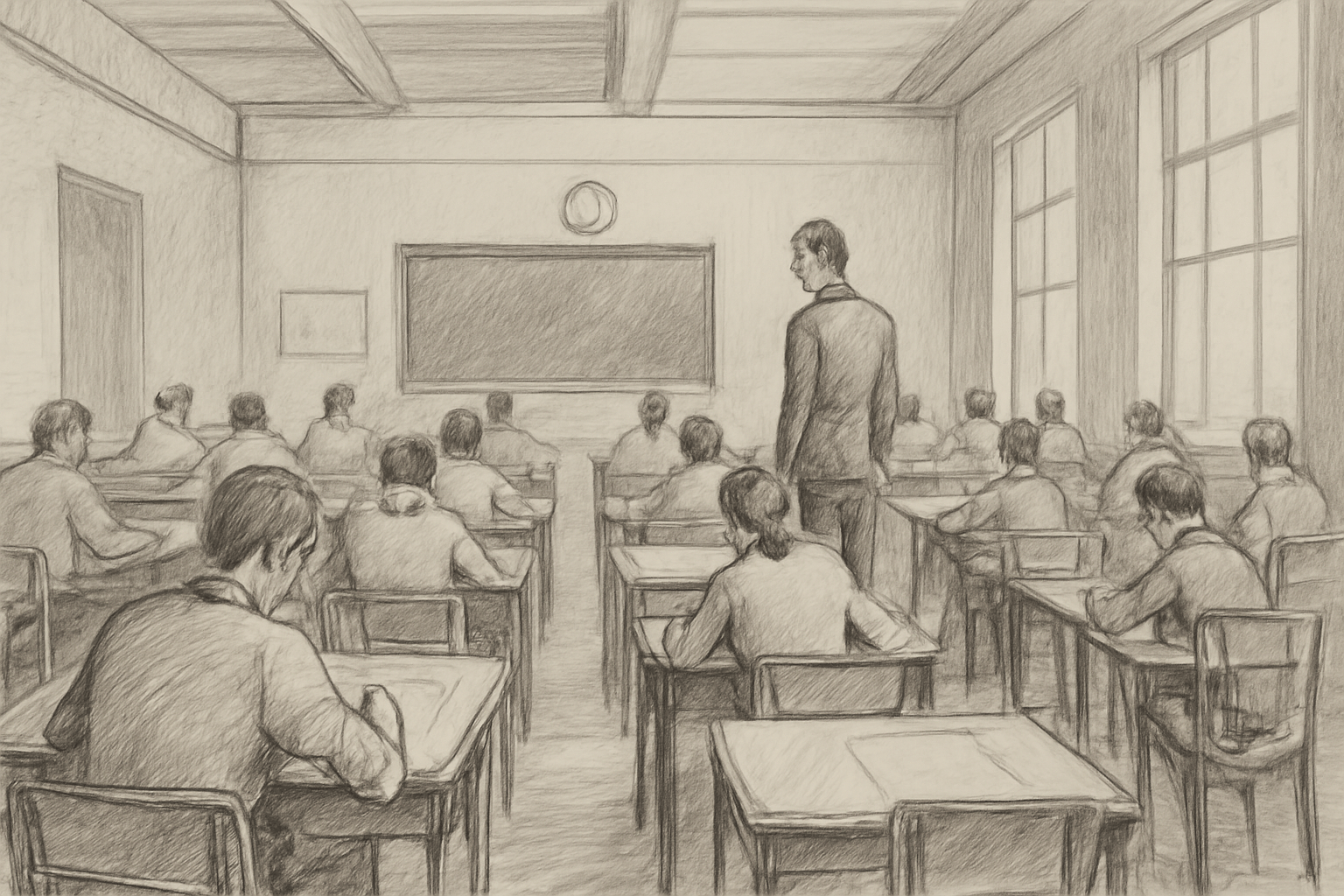
Sketch an interior view of an examination hall, depicting the scene of an examination in progress.
Official Solution
Correct Option:
(1)
Step 1: Analyzing the scene composition. - The examination hall should feature rows of desks and chairs. - Students should be depicted seated and engaged in writing their exams. - An invigilator should be present, supervising the students.
Step 2: Creating depth and perspective. - Utilize linear perspective to add depth to the hall. - Draw desks in rows, reducing in size as they recede into the background to maintain perspective.
Step 3: Incorporating environmental details. - Add elements such as windows, doors, ceiling fans, and a wall clock to enhance realism. - Illustrate students in varied postures, including writing, thinking, or reviewing their answer sheets.
Step 4: Enhancing realism. - Apply shading techniques to add volume to the desks, chairs, and architectural elements. - Maintain accurate proportions for students and objects to ensure a realistic composition.
About Freehand Drawing - JEE-ADVANCED
Freehand Drawing is a vital chapter for JEE-ADVANCED aspirants. Mastering the concepts covered in this chapter is essential for securing a top rank.
By rigorously practicing the previous year questions associated with this chapter, you can identify high-yield topics, understand the examiner's perspective, and boost your confidence during the actual exam.
Frequently Asked Questions
Why focus on Freehand Drawing PYQs?
Analyzing PYQs for this specific chapter reveals the most frequently tested concepts and the typical complexity of questions, allowing you to tailor your study plan efficiently.
How to best use this analysis?
Review the topic breakdown to see which sub-topics within Freehand Drawing carry the most weight. Then, tackle the questions iteratively to solidify your understanding.