Write the classification of aliphatic ketones with example. What is the action of sodium hypoiodite on acetone?
Official Solution
Correct Option: (1)
Step 1: Classification of Aliphatic Ketones: Aliphatic ketones have the general formula R–CO–R', where R and R' are alkyl groups. They are classified as:
- Symmetrical ketones: Both alkyl groups are identical, e.g., acetone (CH COCH ).
- Unsymmetrical ketones: The alkyl groups differ, e.g., methyl ethyl ketone (CH COCH CH ). Step 2: Action of Sodium Hypoiodite on Acetone: Sodium hypoiodite (NaOI, formed in situ from NaOH and I ) reacts with acetone (CH COCH ) in the iodoform test. Acetone, containing a methyl ketone group (CH CO–), undergoes haloform reaction:
Iodoform (CHI ) is a yellow precipitate, confirming the presence of a methyl ketone.
02
PYQ 2022
easy
chemistryID: maharash
Isopropylbenzene on air oxidation followed by dilute acid gives
1
C H OH
2
C H COOH
3
C H CHO
4
CH CHO
Official Solution
Correct Option: (2)
Isopropylbenzene (cumene, C H CH(CH ) ) undergoes air oxidation to form cumene hydroperoxide, which, upon treatment with dilute acid, decomposes via the cumene process to yield phenol (C H OH) and acetone (CH COCH ). However, in strong oxidation conditions, the side chain oxidizes to form benzoic acid (C H COOH). Given options, benzoic acid is likely intended.
Answer: C H COOH.
03
PYQ 2023
medium
chemistryID: maharash
Explain Aldol condensation of ethanal.
Official Solution
Correct Option: (1)
Aldol condensation involves the reaction of two aldehyde molecules (with -H) in the presence of a base to form a -hydroxy aldehyde, which may dehydrate to an unsaturated aldehyde. For ethanal ( ):
Step 1: Enolate ion forms from one ethanal, attacking the carbonyl of another, forming 3-hydroxybutanal (aldol).
Step 2: Dehydration yields crotonaldehyde ( ).
04
PYQ 2026
medium
chemistryID: maharash
Explain Cannizzaro reaction with suitable example.
Official Solution
Correct Option: (1)
Step 1: Understanding the Concept: The Cannizzaro reaction is a disproportionation reaction (self-redox) of aldehydes that do not have an alpha-hydrogen atom. Step 2: Detailed Explanation: In the presence of a strong base (like 50% NaOH), one molecule of aldehyde is reduced to an alcohol while another molecule is oxidized to a carboxylic acid salt. Example: Formaldehyde Two molecules of formaldehyde ( ) react with sodium hydroxide:
Products: Methanol (reduced product) and Sodium formate (oxidized product).
Example: Benzaldehyde
Products: Benzyl alcohol and Potassium benzoate. Step 3: Final Answer: Aldehydes without -hydrogen atoms react with conc. alkali to form an alcohol and a salt of a carboxylic acid.
05
PYQ 2026
medium
chemistryID: maharash
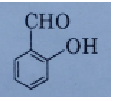
Write the IUPAC name of :
Official Solution
Correct Option: (1)
Step 1: Understanding the Concept: The given compound has a benzene ring with two functional groups: an aldehyde group ( ) and a hydroxyl group ( ). Step 2: Detailed Explanation: According to IUPAC priority rules: 1. The aldehyde group ( ) has higher priority than the hydroxyl group ( ). 2. Therefore, the parent compound is benzaldehyde. 3. The Carbon atom attached to the group is numbered 1. 4. The Carbon atom attached to the group gets the next lowest possible number, which is 2. The group is treated as a substituent called "hydroxy". The name becomes 2-hydroxybenzaldehyde. (Commonly known as Salicylaldehyde). Step 3: Final Answer: The IUPAC name is 2-Hydroxybenzaldehyde.
06
PYQ 2026
medium
chemistryID: maharash
Convert, ethanoic acid to ethanol.
Official Solution
Correct Option: (1)
Step 1: Understanding the Concept: Converting a carboxylic acid to a primary alcohol is a reduction process. Carboxylic acids are difficult to reduce and require strong or specific reducing agents. Step 2: Detailed Explanation: Ethanoic acid ( ) is reduced to ethanol ( ) using Lithium Aluminium Hydride ( ) in dry ether, followed by acid hydrolysis. Reaction:
Alternatively, Diborane ( ) can be used. It is often preferred because it specifically reduces the carboxyl group and does not easily reduce other functional groups like nitro or halo groups. Note: Sodium borohydride ( ) cannot reduce carboxylic acids. Step 3: Final Answer: Ethanoic acid is converted to ethanol by reduction with in ether.
07
PYQ 2026
medium
chemistryID: maharash
Draw the structure of 2, 4 - dinitrophenylhydrazone of acetaldehyde.
Official Solution
Correct Option: (1)
Step 1: Understanding the Concept: Aldehydes react with 2,4-DNP (Brady's reagent) to form crystalline orange/yellow solids called 2,4-dinitrophenylhydrazones. Step 2: Detailed Explanation: This is a nucleophilic addition-elimination reaction. The group of the hydrazine reacts with the of the carbonyl group. Acetaldehyde is . The resulting structure is:
Step 4: Final Answer: The structure is .
08
PYQ 2026
medium
chemistryID: maharash
What is the action of ethane-1, 2 - diol on acetone?
Official Solution
Correct Option: (1)
Step 1: Understanding the Concept: Ketones react with 1,2-diols in the presence of dry gas to form stable cyclic products known as cyclic ketals. Step 2: Detailed Explanation: When acetone reacts with ethane-1,2-diol (ethylene glycol), a water molecule is eliminated. The two hydroxyl groups of the glycol react with the carbonyl oxygen of the acetone. Reaction:
The product is a five-membered heterocyclic ring. Step 3: Final Answer: The reaction produces a cyclic ketal called acetone ethylene ketal.
09
PYQ 2026
medium
chemistryID: maharash
Write Tollen's reagent test for acetaldehyde.
Official Solution
Correct Option: (1)
Step 1: Understanding the Concept: Tollen's reagent is ammoniacal silver nitrate, a mild oxidizing agent. It oxidizes aldehydes but not ketones. Step 2: Detailed Explanation: When acetaldehyde ( ) is heated with Tollen's reagent, the aldehyde is oxidized to acetate ion, and the silver ions ( ) are reduced to metallic silver ( ). The metallic silver deposits on the inner wall of the test tube, forming a shiny mirror. Reaction:
Step 3: Final Answer: Acetaldehyde reduces Tollen's reagent to give a bright silver mirror.
10
PYQ 2026
medium
chemistryID: maharash
Convert : (a) Benzene into benzaldehyde, (b) Cyclohexene into adipic acid.
Official Solution
Correct Option: (1)
Step 1: Understanding the Concept: (a) Involves formylation of an aromatic ring. (b) Involves strong oxidation and ring opening of an alkene. Step 2: Detailed Explanation: (a) Benzene to Benzaldehyde: Benzene is treated with Carbon monoxide ( ) and Hydrogen chloride ( ) in the presence of anhydrous Aluminium chloride ( ) and Cuprous chloride ( ). Reaction:
(b) Cyclohexene to Adipic acid: Cyclohexene undergoes oxidative cleavage when treated with hot, acidified Potassium permanganate ( ). The double bond breaks and terminal carbons are oxidized to carboxylic acids. Reaction: Step 3: Final Answer: (a) Use Gattermann-Koch reaction. (b) Use oxidative cleavage with hot acidic .