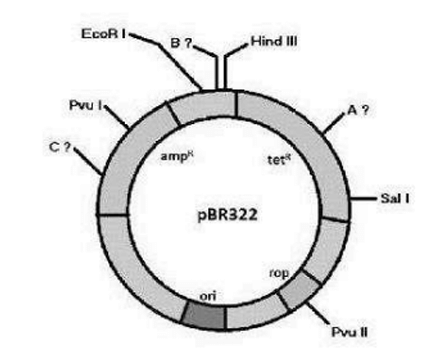
Identify the missing restriction sites (A, B, and C) in the given E. coli cloning vector pBR322.
1
A - BamHI; B - ClaI; C - PstI
2
A - PstI; B - ClaI; C - HindII
3
A - BamHI; B - HindIII; C - ClaI
4
A - ClaI; B - PstI; C - BamHI
Official Solution
Correct Option:
(1)
To determine the missing restriction sites in the E. coli cloning vector pBR322, we need to understand the typical layout and restriction sites present in this commonly used vector. pBR322 contains multiple cloning sites for efficient insertion of foreign DNA.
Key Restriction Sites in pBR322:
BamHI: Typically located in the tetracycline resistance gene region.
ClaI: Commonly found near the replication origin.
PstI: Generally positioned in the ampicillin resistance gene region.
Step-by-step Identification:
Assess position A: Based on the vector map, the site must be a restriction site that influences tetracycline resistance. In pBR322, BamHI is known to be in this area.
Assess position B: Located close to the replication origin, which is a common spot for ClaI.
Assess position C: Situated within the ampicillin resistance region where PstI is usually found.
Thus, correlating the standard locations of these restriction enzymes within pBR322 verifies that the correct sequence of restriction sites is A - BamHI; B - ClaI; C - PstI.
About Expression Vectors - CUET-UG
Expression Vectors is a vital chapter for CUET-UG aspirants. Mastering the concepts covered in this chapter is essential for securing a top rank.
By rigorously practicing the previous year questions associated with this chapter, you can identify high-yield topics, understand the examiner's perspective, and boost your confidence during the actual exam.
Frequently Asked Questions
Why focus on Expression Vectors PYQs?
Analyzing PYQs for this specific chapter reveals the most frequently tested concepts and the typical complexity of questions, allowing you to tailor your study plan efficiently.
How to best use this analysis?
Review the topic breakdown to see which sub-topics within Expression Vectors carry the most weight. Then, tackle the questions iteratively to solidify your understanding.