Geomorphology
23 previous year questions.
High-Yield Trend
Chapter Questions 23 MCQs
Group I
P. Dissolution
Q. Abrasion
R. Deposition
S. Onion skin weathering
Group II
1. Mushroom rocks
2. Exfoliation domes
3. Sinkholes
4. Moraines
P-3, Q-1, R-2, S-4
P-3, Q-1, R-4, S-2
P-2, Q-1, R-4, S-3
Match the geomorphic features in Group I with corresponding environments in Group II.
| Group I | Group II |
|---|---|
| P. Eskers | 1. Beach |
| Q. Natural levee | 2. Volcanic |
| R. Chenier ridge | 3. Glacial |
| S. Plug dome | 4. Fluvial |
Match the landform in Group I with the corresponding geological process in Group II.
In a structurally controlled fluvial setting, an asymmetric flight of river terraces T1, T2, and T3 shown in the figure was sampled at location L1. The age of the sample at L1 was 30 ka (kiloyears). Assuming that the terraces were formed entirely due to deformation-related uplift, the average uplift rate in the past 30 ka in the region was ________ mm/yr. (Answer in integer.) 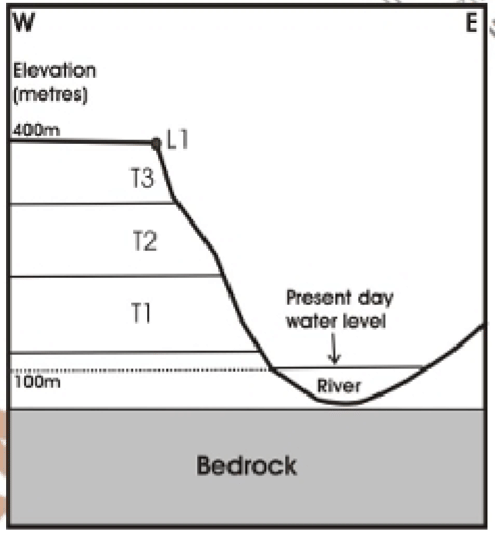
Group I Group II
P. Aeolian 1. Drumlin
Q. Glacial 2. Tombolo
R. Fluvial 3. Yardang
S. Coastal 4. Natural levee
| Group I | Group II | ||
| P | Cirque | 1 | Fluvial |
| Q | Ventifact | 2 | Glacial |
| R | Point bar | 3 | Volcanic |
| S | Tephra | 4 | Aeolian |
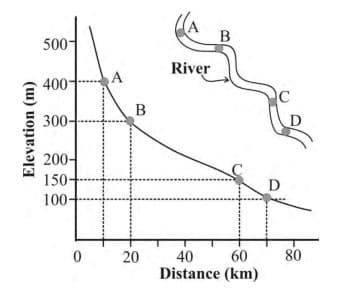
(Use g = 10 m/s2, Pwater = 1000 kg/m3)
| Column-I | Column-II | ||
| P. | Wind | 1. | Backswamp |
| Q. | Groundwater | 2. | Yardang |
| R. | Glacier | 3. | Doline |
| S. | River | 4. | Drumlin |
| Group I | Group II |
| P. Dreikanter | 1. Glacial |
| Q. Cirque | 2. Beach |
| R. Natural levee | 3. Eolian |
| S. Berm | 4. Fluvial |
About Geomorphology - IIT-JAM-GG
Geomorphology is a vital chapter for IIT-JAM-GG aspirants. Mastering the concepts covered in this chapter is essential for securing a top rank.
By rigorously practicing the previous year questions associated with this chapter, you can identify high-yield topics, understand the examiner's perspective, and boost your confidence during the actual exam.
Frequently Asked Questions
Why focus on Geomorphology PYQs?
Analyzing PYQs for this specific chapter reveals the most frequently tested concepts and the typical complexity of questions, allowing you to tailor your study plan efficiently.
How to best use this analysis?
Review the topic breakdown to see which sub-topics within Geomorphology carry the most weight. Then, tackle the questions iteratively to solidify your understanding.