IIT-JAM-GG SERIES
Geology

Sedimentology

14 previous year questions.

Volume: 14 Ques
Yield: Medium

High-Yield Trend

2
2021
4
2020
1
2019
3
2018
4
2017

Chapter Questions
14 MCQs

01
PYQ 2017
medium
geology ID: iit-jam-
Which one of the following primary sedimentary structures is NOT used for palaeocurrent analysis?
1
Current crescent
2
Flute marks
3
Symmetrical wave ripples
4
Imbrication of pebbles
02
PYQ 2017
medium
geology ID: iit-jam-

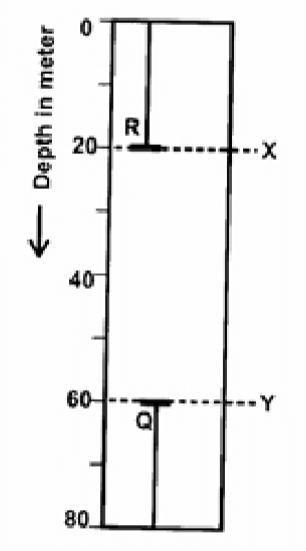
In a sedimentary succession shown in the figure, the last occurrence of the fossil species Q (dated 50 Ma) and the first occurrence of the fossil species R (dated 30 Ma) are recorded at Y and X, respectively. The estimated rate of sedimentation is (assume constant rate of sedimentation).
03
PYQ 2017
medium
geology ID: iit-jam-

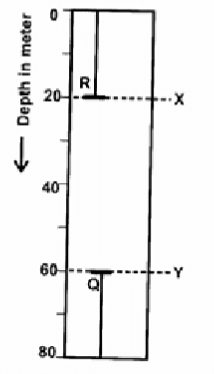
In a sedimentary succession shown in the figure, the last occurrence of the fossil species Q (dated 50 Ma) and the first occurrence of the fossil species R (dated 30 Ma) are recorded at Y and X, respectively. The estimated rate of sedimentation is (assume constant rate of sedimentation).
04
PYQ 2017
medium
geology ID: iit-jam-
Which one of the following primary sedimentary structures is NOT used for palaeocurrent analysis?
1
Current crescent
2
Flute marks
3
Symmetrical wave ripples
4
Imbrication of pebbles
05
PYQ 2018
medium
geology ID: iit-jam-
A continuous 10 m thick sequence of shale was deposited in 10,000 years at uniform rate of sedimentation. The number of samples that must be collected at equal stratigraphic intervals to sample the succession every 500 years is .............. .
06
PYQ 2018
medium
geology ID: iit-jam-
Conglomerates are commonly deposited in
1
aeolian dunes
2
tidal flats
3
alluvial fans
4
river flood plains
07
PYQ 2018
medium
geology ID: iit-jam-
Fissility is best shown by
1
sandstone
2
siltstone
3
shale
4
limestone
08
PYQ 2019
medium
geology ID: iit-jam-
Turbidites commonly form in
1
fluvial environment
2
deep marine environment
3
tidal flat environment
4
beach environment
09
PYQ 2020
medium
geology ID: iit-jam-

From the data shown in the table, the weighted mean size (in micrometer, correct to two decimal places) of the sediment population is ............

10
PYQ 2020
medium
geology ID: iit-jam-
In clastic sediments, the correct order of decreasing grain size is
1
Boulder > pebble > silt > sand
2
Granule > pebble > clay > silt
3
Cobble > granule > silt > clay
4
Granule > pebble > sand > silt
11
PYQ 2020
medium
geology ID: iit-jam-

Match the primary sedimentary structure in Group I with the corresponding process of formation in Group II.

1
P-1, Q-2, R-3, S-4
2
P-2, Q-3, R-1, S-4
3
P-1, Q-4, R-3, S-2
4
P-2, Q-4, R-1, S-3
12
PYQ 2020
medium
geology ID: iit-jam-
Find out the correct statement(s).
1
Authigenic minerals form during diagenesis of sandstone.
2
Heavy minerals in sandstone are good indicators of provenance.
3
An arkose is mineralogically more mature than a quartz arenite.
4
Matrix in sandstone may form by post-depositional infiltration and/or authigenic filling.
13
PYQ 2021
medium
geology ID: iit-jam-
A marine organic-rich, black shale with tiny pyrite crystals shows complete absence of body or trace fossils. Which of the following statement(s) is/are TRUE?
1
The sediments were deposited in low-energy conditions.
2
The deposition took place in dysoxic to anoxic conditions.
3
The rate of sedimentation was high.
4
The environment was stressful for survival of living organisms.
14
PYQ 2021
medium
geology ID: iit-jam-
Following are the statements regarding types of sandstone as per Pettijohn’s classification. Which is/are the CORRECT statement(s) out of the following?
1
Arkose contains more than 25% feldspar.
2
Greywacke contains more than 90% matrix.
3
Litharenite contains more than 25% lithic fragment.
4
Quartz arenite contains more than 95% quartz.