______ hormone is responsible for efflux of K ions from guard cells and acts as an antitranspirant.
1
Gibberellins
2
Cytokinin
3
Ethylene
4
Abscisic acid
Official Solution
Correct Option: (4)
The question asks which hormone is responsible for the efflux of K ions from guard cells and acts as an antitranspirant. Letβs analyze the options and determine the correct answer.
Gibberellins: Gibberellins are a group of plant hormones that primarily promote growth and influence various developmental processes like seed germination, stem elongation, and flowering. They are not involved in the efflux of K ions from guard cells.
Cytokinin: Cytokinins are plant hormones that promote cell division, delay leaf senescence, and are generally involved in promoting cell growth and differentiation. They do not play a role in the efflux of K ions from guard cells or act as antitranspirants.
Ethylene: Ethylene is a gaseous hormone that regulates fruit ripening, leaf abscission, and flower wilting. It does not manage the efflux of K ions from guard cells.
Abscisic Acid (ABA): Abscisic acid is a plant hormone known for its role in stress responses. It helps the plant close stomata by influencing the efflux of K ions from guard cells, thereby reducing water loss through transpiration. This is why ABA is often considered an antitranspirant.
Based on these explanations, the correct answer is Abscisic Acid. Abscisic acid plays a crucial role in the water stress response and is responsible for signaling the efflux of K ions from guard cells to aid in the closing of stomata, thereby acting as an antitranspirant by reducing water loss.
02
PYQ 2022
medium
biologyID: maharash
Describe hormonal control in various phases of menstrual cycle.
Official Solution
Correct Option: (1)
The menstrual cycle (~28 days) is regulated by hormones across four phases:
1. Menstrual phase (Days 1β5): Low estrogen and progesterone (due to corpus luteum degeneration) cause uterine lining (endometrium) shedding. Follicle-stimulating hormone (FSH) from the pituitary begins stimulating follicle growth.
2. Follicular phase (Days 1β13): FSH promotes ovarian follicle development, which secretes estrogen. Estrogen thickens the endometrium and triggers a luteinizing hormone (LH) surge.
3. Ovulatory phase (Day 14): LH surge induces ovulation (egg release from the mature follicle). Estrogen peaks, and the follicle transforms into the corpus luteum.
4. Luteal phase (Days 15β28): Corpus luteum secretes progesterone and some estrogen, maintaining the endometrium for potential implantation. If no pregnancy occurs, the corpus luteum degenerates, hormone levels drop, triggering menstruation.
03
PYQ 2022
medium
biologyID: maharash
While playing cricket Raju faces problem of severe pain and heaviness in the chest. Pain spreads from neck, lower jaw, left arm and to left shoulder. From above symptoms identify disease ______.
1
Malaria
2
Angina pectoris
3
Kidney failure
4
Typhoid
Official Solution
Correct Option: (2)
Step 1: The symptomsβsevere chest pain, heaviness, and pain radiating to the neck, jaw, left arm, and shoulderβare characteristic of angina pectoris, caused by reduced blood flow to the heart muscle. Step 2: Malaria causes fever and chills, kidney failure leads to swelling and fatigue, and typhoid involves fever and abdominal pain, none matching the described symptoms.
04
PYQ 2022
medium
biologyID: maharash
______ layer is in close contact of CNS in human being.
1
Cranium
2
Dura mater
3
Arachnoid mater
4
Pia mater
Official Solution
Correct Option: (4)
Step 1: The central nervous system (CNS) is covered by three meninges: dura mater (outermost), arachnoid mater (middle), and pia mater (innermost). The pia mater is in direct contact with the brain and spinal cord. Step 2: The cranium is the skull, not a meningeal layer, while dura and arachnoid mater are farther from the CNS surface.
05
PYQ 2022
medium
biologyID: maharash
Which is the primary precursor of IAA in plants?
Official Solution
Correct Option: (1)
Indole-3-acetic acid (IAA), the primary auxin, is biosynthesized mainly from the amino acid tryptophan via the indole-3-pyruvic acid pathway in plants. Tryptophan is converted to indole-3-acetaldoxime or directly to indole-3-pyruvate, leading to IAA.
06
PYQ 2022
medium
biologyID: maharash
Give the causative agent, mode of transmission and symptoms of typhoid.
Official Solution
Correct Option: (1)
Causative Agent: Salmonella typhi, a gram-negative bacillus. Mode of Transmission: - Fecal-oral route, primarily through contaminated food or water.
- Carriers (e.g., asymptomatic individuals) spread the bacteria. Symptoms: - Sustained high fever (39β40Β°C).
- Abdominal pain, constipation, or diarrhea.
- Weakness, fatigue, and loss of appetite.
- Rose spots (rash on abdomen/chest).
- Headache and possible intestinal perforation in severe cases.
07
PYQ 2022
medium
biologyID: maharash
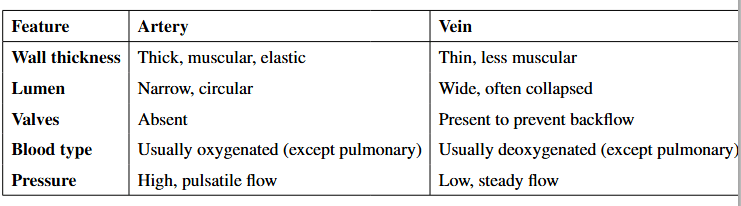
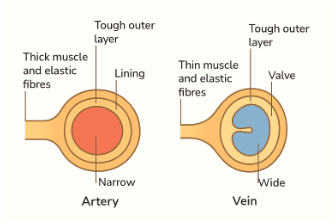
With the help of neat and labelled diagrams, distinguish between artery and vein.
Official Solution
Correct Option: (1)
Diagram:
08
PYQ 2022
medium
biologyID: maharash
Describe physiological effect and applications of gaseous hormone in plants.
Official Solution
Correct Option: (1)
Step 1: Physiological Effects of Ethylene: Ethylene, the gaseous plant hormone, influences:
1. Fruit ripening: Triggers ripening by inducing gene expression for enzymes like pectinase, softening fruits (e.g., bananas).
2. Senescence: Promotes leaf and flower senescence, abscission of leaves/fruits.
3. Stress response: Enhances responses to wounding, flooding, or pathogen attack (e.g., aerenchyma formation in roots).
4. Growth regulation: Inhibits stem elongation, promotes lateral swelling, and induces epinasty (leaf drooping). Step 2: Applications: 1. Controlled fruit ripening (e.g., ethylene gas for bananas in storage).
2. Preventing premature abscission in crops (e.g., cherries).
3. Inducing flowering in pineapples for synchronized harvests.
4. Enhancing senescence for easier harvesting (e.g., cotton defoliation).
09
PYQ 2022
medium
biologyID: maharash
Complete the following flow diagram of double circulation:
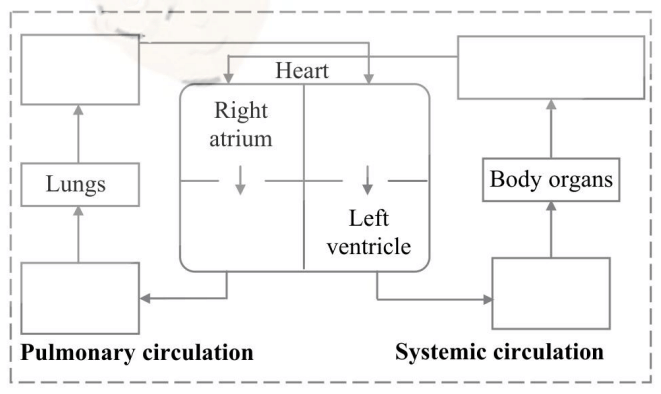
Official Solution
Correct Option: (1)
Step 1: Double circulation in mammals involves two circuits:
- Pulmonary circulation: Deoxygenated blood from the heart to lungs and back.
- Systemic circulation: Oxygenated blood from the heart to body organs and back. Step 2: Completed Flow Diagram:
- Deoxygenated blood enters the right atrium, moves to the right ventricle, and is pumped to the lungs for oxygenation.
- Oxygenated blood returns to the left atrium, flows to the left ventricle, and is pumped to body organs.
- Deoxygenated blood from organs returns to the right atrium.
10
PYQ 2022
medium
biologyID: maharash
Distinguish between hyperthyroidism and hypothyroidism.
Official Solution
Correct Option: (1)
11
PYQ 2022
medium
biologyID: maharash
Enlist the characteristics of Neanderthal Man.
Official Solution
Correct Option: (1)
Neanderthal Man (Homo neanderthalensis) characteristics:
1. Robust skeletal structure with thick bones and muscular build.
2. Prominent supraorbital brow ridges and sloping forehead.
3. Large cranial capacity (~1500 cmΒ³), comparable to modern humans.
4. Short stature (~1.5β1.7 m) and wide pelvis.
5. Advanced tool-making (Mousterian tools) and use of fire.
6. Evidence of burial practices, art, and possible language ability.
7. Adapted to cold climates, with large nasal cavities for air warming.
12
PYQ 2022
medium
biologyID: maharash
A person met with a small accident and bleeds, but very soon stops bleeding. Explain the physiological process responsible for this.
Official Solution
Correct Option: (1)
Step 1: Hemostasis is the physiological process that stops bleeding. It involves three stages:
1. Vascular spasm: Blood vessels constrict to reduce blood flow at the injury site.
2. Platelet plug formation: Platelets adhere to the damaged endothelium, releasing chemicals (e.g., ADP, thromboxane) to attract more platelets, forming a temporary plug.
3. Coagulation: A cascade of clotting factors (e.g., thrombin converts fibrinogen to fibrin) forms a stable fibrin clot, sealing the wound. Step 2: For a small injury, the process is rapid, with the clot reinforced by fibrin within minutes, stopping bleeding. The clot later retracts, and tissue repair begins.
13
PYQ 2022
medium
biologyID: maharash
Abscissic acid is the common name given to two identical substances isolated separately. Name them. Give the chemical features of abscissic acid.
Official Solution
Correct Option: (1)
Step 1: Abscissic acid (ABA) was independently isolated as two substances:
- Abscisin II: Isolated from cotton bolls, linked to abscission.
- Dormin: Isolated from sycamore leaves, associated with dormancy. Step 2: Chemical features of ABA:
- A sesquiterpenoid with a 15-carbon skeleton (C15H20O4).
- Contains a carboxylic acid group, contributing to its acidity.
- Features a cyclohexene ring with a keto group and conjugated double bonds.
- Has a side chain with a double bond and methyl groups, conferring stereospecificity (S-(+)-ABA is the active form).
14
PYQ 2022
medium
biologyID: maharash
Identify A, B, C, D, in the given diagram of human reproductive system:
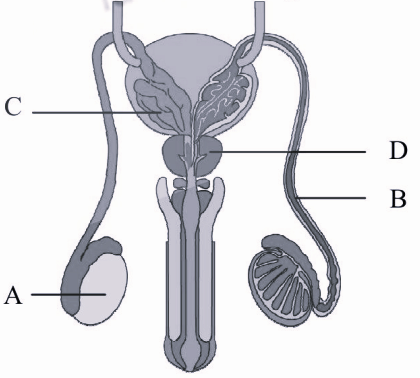
Official Solution
Correct Option: (1)
Step 1: The human male reproductive system diagram typically includes key structures. Assuming a standard labeled diagram:
- A (Testis): Paired organs in the scrotum, responsible for sperm production and testosterone secretion.
- B (Vas deferens): Tube transporting sperm from the epididymis to the urethra.
- C (Prostate gland): Gland below the bladder, secreting seminal fluid to nourish sperm.
- D (Penis): External organ for sperm delivery and urination. Step 2: Without the specific diagram, these are standard labels for a male reproductive system. If the diagram is female, please specify for adjustments (e.g., A: Ovary, B: Fallopian tube, etc.).
15
PYQ 2023
medium
biologyID: maharash
Complete the following box with reference to symptoms of mineral deficiency:
Abscission: Pre-mature fall of flowers, fruits and leaves
______: Appearance of green and non-green patches on leaves
Official Solution
Correct Option: (1)
Necrosis refers to the death of leaf tissues, often appearing as green and non-green patches due to mineral deficiencies (e.g., calcium or potassium). Abscission is premature shedding linked to deficiencies like boron.
16
PYQ 2023
medium
biologyID: maharash
Give reason β ABA is also known as antitranspirant.
Explain the role of chlorophyllase enzyme in banana.
Official Solution
Correct Option: (1)
i. Reason: Abscisic acid (ABA) is called an antitranspirant because it induces stomatal closure, reducing water loss through transpiration, especially under water stress conditions. ii. Role of Chlorophyllase: Chlorophyllase in bananas catalyzes the breakdown of chlorophyll into chlorophyllide and phytol during ripening, leading to the yellowing of the fruit as chloroplasts convert to chromoplasts. Answer: i. ABA reduces transpiration; ii. Chlorophyllase degrades chlorophyll during banana ripening.
17
PYQ 2023
medium
biologyID: maharash
Which of the following is the only gaseous plant growth regulator?
1
ABA
2
Cytokinin
3
Ethylene
4
Gibberellin
Official Solution
Correct Option: (3)
Ethylene is a gaseous plant hormone that regulates processes like fruit ripening and senescence. ABA, cytokinin, and gibberellin are not gases; they are typically solid or liquid compounds. Answer: Ethylene.
18
PYQ 2023
medium
biologyID: maharash
In Hamburgerβs phenomenon,.........
1
Clβ» diffuse into WBCs
2
Clβ» diffuse into RBCs
3
NaβΊ diffuse into RBCs
4
NaβΊ diffuse into WBCs
Official Solution
Correct Option: (2)
Step 1: Understanding Hamburger's phenomenon.
Hamburger's phenomenon refers to the exchange of ions between red blood cells (RBCs) and the surrounding plasma. Specifically, chloride ions (Clβ») diffuse into RBCs while bicarbonate ions diffuse out to maintain ionic balance. Step 2: Analyzing the options. (1) Clβ» diffuse into WBCs: Incorrect. Clβ» diffuses into RBCs, not WBCs. (2) Clβ» diffuse into RBCs: Correct. This is the correct description of Hamburgerβs phenomenon. (3) NaβΊ diffuse into RBCs: Incorrect. Sodium ions (NaβΊ) do not play a major role in Hamburger's phenomenon. (4) NaβΊ diffuse into WBCs: Incorrect. Sodium ions do not diffuse into WBCs in this context. Step 3: Conclusion.
The correct answer is (2) Clβ» diffuse into RBCs, as this is the essence of Hamburger's phenomenon.
19
PYQ 2023
medium
biologyID: maharash
Give reason β Water acts as thermal buffer.
Official Solution
Correct Option: (1)
Step 1: Understanding Water's Role as a Thermal Buffer.
Water has a high specific heat capacity, meaning it can absorb or release a large amount of heat with a small change in temperature. This property allows water to regulate temperature and act as a thermal buffer, stabilizing temperature in both living organisms and the environment. Step 2: Conclusion.
Waterβs high specific heat capacity helps in maintaining temperature stability, making it an effective thermal buffer. ii. Draw a neat and proportionate diagram of root hair and label mitochondria, nucleus, and vacuole. Solution: Unfortunately, I cannot directly draw diagrams in this text format. However, you can follow these steps to draw the diagram of a root hair: Step 1: Diagram Components.
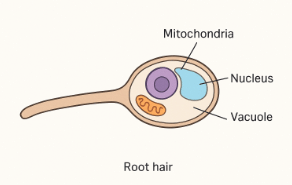
- Draw an elongated structure to represent the root hair.
- Label the cell wall surrounding the root hair.
- Draw a central large vacuole and label it.
- Draw a small oval-shaped structure to represent the nucleus and label it.
- Label the mitochondria, which are scattered in the cytoplasm, responsible for energy production. Step 2: Conclusion.
The diagram should clearly show the root hair structure with labels for the mitochondria, nucleus, and vacuole.
20
PYQ 2023
medium
biologyID: maharash
Draw a neat diagram of the conducting system of human heart and label AV node, Bundle of His, and Purkinje fibres.
Official Solution
Correct Option: (1)
Unfortunately, I cannot directly draw diagrams in this text format. However, you can follow these steps to draw the diagram of the human heart's conducting system: Step 1: Drawing the human heart.
Start by drawing a simple outline of the heart with the right and left atria, and ventricles. Step 2: Labeling the conducting system.
- Label the Sinoatrial (SA) node at the top of the right atrium.
- Label the Atrioventricular (AV) node near the junction of the atria and ventricles.
- Draw the Bundle of His coming from the AV node, and label it.
- Label the Purkinje fibres extending into the walls of the ventricles. Step 3: Conclusion.
The conducting system of the heart allows electrical signals to coordinate the heartbeat.
21
PYQ 2023
medium
biologyID: maharash
Differentiate between sympathetic and parasympathetic nervous system with reference to the following: a. Pre and post ganglionic nerve fibres.
Official Solution
Correct Option: (1)
Step 1: Understanding the Nervous Systems.
The sympathetic and parasympathetic nervous systems are part of the autonomic nervous system, which controls involuntary functions. Both systems have pre- and post-ganglionic fibres that transmit signals from the central nervous system to various organs. - Sympathetic Nervous System: The pre-ganglionic fibres are short, and the post-ganglionic fibres are long. The ganglia are located near the spinal cord.
- Parasympathetic Nervous System: The pre-ganglionic fibres are long, and the post-ganglionic fibres are short. The ganglia are located near or within the target organs. Step 2: Conclusion.
The main difference lies in the length of the pre- and post-ganglionic fibres and the location of the ganglia. The sympathetic system has short pre-ganglionic and long post-ganglionic fibres, whereas the parasympathetic system has long pre-ganglionic and short post-ganglionic fibres. b. Effect on heart beat. Solution: Step 1: Effect on Heartbeat.
The sympathetic and parasympathetic nervous systems have opposite effects on the heart.
- Sympathetic Nervous System: It increases the heart rate by releasing norepinephrine, which stimulates the heart.
- Parasympathetic Nervous System: It decreases the heart rate by releasing acetylcholine, which slows down the heart. Step 2: Conclusion.
The sympathetic nervous system increases heart rate, while the parasympathetic nervous system decreases heart rate.
22
PYQ 2023
medium
biologyID: maharash
Give an example of a plant having both kidney and dumb-bell shaped guard cells in stomata.
Official Solution
Correct Option: (1)
Step 1: Understanding the structure of guard cells.
Guard cells control the opening and closing of stomata, with different shapes depending on the plant species. Some plants, such as grasses, have kidney-shaped guard cells, while others, such as dicots, can have dumb-bell shaped guard cells. Step 2: Example.
An example of a plant with both kidney and dumb-bell shaped guard cells in its stomata is "wheat," which exhibits both types of guard cells depending on environmental factors and the plant's developmental stage. Step 3: Conclusion.
Wheat (Triticum aestivum) is an example of a plant that has both kidney-shaped and dumb-bell shaped guard cells.
23
PYQ 2023
medium
biologyID: maharash
Give reason - ABA is also known as an antitranspirant.
Official Solution
Correct Option: (1)
Step 1: Understanding ABA.
Abscisic acid (ABA) is a plant hormone that plays a significant role in stress responses. It is often called an antitranspirant because it helps to reduce water loss by closing stomata, preventing excessive transpiration under drought conditions. Step 2: Conclusion.
ABA helps to minimize water loss in plants, making it an antitranspirant during times of water stress. ii. Explain the role of chlorophyllase enzyme in banana. Solution: Step 1: Understanding the role of chlorophyllase.
Chlorophyllase is an enzyme that plays a crucial role in the degradation of chlorophyll. In bananas, this enzyme is involved in the breakdown of chlorophyll during the ripening process. As chlorophyll is broken down, the banana changes from green to yellow, indicating ripening. Step 2: Conclusion.
Chlorophyllase facilitates the breakdown of chlorophyll, contributing to the color change in bananas as they ripen.
24
PYQ 2023
medium
biologyID: maharash
Define β Imbibition
Official Solution
Correct Option: (1)
Step 1: Definition of Imbibition.
Imbibition is the process in which water is absorbed by solid or porous materials, such as seeds or dry wood, causing them to swell. It is a passive process and occurs due to the affinity of the substance for water. Step 2: Conclusion.
Imbibition is the absorption of water by materials, particularly in seeds, leading to their rehydration and germination. ii. Explain how imbibition helps root hairs in the adsorption of water. Solution: Step 1: Role of Imbibition in Root Hairs.
Imbibition is essential for root hairs as they absorb water from the soil. The root hairs are in contact with water in the soil, and imbibition allows them to absorb the water efficiently. The swelling of the root hair cells facilitates the movement of water into the plant. Step 2: Conclusion.
Imbibition helps root hairs by enabling them to absorb water from the soil, facilitating plant growth and nutrient uptake.
25
PYQ 2023
medium
biologyID: maharash
Identify the INCORRECT statement.
1
In a flaccid cell, T.P. is zero
2
In a turgid cell, DPD is zero
3
In a fully turgid cell, TP = OP
4
Water potential of pure water is negative
Official Solution
Correct Option: (4)
Step 1: Understanding water potential.
Water potential is the potential energy of water in a system. In pure water, the water potential is zero because it has no solute or pressure gradient. Step 2: Analyzing the options. (1) In a flaccid cell, T.P. is zero: Correct. Turgor pressure (T.P.) is zero in a flaccid cell. (2) In a turgid cell, DPD is zero: Correct. In a turgid cell, the pressure potential (DPD) is zero. (3) In a fully turgid cell, TP = OP: Correct. In a fully turgid cell, turgor pressure equals osmotic pressure. (4) Water potential of pure water is negative: Incorrect. The water potential of pure water is zero, not negative. Step 3: Conclusion.
The correct answer is (4) Water potential of pure water is negative, which is incorrect. The water potential of pure water is zero.
26
PYQ 2023
medium
biologyID: maharash
Give reason β Water acts as thermal buffer.
Draw a neat and proportionate diagram of root hair and label mitochondria, nucleus, and vacuole.
Official Solution
Correct Option: (1)
i. Reason: Water has a high specific heat capacity, allowing it to absorb and release large amounts of heat with minimal temperature change, stabilizing environmental and organismal temperatures. ii. Diagram: a neat and proportio.png Answer: i. High specific heat stabilizes temperature; ii. Diagram labels Nucleus, Vacuole, Mitochondria.
27
PYQ 2023
medium
biologyID: maharash
Name the hormone which is responsible for apical dominance.
iA farmer wants to remove broad-leaved weeds from the jowar plantation in his field. Suggest any plant hormone to remove such weeds.
iiMention any two applications of cytokinin.
Official Solution
Correct Option: (1)
i. Hormone: Auxin (e.g., IAA) is responsible for apical dominance, inhibiting lateral bud growth. ii. Hormone for Weeds: 2,4-D (synthetic auxin) selectively kills broad-leaved weeds without harming monocots like jowar. iii. Applications of Cytokinin: 1. Promotes cell division in tissue culture. 2. Delays senescence in leaves. Answer: i. Auxin; ii. 2,4-D; iii. Cell division, delays senescence.
28
PYQ 2023
medium
biologyID: maharash
Define β Imbibition
Explain how imbibition helps root hairs in adsorption of water.
Official Solution
Correct Option: (1)
Imbibition: The process by which dry colloidal substances (e.g., cell walls, proteins) absorb water, causing swelling due to their affinity for water molecules. ii. Role in Root Hairs: Root hair cell walls, rich in cellulose, imbibe water, creating a water potential gradient. This facilitates water adsorption into root hairs, aiding absorption from soil to root cells. Answer: i. Imbibition is water absorption by colloids; ii. It drives water uptake in root hairs via cell wall swelling.
29
PYQ 2025
medium
biologyID: maharash
What are the limitations of root pressure theory?
Official Solution
Correct Option: (1)
The root pressure theory suggests that a positive hydrostatic pressure generated in the roots can push water up the xylem. While root pressure does exist, it has several limitations as the primary mechanism for water transport in plants:
Insufficient Force: The magnitude of root pressure is typically low (around 1-2 atmospheres), which is only enough to push water up a few meters. It cannot account for the ascent of sap in tall trees, which can exceed 100 meters in height. Not a Universal Phenomenon: Root pressure is not observed in all plants. For example, gymnosperms and many other tall trees do not generate any significant root pressure. Absent During Active Transpiration: Root pressure is highest at night or in conditions of high humidity when transpiration is low. During the day, when water demand is highest due to active transpiration, the water column in the xylem is under tension (negative pressure), not positive pressure. Slow Rate: The rate of water movement attributed to root pressure is much slower than the actual rates measured in the stems of actively transpiring plants.
Therefore, while root pressure can explain guttation (exudation of water droplets from leaf margins) in small herbaceous plants, the main driving force for water movement over long distances is the cohesion-tension or transpiration pull theory.
30
PYQ 2025
medium
biologyID: maharash
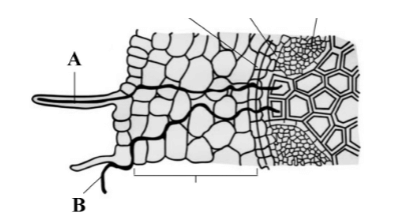
Identify and define 'A' and 'B' in relation to uptake of water by the root :
Official Solution
Correct Option: (1)
The image shows two pathways for water uptake by a plant root.
A is the Apoplast Pathway: This is the pathway where water moves from the root hair to the xylem through the non-living parts of the rootβthe intercellular spaces and the cell walls. This pathway is blocked by the Casparian strip in the endodermis, forcing water to enter the symplast. B is the Symplast Pathway: This is the pathway where water moves through the living parts of the cellsβthe cytoplasm and plasmodesmata (cytoplasmic channels connecting adjacent cells). Water enters the cytoplasm of a root hair cell and moves from cell to cell through the plasmodesmata, crossing the cortex and endodermis to reach the xylem.
31
PYQ 2025
medium
biologyID: maharash
Explain factors affecting water absorption.
Official Solution
Correct Option: (1)
The rate of water absorption by plant roots is affected by several external and internal factors:
Available Soil Water: The primary source of water for plants is capillary water in the soil. If the soil has too little water (below the wilting point) or is waterlogged (displacing soil oxygen), absorption rates will be low. Soil Temperature: The optimal temperature for water absorption is typically between 20Β°C and 30Β°C. Low temperatures decrease the permeability of the root cell membranes and increase the viscosity of water, slowing down absorption. Soil Aeration: Root cells need oxygen for respiration to provide the energy needed for active transport of minerals, which in turn facilitates water absorption by osmosis. Poorly aerated or waterlogged soils lack sufficient oxygen, thus hindering water uptake. Concentration of Soil Solution: If the soil solution is highly concentrated with salts (hypertonic), the water potential gradient between the soil and the root cells is reduced or even reversed, making it difficult for the roots to absorb water. Rate of Transpiration: A high rate of transpiration creates a strong tension or "pull" on the water column in the xylem (transpirational pull). This is the main driving force for passive water absorption by the roots.