Neural Control And Coordination
15 previous year questions.
High-Yield Trend
Chapter Questions 15 MCQs
The center of the posterior portion of the retina is called the macula lutea.
The site of the retina where the optic nerve exits the eye is called the blind spot.
Cones contain a visual pigment called iodopsin.
Rods contain a protein called rhodopsin.
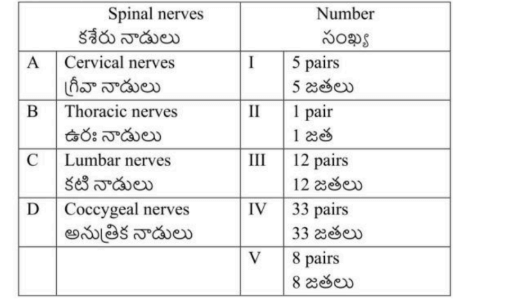
Statement-I: Salmon and Hilsa are catadromous fishes.
Statement-II: In limnetic zone rate of photosynthesis and rate of respiration are almost equal.
The correct answer is
I. Corvus splendens
II. Panthera tigris
III. Oryctolagus cuniculus
IV. Antelope cervicapra
V. Loris tardigradus
VI. Macaca mullata
Statement-I: When compared to UV-A rays, UV-B and UV-C rays are more harmful to organisms
Statement-II: Oriented locomotor movement of an organism towards or away from the direction of light is called phototaxis
I. Foramen ovale
II. Foramen Manro
III. Foramen magnum
IV. Ductus Sylvius
V. Ductus arteriosus
VI. Metacoel
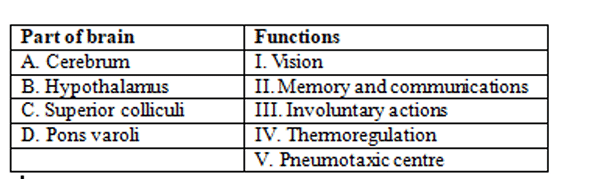
I. Sanctuary
II. Cryopreservation
III. Sacred groves
IV. Gene banks
V. National parks
VI. In-vitro culture
About Neural Control And Coordination - TS-EAMCET
Neural Control And Coordination is a vital chapter for TS-EAMCET aspirants. Mastering the concepts covered in this chapter is essential for securing a top rank.
By rigorously practicing the previous year questions associated with this chapter, you can identify high-yield topics, understand the examiner's perspective, and boost your confidence during the actual exam.
Frequently Asked Questions
Why focus on Neural Control And Coordination PYQs?
Analyzing PYQs for this specific chapter reveals the most frequently tested concepts and the typical complexity of questions, allowing you to tailor your study plan efficiently.
How to best use this analysis?
Review the topic breakdown to see which sub-topics within Neural Control And Coordination carry the most weight. Then, tackle the questions iteratively to solidify your understanding.