BITSAT SERIES
Physics

Carnot Cycle

6 previous year questions.

Volume: 6 Ques
Yield: Medium

High-Yield Trend

1
2025
1
2021
1
2017
2
2013
1
2010

Chapter Questions
6 MCQs

01
PYQ 2010
medium
physics ID: bitsat-2
An ideal refrigerator has a freezer at a temperature of 130C. The coefficient of performance of the engine is 5. The temperature of the air (to which heat is rejected) is
1
320C
2
39C
3
325K
4
325C
02
PYQ 2013
medium
physics ID: bitsat-2
A Carnot's heat engine works between the temperatures and . What amount of heat should it consume per second to deliver mechanical work at the rate of ?
1
0.417 kcal/s
2
4.17 kcal /s
3
41.7 kcal/s
4
0.212 kcal/s
03
PYQ 2013
medium
physics ID: bitsat-2
A Carnot's heat engine works between the temperatures 427°C and 27°C. What amount of heat should it consume per second to deliver mechanical work at the rate of 1.0 kW?
1
0.417 kcal/s
2
1.3 kcal/s
3
18.1 kcal/s
4
0.212 kcal/s
04
PYQ 2017
medium
physics ID: bitsat-2

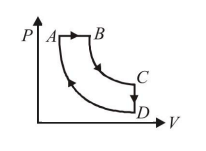
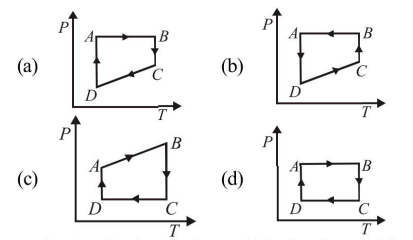
A cyclic process ABCD is shown in the P–V diagram. Which of the following curves represent the same process? 


1
Option a
2
Option b
3
Option c
4
Option d
05
PYQ 2021
hard
physics ID: bitsat-2

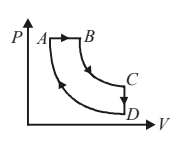
A cyclic process ABCD is shown in the figure P-V diagram. Which of the following curves represent the same process? 
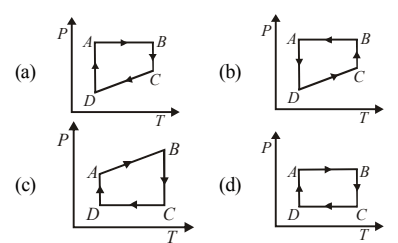

1
As shown in figure (a)
2
As shown in figure (b)
3
As shown in figure (c)
4
As shown in figure (d)
06
PYQ 2025
hard
physics ID: bitsat-2
A Carnot engine operates between temperatures of and . If it absorbs of heat from the source, how much work does it perform?
1
300 J
2
450 J
3
600 J
4
150 J

About Carnot Cycle - BITSAT

Carnot Cycle is a vital chapter for BITSAT aspirants. Mastering the concepts covered in this chapter is essential for securing a top rank.

By rigorously practicing the previous year questions associated with this chapter, you can identify high-yield topics, understand the examiner's perspective, and boost your confidence during the actual exam.

Frequently Asked Questions

Why focus on Carnot Cycle PYQs?

Analyzing PYQs for this specific chapter reveals the most frequently tested concepts and the typical complexity of questions, allowing you to tailor your study plan efficiently.

How to best use this analysis?

Review the topic breakdown to see which sub-topics within Carnot Cycle carry the most weight. Then, tackle the questions iteratively to solidify your understanding.