Kinetic Theory
21 previous year questions.
High-Yield Trend
Chapter Questions 21 MCQs
mole of an ideal gas at constant temperature is kept inside a cylinder of length and cross-sectional area , closed by a massless piston. The cylinder is attached to a conducting rod of length , cross-sectional area and thermal conductivity , whose other end is maintained at . The piston is moved such that heat flow through the conducting rod is constant. Find the velocity of the piston when it is at a height from the bottom of the cylinder. (Neglect any loss of heat from the system.) 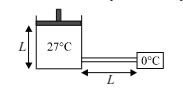
One mole of an ideal gas is taken from state A to state B by three different processes,
(i) ACB (ii) ADB (iii) AEB as shown in the P–V diagram. The heat absorbed by the gas is 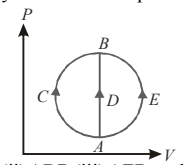
The mass of an H₂ molecule is 3.32×10⁻²⁷ kg. If 10²³ hydrogen molecules per second strike 2 cm² of a wall at an angle of 45° with the normal while moving at a speed of 10⁵ cm/s, the pressure exerted on the wall is nearly:
0.5 mole of an ideal gas at a constant temperature of 27°C is kept inside a cylinder of length L and cross-section area A, closed by a massless piston. The cylinder is attached to a conducting rod of length L, cross-section area A/19, and thermal conductivity k, whose other end is maintained at 0°C. The piston is moved such that the rate of heat flow through the rod is constant. The constant velocity of the piston when it is at height L/2 from the bottom is 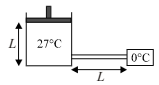
About Kinetic Theory - BITSAT
Kinetic Theory is a vital chapter for BITSAT aspirants. Mastering the concepts covered in this chapter is essential for securing a top rank.
By rigorously practicing the previous year questions associated with this chapter, you can identify high-yield topics, understand the examiner's perspective, and boost your confidence during the actual exam.
Frequently Asked Questions
Why focus on Kinetic Theory PYQs?
Analyzing PYQs for this specific chapter reveals the most frequently tested concepts and the typical complexity of questions, allowing you to tailor your study plan efficiently.
How to best use this analysis?
Review the topic breakdown to see which sub-topics within Kinetic Theory carry the most weight. Then, tackle the questions iteratively to solidify your understanding.