COMEDK-UGET SERIES
Chemistry

Chemical Reactions

6 previous year questions.

Volume: 6 Ques
Yield: Medium

High-Yield Trend

2
2023
1
2015
2
2014
1
2011

Chapter Questions
6 MCQs

01
PYQ 2011
medium
chemistry ID: comedk-u
The compound which gives hydrocarbon on distillation with zinc dust is
1
ethanol
2
benzyl alcohol
3
o-cresol
4
propyl alcohol.
02
PYQ 2014
medium
chemistry ID: comedk-u
The unstable intermediate dichlorocarbene is formed during
1
Kolbe's reaction
2
Friedel Craft's reaction
3
Williamson synthesis
4
Reimer-Tiemann reaction
03
PYQ 2014
easy
chemistry ID: comedk-u
The major product formed when alkyl iodide is treated with excess of ammonia
1
primary amine
2
secondary amine
3
tertiary amine
4
quaternary ammonium salt.
04
PYQ 2015
medium
chemistry ID: comedk-u
The correct increasing order of basic strength of following amines, in gaseous state is
1
2
3
4
05
PYQ 2023
medium
chemistry ID: comedk-u
Mg(OH) is used as an antaci(D) If a person, suffering from acidity, produces 2.5 L of Gastric juice in a day, approximately how many antacid tablets, each containing 600 mg of Mg(OH) , will be required to completely neutralize the whole HCl produced in the stomach in one day? (Gastric juice contains 3.0 g of HCl per L). (Atomic masses: Mg = 24 g/mol, O = 16 g/mol, and H = 1 g/mol.)
1
10 tablets
2
4 tablets
3
7 tablets
4
6 tablets
06
PYQ 2023
medium
chemistry ID: comedk-u

Given below are graphs showing the variation in velocity constant with temperature on the Kelvin scale. Identify the graph which represents the Arrhenius equation.
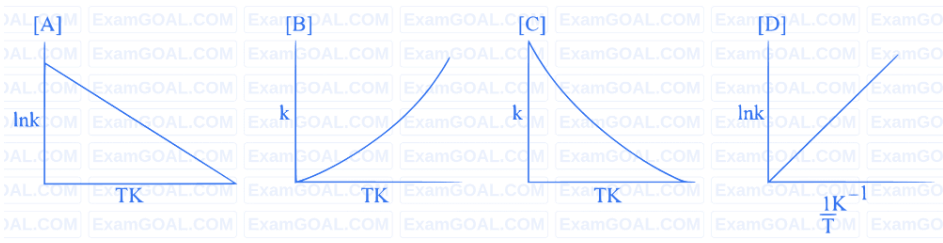
1
D
2
C
3
A
4
B

About Chemical Reactions - COMEDK-UGET

Chemical Reactions is a vital chapter for COMEDK-UGET aspirants. Mastering the concepts covered in this chapter is essential for securing a top rank.

By rigorously practicing the previous year questions associated with this chapter, you can identify high-yield topics, understand the examiner's perspective, and boost your confidence during the actual exam.

Frequently Asked Questions

Why focus on Chemical Reactions PYQs?

Analyzing PYQs for this specific chapter reveals the most frequently tested concepts and the typical complexity of questions, allowing you to tailor your study plan efficiently.

How to best use this analysis?

Review the topic breakdown to see which sub-topics within Chemical Reactions carry the most weight. Then, tackle the questions iteratively to solidify your understanding.