Food Chemistry
18 previous year questions.
High-Yield Trend
Chapter Questions 18 MCQs
(A). Sodium metasilicate
(B). Sodium tripolyphosphate
(C). Sodium decaphosphate
(D). Sodium sesquisilicate
Choose the most appropriate answer from the options given below:
Match List-I with List-II 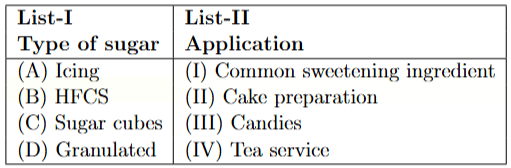
Choose the most appropriate answer from the options given below:
Match List-I with List-II 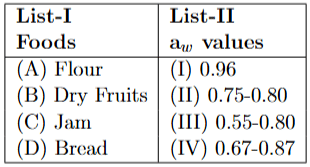
Choose the most appropriate answer from the options given below:
(A). The chain length and degree of saturation control the properties that are found within the fatty acids and lipids
(B). Fatty acids typically contain an even number of carbon atoms.
(C). The saturated acids have higher melting points than unsaturated acids of corresponding size.
Choose the most appropriate answer from the options given below:
(A). Protopectin
(B). Pectin
(C). Pectinic acid
(D). Pectic acid
Choose the most appropriate answer from the options given below:
(A). Linoleic
(B). - Linolenic
(C). Arachidonic
(D). Oleic
Choose the most appropriate answer from the options given below:
(A). Acidity
(B). Fat content
(C). Salt content
(D). Sugar
Choose the most appropriate answer from the options given below:
About Food Chemistry - CUET-PG
Food Chemistry is a vital chapter for CUET-PG aspirants. Mastering the concepts covered in this chapter is essential for securing a top rank.
By rigorously practicing the previous year questions associated with this chapter, you can identify high-yield topics, understand the examiner's perspective, and boost your confidence during the actual exam.
Frequently Asked Questions
Why focus on Food Chemistry PYQs?
Analyzing PYQs for this specific chapter reveals the most frequently tested concepts and the typical complexity of questions, allowing you to tailor your study plan efficiently.
How to best use this analysis?
Review the topic breakdown to see which sub-topics within Food Chemistry carry the most weight. Then, tackle the questions iteratively to solidify your understanding.