Ethers
6 previous year questions.
High-Yield Trend
Chapter Questions 6 MCQs
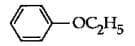
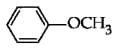
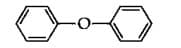
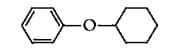
(A) Br /FeBr
(B) Mg, dry Ether
(C) CO , H O
(D) Methanol, Conc. H SO
Replacement of a hydrogen atom in a hydrocarbon by an alkoxy or carboxyl group yields a class of compounds known as ethers. Ethers are classified as symmetrical or unsymmetrical on the basis of groups attached to the oxygen atoms. Diethyl ether, a symmetrical ether, has been widely used as an inhalation anesthetic. Ethers can be prepared by acid catalyzed intermolecular dehydration of alcohols and Williamson's synthesis. Acid catalyzed dehydration of alcohols is not generally preferred as it gives a mixture of elimination and substitution products. In Williamson's synthesis, an alkyl halide is allowed to react with sodium alkoxide. Ethers containing substituted Alkyl groups may also be prepared by this method. The C-O bond in ether is weakly polar and is cleaved under drastic conditions with excess of hydrogen halides. In electrophilic substitution, the alkoxy group deactivates the aromatic ring and directs the incoming group to ortho and para positions.
About Ethers - CUET-UG
Ethers is a vital chapter for CUET-UG aspirants. Mastering the concepts covered in this chapter is essential for securing a top rank.
By rigorously practicing the previous year questions associated with this chapter, you can identify high-yield topics, understand the examiner's perspective, and boost your confidence during the actual exam.
Frequently Asked Questions
Why focus on Ethers PYQs?
Analyzing PYQs for this specific chapter reveals the most frequently tested concepts and the typical complexity of questions, allowing you to tailor your study plan efficiently.
How to best use this analysis?
Review the topic breakdown to see which sub-topics within Ethers carry the most weight. Then, tackle the questions iteratively to solidify your understanding.