CUET-UG SERIES Political-science
Reading Comprehension
15 previous year questions.
Volume: 15 Ques
Yield: Medium
High-Yield Trend
15
2023 Chapter Questions 15 MCQs
01
PYQ 2023
medium
political-science ID: cuet-ug-
What statement is correct about SAARC ?
1
SAARC began in 1986
2
SAARC is an association of East Asian Nations
3
SAARC members signed South Asian Free Trade (SAFTA) Agreement
4
SAARC is a highly successful regional organisation
02
PYQ 2023
medium
political-science ID: cuet-ug-
State the years correctly when the agreement SAFTA was signed and came into effect :-
1
2006 and 2007
2
2004 and 2005
3
2004 and 2006
4
2008 and 2009
03
PYQ 2023
medium
political-science ID: cuet-ug-
Complete the following :
SAARC has been evolved for cooperation through which of the following means
SAARC has been evolved for cooperation through which of the following means
1
Multilateral
2
Bilateral
3
Unilateral
4
Tripartite
04
PYQ 2023
medium
political-science ID: cuet-ug-
The full form of SAARC is
1
South Asian Amalgamation for Regional Cooperation
2
South Asian Association for Regional Cooperation
3
South Asian Association for Regional Cooperation
4
South Asian Association for Research and Cooperation
05
PYQ 2023
medium
political-science ID: cuet-ug-
The following agreement promised the formation of a free trade zone for the whole of South Asia
1
WTO
2
BAFTA
3
SAARC
4
SAFTA
06
PYQ 2023
easy
political-science ID: cuet-ug-
Read the passage given below to answer :
In spite of the many conflicts, the states of South Asia recognize the importance of cooperation and friendly relationship among themselves. The South Asian association for regional Cooperation (SAARC) is a major regional initiative by the South Asian states to evolve cooperation through multilateral means. It began in 1985. Unfortunately, due to persisting political differences, SAARC has not had much success. SAARC members signed the South Asian Free Trade (SAFTA) agreement which promised the formation of a free trade zone for the whole of South Asia.
The SAFTA agreement was signed in 2004 and came into effect on 1 January 2006. India thinks that there are real economic benefits for all SAFTA. Some in India think that SAFTA is not the worth the trouble since India already has bilateral agreements with Bhutan, Nepal and Sri Lanka.
In spite of the many conflicts, the states of South Asia recognize the importance of cooperation and friendly relationship among themselves. The South Asian association for regional Cooperation (SAARC) is a major regional initiative by the South Asian states to evolve cooperation through multilateral means. It began in 1985. Unfortunately, due to persisting political differences, SAARC has not had much success. SAARC members signed the South Asian Free Trade (SAFTA) agreement which promised the formation of a free trade zone for the whole of South Asia.
The SAFTA agreement was signed in 2004 and came into effect on 1 January 2006. India thinks that there are real economic benefits for all SAFTA. Some in India think that SAFTA is not the worth the trouble since India already has bilateral agreements with Bhutan, Nepal and Sri Lanka.
07
PYQ 2023
easy
political-science ID: cuet-ug-
Globalisation is a multi-dimensional concept. It has political, economic and cultural manifestations, and these must be adequate distinguished. The impact of globalisation in vastly uneven. It affects some societies more than others. It is important to avoid drawing general conclusions about the impact of globalisation without paying sufficient attention to specific contexts. Globalisation as a concept fundamentally deals with flows. These flows could be of various kinds- ideas moving from one part of the world to another, capital shunted between two or more places, commodities being traded across borders, and people moving in search of better livelihoods to different parts of the world.
08
PYQ 2023
easy
political-science ID: cuet-ug-
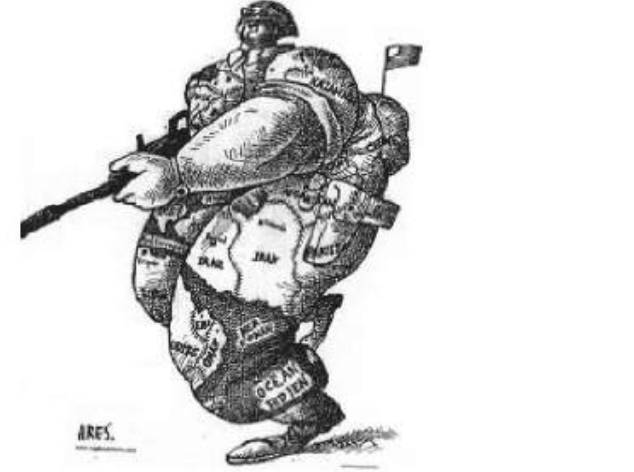
Look at the following cartoon and answer the question that follow:
09
PYQ 2023
easy
political-science ID: cuet-ug-
Read the passage and answer the following question:
In may 1977, the Janata party government appointed a commission of Inquiry headed by Justice J.C. Shah retired chief justice of the supreme court of India, to inquire into several aspects of allegations of abuse of authority, excesses and malpractices committed and action taken in the wake of the Emergency proclaimed on the 25th June 1975. The Commission examined various kind of evidence and called scores of witnesses to give testimonies. The government of India accepted the findings, obsevations and recommendations containedin the two interim reports and third and final report of the Shah Commission.
In may 1977, the Janata party government appointed a commission of Inquiry headed by Justice J.C. Shah retired chief justice of the supreme court of India, to inquire into several aspects of allegations of abuse of authority, excesses and malpractices committed and action taken in the wake of the Emergency proclaimed on the 25th June 1975. The Commission examined various kind of evidence and called scores of witnesses to give testimonies. The government of India accepted the findings, obsevations and recommendations containedin the two interim reports and third and final report of the Shah Commission.
10
PYQ 2023
easy
political-science ID: cuet-ug-
Read the paragraph given below and answer the following questions.
Shastri was the country's Prime Minister from 1964-1966. During Shastri's brief Prime Ministership, the country faced two major challenges. While India was still recovering from the economic implications of the war with China, failed monsoons, drought and serious food crisis presented a grave challenge. The country also faced a war with Pakistan in 1965. Shastri's famous slogan 'Jai Jawan Jai Kisan', symbolised the country's resolve to face both these challenges.
Shastri's Prime Ministership came to an abrupt end on 10 January 1966, when he suddenly expired in Tashkent, then in USSR and currently the capital of Uzbekistan. He was there to discuss and sign an agreement with Muhammad Ayub Khan, the then President of Pakistan, to end the war.
Shastri was the country's Prime Minister from 1964-1966. During Shastri's brief Prime Ministership, the country faced two major challenges. While India was still recovering from the economic implications of the war with China, failed monsoons, drought and serious food crisis presented a grave challenge. The country also faced a war with Pakistan in 1965. Shastri's famous slogan 'Jai Jawan Jai Kisan', symbolised the country's resolve to face both these challenges.
Shastri's Prime Ministership came to an abrupt end on 10 January 1966, when he suddenly expired in Tashkent, then in USSR and currently the capital of Uzbekistan. He was there to discuss and sign an agreement with Muhammad Ayub Khan, the then President of Pakistan, to end the war.
11
PYQ 2023
easy
political-science ID: cuet-ug-
The Indian Government is already participating in global efforts through a number of programmes. For example, India's National Auto-fuel Policy mandates cleaner fuels for vehicles. The energy Conservation Act. passed in 2001, outlines initiative to improve energy efficiency. Similarly, the Electricity Act of 2003 encourages the use of renewable energy. Recent trends in importing natural gas and encouraging the adoption of clean coal technologies show that India has been making real efforts. the Government is also keen to launch a National Mission on Biodiesel, using about 11 million hectares of land to produce biodiesel by 2011-2012. India ratified the Paris Climate Agreement on 2 October 2016. And India has one of the largest renewable energy programmes in the world.
A review of the implementation of the agreements at the Earth Summit in Rio was undertaken by India in 1997.
India feels this contravenes very spirit of UNFCCC. Neither does it seem fair to impose restrictions on India when the country's rise in per capita carbon emissions by 2030 is likely to still represent less than half the world average of 3.8 tonnes in 2000. Indian emissions are predicted to rise from 0.9 tonnes per capita in 2000 to 1.6 tonnes per capita in 2030
A review of the implementation of the agreements at the Earth Summit in Rio was undertaken by India in 1997.
India feels this contravenes very spirit of UNFCCC. Neither does it seem fair to impose restrictions on India when the country's rise in per capita carbon emissions by 2030 is likely to still represent less than half the world average of 3.8 tonnes in 2000. Indian emissions are predicted to rise from 0.9 tonnes per capita in 2000 to 1.6 tonnes per capita in 2030
12
PYQ 2023
easy
political-science ID: cuet-ug-
Read the following passage carefully and answer the question that follow:
The Cold War threatened to divide the world into two allinces. Under these circumstances, many of the newly independent countries, after gaining their independence from the colonial powers such as Britain and France, were worried that they would lose their freedom as soon as they gained formal independence. Cracks and splits within the western and eastern allinces were quick to appear headed by the USA and the USSR respectively. Communist China quarreled with the USSR towards the late 1950s, and, in 1969, they fought a brief war over a territorial dispute.
The Cold War threatened to divide the world into two allinces. Under these circumstances, many of the newly independent countries, after gaining their independence from the colonial powers such as Britain and France, were worried that they would lose their freedom as soon as they gained formal independence. Cracks and splits within the western and eastern allinces were quick to appear headed by the USA and the USSR respectively. Communist China quarreled with the USSR towards the late 1950s, and, in 1969, they fought a brief war over a territorial dispute.
13
PYQ 2023
easy
political-science ID: cuet-ug-
Read the paragrah given below and answer, the following question:
As in the USSR, the planning commission of India opted for Five Year Plans (FYP). The idea is very simple the government of India prepares a document that has a plan for all its income and expenditure for the next five years. Accordingly the budget of the central and all the state governments is divided into two parts 'non-plan' budget that is spent on routine items on a yearly basis and 'plan' budget that is spent on a five year basis as per the priorities fixed by the plan. A five year plan has the advantage of permitting the government to focus on the larger picture and make long term intervention in the economy.
As in the USSR, the planning commission of India opted for Five Year Plans (FYP). The idea is very simple the government of India prepares a document that has a plan for all its income and expenditure for the next five years. Accordingly the budget of the central and all the state governments is divided into two parts 'non-plan' budget that is spent on routine items on a yearly basis and 'plan' budget that is spent on a five year basis as per the priorities fixed by the plan. A five year plan has the advantage of permitting the government to focus on the larger picture and make long term intervention in the economy.
14
PYQ 2023
easy
political-science ID: cuet-ug-
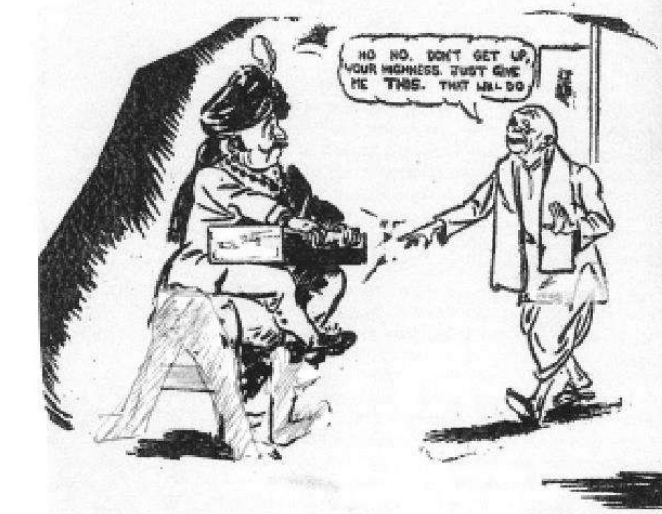
See the cartoon and answer the following question:
15
PYQ 2023
easy
political-science ID: cuet-ug-
Read the passage and answer the following queston :
Non - Traditional Notions
Non-traditional notions of security go beyond military threats to include a wide range of threats and dangers affecting the conditions of human existence. They begin by questioning the traditional referent of security. In doing so, they also question the other three elements of security- what is being secured, from what kind of threats and the approach to security. When we say referent we mean ‘Security for who” In the traditional security inception, the referent is the state with its territory and governing institutions. In the non-traditional conceptions, the referent is expanded. When we ask ‘Security for who ?’ Proponents of non-traditional security reply ‘Not just the state but also individuals or communities or indeed all of humankind’. Non-traditional views of security have been called ‘human security’ or ‘global security’.
Human Security is about the protection of people more than the protection of states. Human security and state security should be - and often are - the same thing. But secure states do not automatically mean secure peoples. Protecting citizens from foreign attack may be a necessary condition for the security of individuals, but it is certainly not a sufficient one. Indeed, during the last 100 years, more people have been killed by their own governments than by foreign armies.
All proponents of human security agree that its primary goal is the protection of individuals. However, there are differences about precisely what threats individuals should be protected from. Proponents of the ‘narrow’ concept of human security focus on violent threats to individuals or, as former UN Secretary-General Kofi Annan puts it, “The protection of communities and individuals from internal violence”. Proponents of the ‘broad’ concept of human security argue that the threat agenda should include hunger, disease and natural disasters because these kill far more people than war, genocide and terrorism combined. Human security policy, they argue, should protect people from these threats as well as from violence. In its broadest formulation, the human security agenda also encompasses economic security and ‘threats to human dignity’. Put differently, the broadest formulation stresses what has been called ‘freedom from want’ and ‘freedom from fear’, respectively.
The idea of global security emerged in the 1990s in response to the global nature of threats such as global warming, international terrorism, and health epidemics like AIDS and bird flu and so on. No country can resolve these problem alone. And, in some situations, one country may have to disproportionately bear the brunt of a global problem such as environmental degradation. For example, due to global warming, a sea level rise of 1.5-2.0 meters would flood 20 percent of Bangladesh, inundate most of the Maldives, and threaten nearly half the population of Thailand. Since these problems are global in nature, international cooperation is vital, even though itis difficult to achieve.
Non - Traditional Notions
Non-traditional notions of security go beyond military threats to include a wide range of threats and dangers affecting the conditions of human existence. They begin by questioning the traditional referent of security. In doing so, they also question the other three elements of security- what is being secured, from what kind of threats and the approach to security. When we say referent we mean ‘Security for who” In the traditional security inception, the referent is the state with its territory and governing institutions. In the non-traditional conceptions, the referent is expanded. When we ask ‘Security for who ?’ Proponents of non-traditional security reply ‘Not just the state but also individuals or communities or indeed all of humankind’. Non-traditional views of security have been called ‘human security’ or ‘global security’.
Human Security is about the protection of people more than the protection of states. Human security and state security should be - and often are - the same thing. But secure states do not automatically mean secure peoples. Protecting citizens from foreign attack may be a necessary condition for the security of individuals, but it is certainly not a sufficient one. Indeed, during the last 100 years, more people have been killed by their own governments than by foreign armies.
All proponents of human security agree that its primary goal is the protection of individuals. However, there are differences about precisely what threats individuals should be protected from. Proponents of the ‘narrow’ concept of human security focus on violent threats to individuals or, as former UN Secretary-General Kofi Annan puts it, “The protection of communities and individuals from internal violence”. Proponents of the ‘broad’ concept of human security argue that the threat agenda should include hunger, disease and natural disasters because these kill far more people than war, genocide and terrorism combined. Human security policy, they argue, should protect people from these threats as well as from violence. In its broadest formulation, the human security agenda also encompasses economic security and ‘threats to human dignity’. Put differently, the broadest formulation stresses what has been called ‘freedom from want’ and ‘freedom from fear’, respectively.
The idea of global security emerged in the 1990s in response to the global nature of threats such as global warming, international terrorism, and health epidemics like AIDS and bird flu and so on. No country can resolve these problem alone. And, in some situations, one country may have to disproportionately bear the brunt of a global problem such as environmental degradation. For example, due to global warming, a sea level rise of 1.5-2.0 meters would flood 20 percent of Bangladesh, inundate most of the Maldives, and threaten nearly half the population of Thailand. Since these problems are global in nature, international cooperation is vital, even though itis difficult to achieve.
About Reading Comprehension - CUET-UG
Reading Comprehension is a vital chapter for CUET-UG aspirants. Mastering the concepts covered in this chapter is essential for securing a top rank.
By rigorously practicing the previous year questions associated with this chapter, you can identify high-yield topics, understand the examiner's perspective, and boost your confidence during the actual exam.
Frequently Asked Questions
Why focus on Reading Comprehension PYQs?
Analyzing PYQs for this specific chapter reveals the most frequently tested concepts and the typical complexity of questions, allowing you to tailor your study plan efficiently.
How to best use this analysis?
Review the topic breakdown to see which sub-topics within Reading Comprehension carry the most weight. Then, tackle the questions iteratively to solidify your understanding.