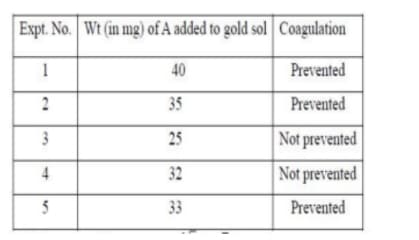
‘A’ is a protecting colloid. The following data is obtained for preventing the coagulation of 10 mL of gold sol to which 1 mL of 10% NaCl is added. What is the gold number of ‘A’?
1
32
2
33
3
35
4
40
Official Solution
Correct Option:
(2)
Gold Number Determination Problem
The gold number is defined as the amount (in mg) of a protecting colloid required to prevent the coagulation of 10 mL of a gold sol when 1 mL of 10% NaCl is added.
From the given data:
In the first experiment, 40 mg of A prevents coagulation.
In the second experiment, 35 mg of A prevents coagulation.
In the third experiment, 25 mg of A does not prevent coagulation.
In the fourth experiment, 32 mg of A does not prevent coagulation.
In the fifth experiment, 33 mg of A prevents coagulation.
The gold number is the amount of A required to just prevent coagulation.
Conclusion:
The correct amount for coagulation prevention is 33 mg. Thus, the gold number of ‘A’ is .
02
PYQ 2024
hard
chemistryID: ap-eamce
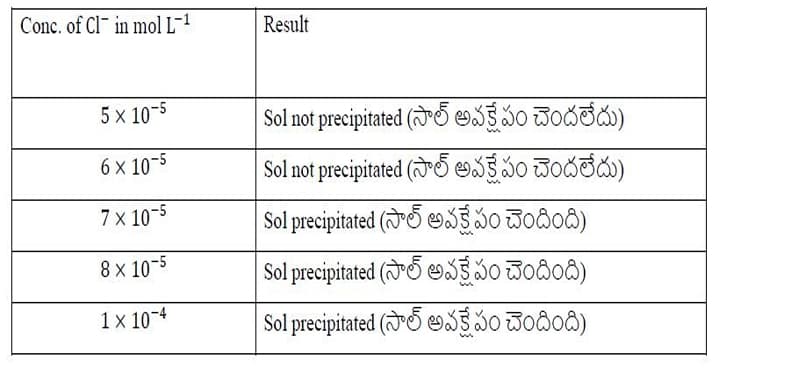
The following data is obtained for coagulating a positively charged sol in 2 hours:What is the coagulating value of electrolyte for this sol?
1
2
3
4
Official Solution
Correct Option:
(2)
The coagulating value of electrolyte is the concentration of the electrolyte which causes precipitation of sol. From the given data, the sol starts precipitating at a concentration of mol L . Hence, the coagulating value of the electrolyte is .
About Colloids - AP-EAMCET
Colloids is a vital chapter for AP-EAMCET aspirants. Mastering the concepts covered in this chapter is essential for securing a top rank.
By rigorously practicing the previous year questions associated with this chapter, you can identify high-yield topics, understand the examiner's perspective, and boost your confidence during the actual exam.
Frequently Asked Questions
Why focus on Colloids PYQs?
Analyzing PYQs for this specific chapter reveals the most frequently tested concepts and the typical complexity of questions, allowing you to tailor your study plan efficiently.
How to best use this analysis?
Review the topic breakdown to see which sub-topics within Colloids carry the most weight. Then, tackle the questions iteratively to solidify your understanding.