Communication Systems
38 previous year questions.
High-Yield Trend
Chapter Questions 38 MCQs
In amplitude modulation, the amplitude of the carrier signal is 28 V and the modulation index is 0.4. The amplitude of the side bands is:
200 g of water is heated from 40°C to 60°C. The change in its internal energy [No expansion is taken place] specific heat of water is 4200 J kg⁻¹ K⁻¹
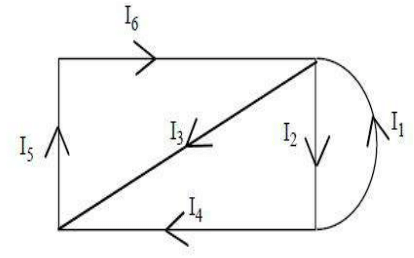
In the given circuit the currents are , , and . Analyzing the circuit using Kirchhoff’s laws, then , , and values are:
The ratio of the wavelengths of the first and second Balmer lines of the hydrogen spectrum is:
A proton and an alpha particle are moving with kinetic energies of 4.5 MeV and 0.5 MeV respectively. The ratio of the de Broglie wavelengths of the proton and alpha particle is:
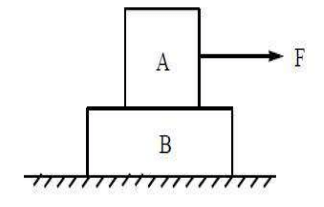
The blocks A and B weighing 100 N and 250 N respectively are placed one over the other as shown in the figure. Block B rests on a smooth surface. The coefficient of static friction between A and B is 0.4. When , the acceleration of the upper block is (Take acceleration due to gravity, ):
Direct solar energy is incident on the horizontal surface at an average rate of 200 W/m². If 20% of this energy can be converted to useful electrical energy, how much area is needed to supply 8 kW?
266.3°C
66.66°C
133.3°C
70°C
About Communication Systems - AP-EAMCET
Communication Systems is a vital chapter for AP-EAMCET aspirants. Mastering the concepts covered in this chapter is essential for securing a top rank.
By rigorously practicing the previous year questions associated with this chapter, you can identify high-yield topics, understand the examiner's perspective, and boost your confidence during the actual exam.
Frequently Asked Questions
Why focus on Communication Systems PYQs?
Analyzing PYQs for this specific chapter reveals the most frequently tested concepts and the typical complexity of questions, allowing you to tailor your study plan efficiently.
How to best use this analysis?
Review the topic breakdown to see which sub-topics within Communication Systems carry the most weight. Then, tackle the questions iteratively to solidify your understanding.