Stereoisomers
21 previous year questions.
High-Yield Trend
Chapter Questions 21 MCQs
A train moves towards a stationary observer with speed 72 m/s . The train blows its horn and its frequency heard by observer is .
If the train speed is reduced to 36 m/s , the frequency heard by observer is . Then is (given ):
A man of mass 70 kg jumps to a height of 0.8 m from the ground, then the momentum transferred by the ground to the man is
(g = 10 m/s ):
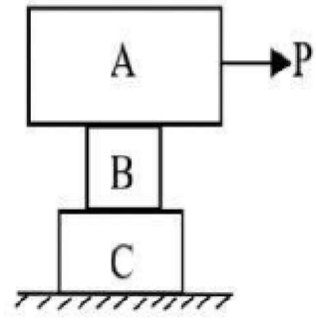
Find the least horizontal force to start motion of any part of the system of three blocks resting upon one another as shown in the figure. The weights of blocks are . The coefficient of friction between and is 0.3, between and is 0.2 and between and the ground is 0.1.
Young double slit arrangement is placed in a liquid medium of 1.2 refractive index. Distance between the slits and screen is 2.4 m.
Slit separation is 1 mm. The wavelength of incident light is 5893 Å. The fringe width is:
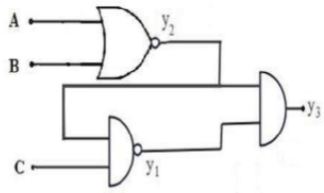
Three logic gates are connected as shown in the figure. If the inputs are , and then the values of , and respectively are:
A glass capillary tube with a radius is immersed into water to a depth of . To blow an air bubble out of the lower end of the tube, the pressure required is:
Given:
Surface tension
Density of water
Acceleration due to gravity
A thin circular ring and a circular disc have the same mass and moment of inertia about their centers perpendicular to the plane.
Then the ratio of their radii is:
A truck of mass 1200 kg moves over an inclined plane raising 1 in 20, with a speed of 18 kmph. The power of the engine is
(g = 10 m/s ):
About Stereoisomers - AP-EAMCET
Stereoisomers is a vital chapter for AP-EAMCET aspirants. Mastering the concepts covered in this chapter is essential for securing a top rank.
By rigorously practicing the previous year questions associated with this chapter, you can identify high-yield topics, understand the examiner's perspective, and boost your confidence during the actual exam.
Frequently Asked Questions
Why focus on Stereoisomers PYQs?
Analyzing PYQs for this specific chapter reveals the most frequently tested concepts and the typical complexity of questions, allowing you to tailor your study plan efficiently.
How to best use this analysis?
Review the topic breakdown to see which sub-topics within Stereoisomers carry the most weight. Then, tackle the questions iteratively to solidify your understanding.