Molecular Biology
14 previous year questions.
High-Yield Trend
Chapter Questions 14 MCQs
Met – Phe – Arg – Gly – Phe
Match the following
| Set I | Set II | Set III | |||
|---|---|---|---|---|---|
| I. | DNA Ligase | A. | Polymerisation | i. | Okazaki fragments |
| II. | DNA Polymerase | B. | Introns | ii. | Reactive & unstable |
| III. | Splicing | C. | Joining | iii. | mRNA |
| IV. | Ribozyme | D. | RNA Enzyme | iv. | One direction |
Reason (R): In prokaryotes, negatively charged DNA molecules are held with positively charged proteins.
Identify the correct option from the following:
1. Purines and cytosine are common in DNA and RNA.
2. Thymine is present only in RNA.
3. Uracil is present in DNA at the place of Thymine.
4. Adenine and Guanine are Purines
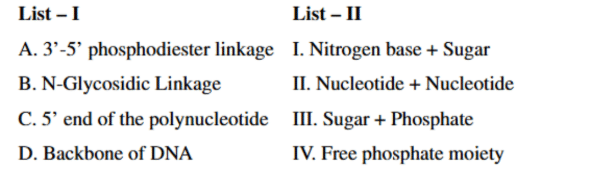
[I.] The packaging of chromatin at higher level requires additional set of proteins called non-histone chromosomal proteins.
[II.] In some viruses, the flow of genetic information for protein synthesis is in the reverse direction — that is from RNA to DNA.
[III.] RNA is the genetic material that is passed from virus to bacteria was given by Avery, Macleod and McCarty.
[IV.] RNA polymerase II transcribes the precursor of 5S RNA.
About Molecular Biology - AP-EAPCET
Molecular Biology is a vital chapter for AP-EAPCET aspirants. Mastering the concepts covered in this chapter is essential for securing a top rank.
By rigorously practicing the previous year questions associated with this chapter, you can identify high-yield topics, understand the examiner's perspective, and boost your confidence during the actual exam.
Frequently Asked Questions
Why focus on Molecular Biology PYQs?
Analyzing PYQs for this specific chapter reveals the most frequently tested concepts and the typical complexity of questions, allowing you to tailor your study plan efficiently.
How to best use this analysis?
Review the topic breakdown to see which sub-topics within Molecular Biology carry the most weight. Then, tackle the questions iteratively to solidify your understanding.