Ancient History
35 previous year questions.
High-Yield Trend
Chapter Questions 35 MCQs
Refer to the given image of the sandstone sculpture. Which one of the following dynasties does this sculpture of the King represent? 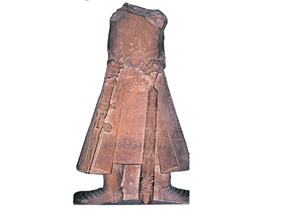
- They belonged to important ruling lineage.
- They were the immediate successors of the Mauryas.
- They were Brahmanas.
Identify the ancient Indian text with the help of the following information:
- Sanskrit text compiled between c. 200 BCE and 200 CE.
- Provided a comprehensive code of laws.
- Offered guidelines on various aspects of social life. \end{itemize
Assertion (A): James Prinsep's work was crucial for understanding the political history of ancient India.
Reason (R): Deciphering inscriptions provided insights into political events and rulers.
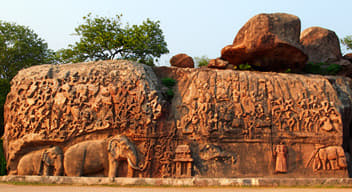
Look at the given image and identify the ancient sculptural panel from the options:
|
(i) Banawali – a mature Harappan site
(ii) Kannauj – An important town from early states
(iii) (a) Ajmer – A city under Mughals
OR
(iii) (b) Bidar – A medieval town
Assertion (A): Like Buddhism, Jainism also spread to many parts of India.
Reason (R): Jaina scholars produced literature in various languages like Tamil, Prakrit and Sanskrit etc.
II. It is soulless and there is nothing eternal in it.
III. Sorrows and sufferings are intrinsic to human existence.
IV. Renouncing the world is essential for living.
Codes:
Match Column-I with Column-II and choose the correct option: 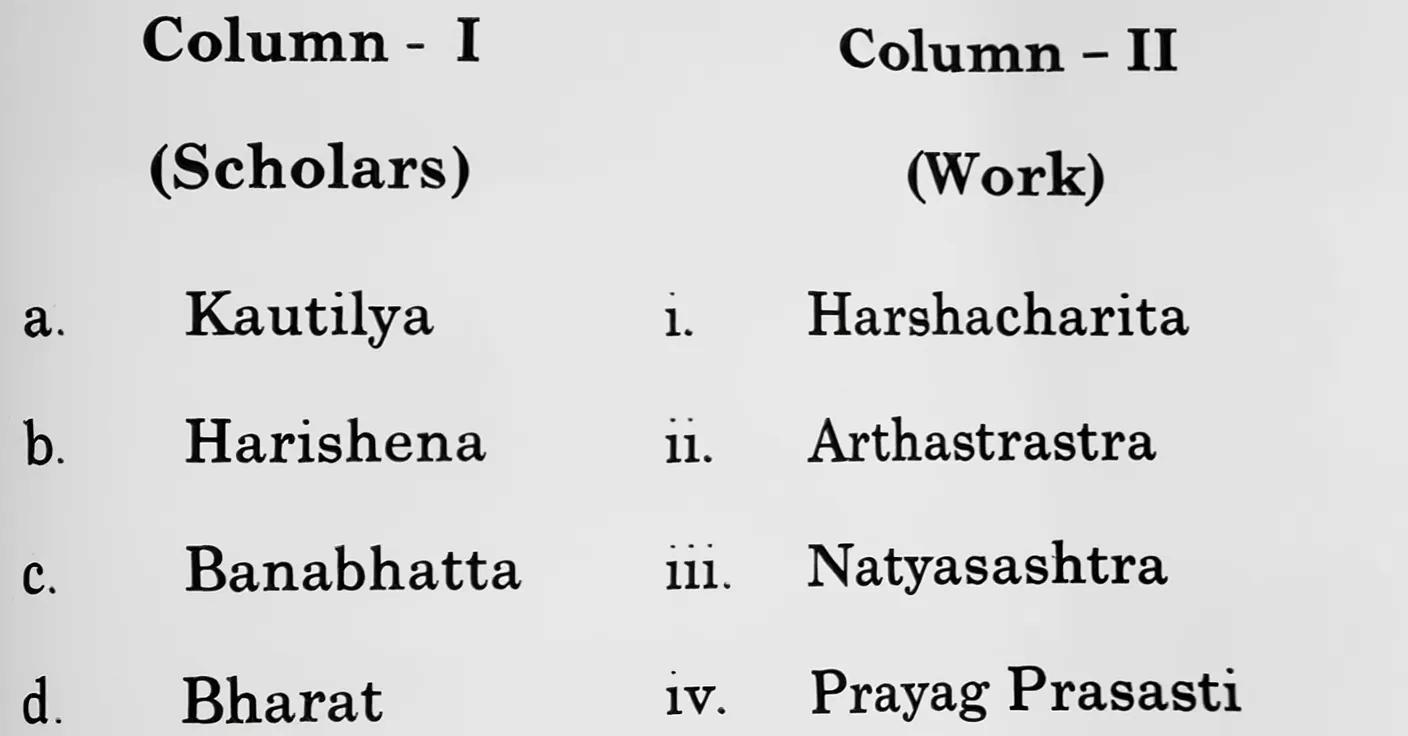
II. One of the major anthologies of compositions by the Alvars, Amuktamalyada, described as Tamil Vedas.
III. Karaikkal Ammaiyar and Andal were the women devotees of Nayanar and Alvar tradition.
IV. Both Nayanars and Alvar saints were revered by the Vellalas peasants.
• Was a Physician.
• Organized Zoo in Calcutta.
• Did survey of Bengal.
• He assumed family name as Hamilton.
Vijayanagara Kingdom flourished under conditions of unparalleled peace and prosperity during the rule of Krishnadeva Raya but after his death Vijayanagara declined. Substantiate the statement with examples.
About Ancient History - CBSE-CLASS-XII
Ancient History is a vital chapter for CBSE-CLASS-XII aspirants. Mastering the concepts covered in this chapter is essential for securing a top rank.
By rigorously practicing the previous year questions associated with this chapter, you can identify high-yield topics, understand the examiner's perspective, and boost your confidence during the actual exam.
Frequently Asked Questions
Why focus on Ancient History PYQs?
Analyzing PYQs for this specific chapter reveals the most frequently tested concepts and the typical complexity of questions, allowing you to tailor your study plan efficiently.
How to best use this analysis?
Review the topic breakdown to see which sub-topics within Ancient History carry the most weight. Then, tackle the questions iteratively to solidify your understanding.