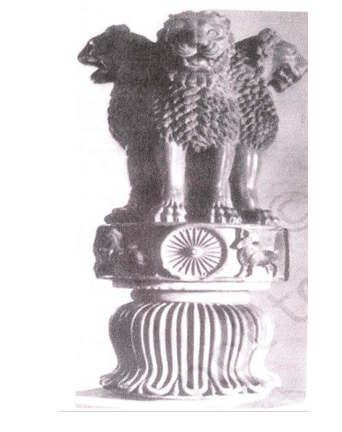
The Mauryan Empire, one of the largest and most powerful empires in ancient India, was known for its strong and efficient administration. The empire, under the leadership of Chandragupta Maurya and later Ashoka, developed a highly organized and centralized system that helped it govern a vast and diverse territory. Below are the key aspects of the Mauryan administration that contributed to its strength:
1. Centralized Administration:
The Mauryan Empire had a highly centralized administration, with the emperor at the top as the supreme authority. The empire was divided into provinces, each of which was administered by a governor appointed by the emperor. This centralized structure allowed for efficient governance and quick decision-making across the vast empire. The Mauryan emperors exercised significant control over all aspects of governance, including law, military, taxation, and foreign relations.
2. Bureaucratic System:
The Mauryas developed a well-structured bureaucracy, with different departments responsible for various functions such as administration, military, finance, and trade. The system was efficient and ensured that the empire’s administration ran smoothly. The Mauryan kings employed officers to handle the administration of justice, revenue collection, law enforcement, and even the management of state-owned industries. This system allowed the empire to maintain order and stability across its territories.
3. The Role of the King and Ministers:
Chandragupta Maurya and his successor, Ashoka, were both actively involved in the administration of the empire. The king had ultimate control over all matters of governance, but he was also assisted by a council of ministers who provided advice on important issues. The Mauryan rulers maintained strict control over their ministers and officials to ensure that power was not concentrated in the hands of any individual.
4. The Arthashastra:
The Arthashastra, written by Kautilya (Chanakya), is a key text that reflects the strong administrative system of the Mauryan Empire. It outlines the principles of governance, law, taxation, military strategy, and economic policies. The Arthashastra highlights the importance of a strong centralized state, efficient revenue collection, and the role of the king in maintaining order and justice. It provides a detailed description of the empire’s administrative machinery, which contributed to its strength.
5. Law and Justice System:
The Mauryan administration was also known for its efficient legal system. Laws were codified and applied uniformly across the empire, ensuring justice and order. Ashoka, in particular, is known for his efforts to promote moral and ethical governance. His edicts, inscribed on pillars and rock surfaces, promoted values such as non-violence, tolerance, and justice. These laws were meant to guide the rulers and the subjects of the empire toward a just and ethical society.
6. Economic Administration:
The Mauryan administration played a crucial role in fostering economic growth and stability. The state took an active role in trade, agriculture, and industry. The empire had a well-organized taxation system, which was used to fund the military and administrative functions. The Mauryas also established a system of state-run markets and undertook large-scale irrigation projects to improve agricultural productivity, which contributed to the economic strength of the empire.
7. Military Organization:
The Mauryan Empire had a strong and well-organized military that was essential for maintaining control over its vast territories. The military was directly controlled by the emperor, and it was organized into infantry, cavalry, and war elephants. The strength of the military allowed the empire to expand its territories and maintain internal stability. Ashoka’s military campaigns, particularly in Kalinga, are well-documented and show the power of the Mauryan military.
Conclusion:
In conclusion, the Mauryan Empire had a strong and efficient administration due to its centralized governance, well-organized bureaucracy, codified legal system, and economic policies. The strength of the administration was key to the success and stability of the empire, allowing it to flourish as one of the most powerful empires in ancient India.