BITSAT SERIES Chemistry
Photoelectric Effect
13 previous year questions.
Volume: 13 Ques
Yield: Medium
High-Yield Trend
1
2021 1
2020 2
2019 1
2017 1
2016 2
2015 2
2014 2
2012 1
2010 Chapter Questions 13 MCQs
01
PYQ 2010
medium
chemistry ID: bitsat-2
The photoelectric threshold of a metal is
2000. The energy of electrons ejected from the surface by ultraviolet light of wavelength 1500 is
1
2.0 eV
2
1.5 eV
3
15 eV
4
150 eV
02
PYQ 2012
medium
chemistry ID: bitsat-2
A light having wavelength 300 nm falls on a metal surface. The work function of metal is 2.54 eV, what is stopping potential?
1
23 V
2
2.59 V
3
1.59 V
4
1.29 V
03
PYQ 2012
medium
chemistry ID: bitsat-2
In an experiment on photoelectric effect photons of wavelength 300 nm eject electrons from a metal of work function 2.25 eV. A photon of energy equal to that of the most energetic electron corresponds to the following transition in the hydrogen atom:
1
to state
2
to state
3
to state
4
to state
04
PYQ 2014
medium
chemistry ID: bitsat-2
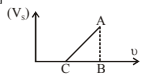
Graph between stopping potential of most energetic emitted photoelectrons ( ) and frequency ( ) of incident radiation on metal is given. Value of slope AB/BC in graph is [where = Planck’s constant, = electronic charge]: 
1
2
3
4
05
PYQ 2014
medium
chemistry ID: bitsat-2
The threshold wavelength of tungsten is . If ultraviolet light of wavelength is incident on it, then the maximum kinetic energy of photoelectrons would be about:
1
2
3
4
06
PYQ 2015
medium
chemistry ID: bitsat-2
When X-rays strike a material, the photoelectrons from the K-shell are observed to move in a circular path of radius in a magnetic field of , perpendicular to the direction of emission of photoelectrons. What is the binding energy of K-shell electrons?
1
2
3
4
07
PYQ 2015
medium
chemistry ID: bitsat-2
The beam of light has wavelengths , , and with a total intensity of equally distributed among the three wavelengths. The beam falls normally on an area of of a clean metallic surface of work function . Assume that there is no loss of light by reflection and that each energetically capable photon ejects one electron. Calculate the number of photoelectrons liberated in .
1
2
3
4
08
PYQ 2016
medium
chemistry ID: bitsat-2
Find the number of photons emitted per second by a 25W source of monochromatic light of wavelength 6600AA. What is the photoelectric current assuming 3% efficiency for photoelectric effect?
1
2
3
4
None of these
09
PYQ 2017
medium
chemistry ID: bitsat-2
When a metal surface is illuminated by light of wavelength 400 nm and 250 nm, the maximum velocities of the photoelectrons ejected are v and 2v respectively. The work function of the metal is (h = Planck’s constant, c = velocity of light in air)
1
2
3
4
0.5hc × 10⁶ J
10
PYQ 2019
medium
chemistry ID: bitsat-2
When 0.50AA X-rays strike a material, photoelectrons from the K shell are observed to move in a circle of radius 23mm in a magnetic field of 2×10⁻2T acting perpendicular to the direction of emission. What is the binding energy of K-shell electrons?
1
2
3
4
5.5keV
11
PYQ 2019
medium
chemistry ID: bitsat-2
The beam of light has three wavelengths 4144AA, 4972AA, 6216AA with a total intensity of 3.6×10⁻3W/m² equally distributed among the three wavelengths. The beam falls normally on a clean metallic surface of work function 2.3eV. Assuming no loss by reflection and that each photon ejects one photoelectron, calculate the number of photoelectrons liberated in 2s.
1
2
3
4
3.75×10⁶
12
PYQ 2020
medium
chemistry ID: bitsat-2
Find the number of photons emitted per second by a 25 watt source of monochromatic light of wavelength 6600AA. What is the photoelectric current assuming 3% efficiency for photoelectric effect?
1
2
3
4
None of these
13
PYQ 2021
medium
chemistry ID: bitsat-2
When a metal surface is illuminated by light of wavelengths 400nm and 250nm, the maximum velocities of the photoelectrons ejected are v and 2v respectively. The work function of the metal is
1
2h × 10¹4J
2
6h × 10¹4J
3
1.5h × 10¹4J
4
0.5h × 10¹4J