Thermal Properties Of Matter
63 previous year questions.
High-Yield Trend
Chapter Questions 63 MCQs
A uniform cube of side a and mass m rests on a rough horizontal table. A horizontal force F is applied normal to one of the faces at a point directly above the centre of the face, at a height 3a/4 above the base. The minimum value of F for which the cube begins to topple on an edge is (assume the cube does not slide): 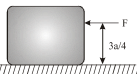
Choose the correct stability order of the given free radicals. 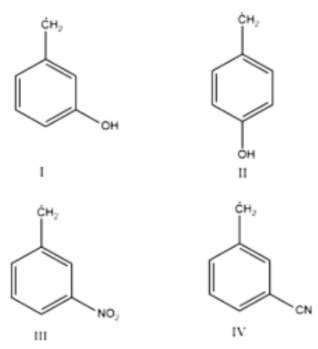
A tetrapeptide is made of naturally occurring alanine, serine, glycine, and valine. If the C-terminal amino acid is alanine and the N-terminal amino acid is chiral, the number of possible sequences of the tetrapeptide is:
If for a first-order reaction, the value of and , then at what temperature will its half-life be 10 minutes?
For the reaction: 2SO2 + O2 → 2SO3,
the rate of disappearance of O2 is .
What is the rate of appearance of SO3?
A decimolar solution potassium ferrocyanide is 50% dissociated at 300 K. The osmotic pressure of solution is (R = 8.314 J K mol ):
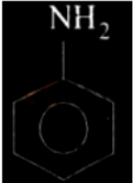
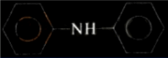
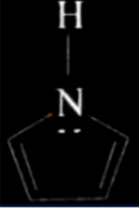

The IUPAC name of the following molecule is:
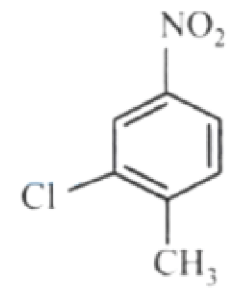
Correct order of stability of carbanion is:
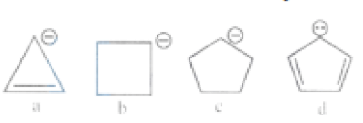
The correct order of melting points of the following salts is:
LiCl & (I)
LiF & (II)
LiBr & (III)
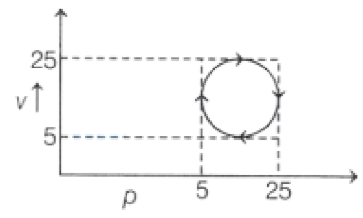
What would be the amount of heat absorbed in the cyclic process shown below?
Which one of the following has the highest relative rate?
About Thermal Properties Of Matter - BITSAT
Thermal Properties Of Matter is a vital chapter for BITSAT aspirants. Mastering the concepts covered in this chapter is essential for securing a top rank.
By rigorously practicing the previous year questions associated with this chapter, you can identify high-yield topics, understand the examiner's perspective, and boost your confidence during the actual exam.
Frequently Asked Questions
Why focus on Thermal Properties Of Matter PYQs?
Analyzing PYQs for this specific chapter reveals the most frequently tested concepts and the typical complexity of questions, allowing you to tailor your study plan efficiently.
How to best use this analysis?
Review the topic breakdown to see which sub-topics within Thermal Properties Of Matter carry the most weight. Then, tackle the questions iteratively to solidify your understanding.