JKCET SERIES Chemistry
Solutions
20 previous year questions.
Volume: 20 Ques
Yield: Medium
High-Yield Trend
3
2024 1
2019 1
2017 1
2016 1
2015 2
2014 1
2013 2
2012 2
2011 3
2010 1
2008 2
2004 Chapter Questions 20 MCQs
01
PYQ 2004
medium
chemistry ID: jkcet-20
Volume of required to oxidize of solution is
1
29.2 mL
2
17.5 mL
3
175 mL
4
145 mL
02
PYQ 2004
medium
chemistry ID: jkcet-20
Vapour pressure of dilute aqueous solution of glucose is of mercury at . The mole fraction of solute is
1
2
3
4
03
PYQ 2008
easy
chemistry ID: jkcet-20
Abnormal colligative properties are observed only when the dissolved non-volatile solute in a given dilute solution
1
is a non-electrolyte
2
offers an intense colour
3
associates or dissociates
4
offers no colour
04
PYQ 2010
medium
chemistry ID: jkcet-20
The vapour pressure of pure liquid solvent is . When a non-volatile substance is added to the solvent, its vapour pressure drops to . What is the mole fraction of component in this solution?
1
0.75
2
0.25
3
0.48
4
0.3
05
PYQ 2010
medium
chemistry ID: jkcet-20
of glucose (molar mass ) if present in of water, the molality of the solution is
1
0.2
2
0.4
3
0.8
4
1
06
PYQ 2010
medium
chemistry ID: jkcet-20
18 g of glucose is added to 178.2 g of water. The vapour pressure of water for this aqueous solution at 100 C
1
76.00 Torr
2
752.40 Torr
3
759.00 Torr
4
7.60 Torr
07
PYQ 2011
medium
chemistry ID: jkcet-20
What happens when blood cells are placed in pure water?
1
The fluid in blood cells rapidly moves into water
2
The water molecules rapidly move into blood cells
3
The blood cells dissolve in water
4
No change takes place
08
PYQ 2011
hard
chemistry ID: jkcet-20
When a solution containing non-volatile solute is diluted with water
1
its osmotic pressure increases
2
its boiling point increases
3
its freezing point decreases
4
its vapour pressure increases
09
PYQ 2012
medium
chemistry ID: jkcet-20
Addition of a non-volatile solute in a volatile ideal solvent
1
increases the vapour pressure of the solvent
2
decreases the vapour pressure of the solvent
3
decreases the boiling pomt of the solvent
4
increases the freezing point of the solvent
10
PYQ 2012
medium
chemistry ID: jkcet-20
Desalination of sea water can be done by
1
osmosis
2
reverse osmosis
3
filtration
4
diffusion
11
PYQ 2013
medium
chemistry ID: jkcet-20
What will be the freezing point of solution of glucose in water, given that molal depression constant for water is
1
2
3
4
12
PYQ 2014
medium
chemistry ID: jkcet-20
of ethylene glycol is mixed with of water, what is the depression of freezing point?
1
2
3
4
13
PYQ 2014
medium
chemistry ID: jkcet-20
Which among the following is a non-colligative property?
1
Elevation in boiling point
2
Osmotic pressure
3
Refractive index
4
Lowering of vapour pressure
14
PYQ 2015
medium
chemistry ID: jkcet-20
If the density of methanol is , what is its volume needed for making of its solution?
1
4 mL
2
8 mL
3
40 mL
4
80 mL
15
PYQ 2016
medium
chemistry ID: jkcet-20
In the plot of vs at , positive deviation from ideal behaviour under all pressure conditions is shown by the gas
1
2
3
4
16
PYQ 2017
medium
chemistry ID: jkcet-20
What will be the boiling point of benzene containing of benzoic acid which undergoes dimerization? Boiling point of pure benzene and
1
2
3
4
17
PYQ 2019
medium
chemistry ID: jkcet-20
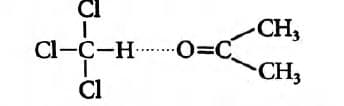
On mixing of acetone with of chloroform, the total volume of the solution is
1
less than
2
more than
3
equal to
4
unpredictable
18
PYQ 2024
medium
chemistry ID: jkcet-20
Which of the following statements is correct with respect to electrolytic solutions?
1
Its conductance increases with dilution
2
Its conductance decreases with dilution
3
Its conductivity increases with dilution
4
Its equivalent conductance decreases with dilution
19
PYQ 2024
medium
chemistry ID: jkcet-20
Precipitate is formed if ionic product is
1
greater than the solubility product
2
less than the solubility product
3
equal to the solubility product
4
independent of the solubility product
20
PYQ 2024
medium
chemistry ID: jkcet-20
Choose the correct order of molar ionic conductivities of the following ions.
1
2
3
4
About Solutions - JKCET
Solutions is a vital chapter for JKCET aspirants. Mastering the concepts covered in this chapter is essential for securing a top rank.
By rigorously practicing the previous year questions associated with this chapter, you can identify high-yield topics, understand the examiner's perspective, and boost your confidence during the actual exam.
Frequently Asked Questions
Why focus on Solutions PYQs?
Analyzing PYQs for this specific chapter reveals the most frequently tested concepts and the typical complexity of questions, allowing you to tailor your study plan efficiently.
How to best use this analysis?
Review the topic breakdown to see which sub-topics within Solutions carry the most weight. Then, tackle the questions iteratively to solidify your understanding.