Laws Of Motion
57 previous year questions.
High-Yield Trend
Chapter Questions 57 MCQs
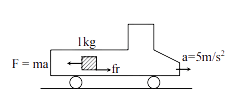
On the horizontal surface of a truck a block of mass 1 kg is placed (µ = 0.6) and truck is moving with acceleration 5 m/s2 then the frictional force on block will be : -
5N
6N
5.88N
8N
A block of mass 10 kg placed on the rough horizontal surface having a coefficient of friction µ = 0.5, if a horizontal force of 100 N acting on it then the acceleration of the block will be :
10 m/s2
5 m/s2
15 m/s2
0.5 m/s2
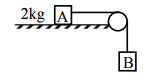
4.0 kg
0.2 kg
0.4 kg
2.0 kg
mg sin θ
mg
mg cosθ
A particle of mass m1 is moving with a velocity v1 and another particle of mass m2 is moving with a velocity v2. Both of them have the same momentum but their different kinetic energies are E1 and E2 respectively. f m1 > m2 then :
E1 > E2
E1 = E2
E1< E
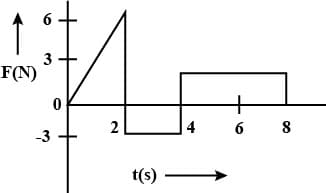
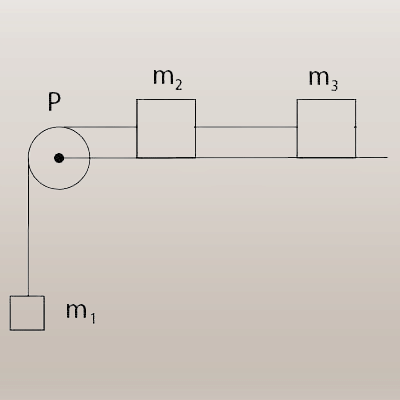
Two stones of masses m and 2m are whirled in horizontal circles, the heavier one in a radius r/2 and the lighter one in radius r. The tangential speed of lighter stone is n times that of the value of heavier stone when they experience same centripetal forces. The value of n is
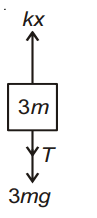
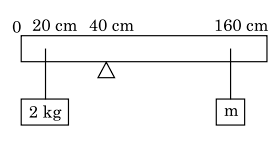
kg
kg
kg
kg
A particle moving in a circle of radius R with a uniform speed takes a time T to complete one revolution. If this particle were projected with the same speed at an angle ‘θ’ to the horizontal, the maximum height attained by it equals 4R. The angle of projection, θ, is then given by
A ball of mass 0.15 kg is dropped from a height 10 m, strikes the ground and rebounds to the same height. The magnitude of impulse imparted to the ball is (g=10 m/s2) nearly
1.4 kg m/s
0 kg m/s
4.2 kg m/s
2.1 kg m/s
About Laws Of Motion - NEET-UG
Laws Of Motion is a vital chapter for NEET-UG aspirants. Mastering the concepts covered in this chapter is essential for securing a top rank.
By rigorously practicing the previous year questions associated with this chapter, you can identify high-yield topics, understand the examiner's perspective, and boost your confidence during the actual exam.
Frequently Asked Questions
Why focus on Laws Of Motion PYQs?
Analyzing PYQs for this specific chapter reveals the most frequently tested concepts and the typical complexity of questions, allowing you to tailor your study plan efficiently.
How to best use this analysis?
Review the topic breakdown to see which sub-topics within Laws Of Motion carry the most weight. Then, tackle the questions iteratively to solidify your understanding.