NEET-UG SERIES
Physics

Mechanical Properties Of Fluid

13 previous year questions.

Volume: 13 Ques
Yield: Medium

High-Yield Trend

2
2023
1
2022
1
2021
2
2019
1
2018
1
2016
2
2015
1
2014
1
2013
1
2006

Chapter Questions
13 MCQs

01
PYQ 2006
medium
physics ID: neet-ug-
A rectangular block of mass m and area of cross-section A floats in a liquid of density . If it is given a small vertical displacement from equilibrium it undergoes oscillation with a time period T. Then :
1
T
2
T
3
T
4
T
02
PYQ 2013
easy
physics ID: neet-ug-
A fluid is in streamline flow across a horizontal pipe of variable area of cross section. For this which of the following statements is correct?
1
The velocity is maximum at the narrowest part of the pipe and pressure is maximum at the widest part of the pipe.
2
Velocity and pressure both are maximum at the narrowest part of the pipe.
3
Velocity and pressure both are maximum at the widest part of the pipe.
4
The velocity is minimum at the narrowest part of the pipe and the pressure is minimum at the widest part of the pipe.
03
PYQ 2014
easy
physics ID: neet-ug-
A certain number of spherical drops of a liquid of radius coalesce to form a single drop of radius and volume . If is the surface tension of the liquid, then
1
energy = is released
2
energy = is absorbed
3
energy = is released
4
energy is neither released nor absorbed.
04
PYQ 2015
easy
physics ID: neet-ug-
The cylindrical tube of a spray pump has radius , one end of which has fine holes, each of radius . If the speed of the liquid in the tube is , the speed of the ejection of the liquid through the holes is
1
2
3
4
05
PYQ 2015
easy
physics ID: neet-ug-
Water rises to a height in capillary tube. If the length of capillary tube above the surface of water is made less than , then
1
water rises upto a point a little below the top and stays there.
2
water does not rise at all.
3
water rises upto the tip of capillary tube and then starts overflowing like a fountain.
4
water rises upto the top of capillary tube and stays there without overflowing.
06
PYQ 2016
medium
physics ID: neet-ug-
A rectangular film of liquid is extended from to . If the work done is , the value of the surface tension of the liquid is -
1
2
3
4
07
PYQ 2018
easy
physics ID: neet-ug-
A small sphere of radius falls from rest in a viscous liquid. As a result, heat is produced due to viscous force. The rate of production of heat when the sphere attains its terminal velocity, is proportional to
1
2
3
4
08
PYQ 2019
medium
physics ID: neet-ug-
A soap bubble, having radius of , is blown from a detergent solution having a surface tension of . The pressure inside the bubble equals at a point below the free surface of water in a container. Taking , density of water , the value of is:
1
1 cm
2
0.5 cm
3
100 cm
4
10 cm
09
PYQ 2019
easy
physics ID: neet-ug-
A small hole of area of cross-section is present near the bottom of a fully filled open tank of height . Taking . the rate of flow of water through the open hole would be nearly:
10
PYQ 2021
easy
physics ID: neet-ug-
The velocity of a small ball of mass M and density d, when dropped in a container filled with glycerine becomes constant after some time. If the density of glycerine is , then the viscous force acting on the ball will be
1

2Mg

2

3

Mg

4

11
PYQ 2022
medium
physics ID: neet-ug-
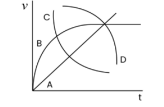
A spherical ball is dropped in a long column of a highly viscous liquid. The curve in the graph shown, which represents the speed of the ball (v) as a function of time (t) is:
1
A
2
B
3
C
4
D
12
PYQ 2023
medium
physics ID: neet-ug-
If a soap bubble expands, the pressure inside the bubble:
1
decreases
2
decreases
3
remains the same
4
In equal to the atmospheric pressure
13
PYQ 2023
easy
physics ID: neet-ug-

The amount of energy required to form a soap bubble of radius 2 cm from a soap solution is nearly: (surface tension of soap solution = 0.03 Nm-1)

1

50.1 x 10⁻⁴ J

2

30.16 x 10⁻⁴ J

3

5.06 x 10⁻⁴ J

4

3.01 x 10⁻⁴ J

About Mechanical Properties Of Fluid - NEET-UG

Mechanical Properties Of Fluid is a vital chapter for NEET-UG aspirants. Mastering the concepts covered in this chapter is essential for securing a top rank.

By rigorously practicing the previous year questions associated with this chapter, you can identify high-yield topics, understand the examiner's perspective, and boost your confidence during the actual exam.

Frequently Asked Questions

Why focus on Mechanical Properties Of Fluid PYQs?

Analyzing PYQs for this specific chapter reveals the most frequently tested concepts and the typical complexity of questions, allowing you to tailor your study plan efficiently.

How to best use this analysis?

Review the topic breakdown to see which sub-topics within Mechanical Properties Of Fluid carry the most weight. Then, tackle the questions iteratively to solidify your understanding.