Nuclei
34 previous year questions.
High-Yield Trend
Chapter Questions 34 MCQs
For the given reaction, the particle X is: 6C11→5B11+β++X
Neutron
Anti neutrino
Neutrino
Proton
Yukawa -meson theory
Which of the following are suitable for the fusion process
A sample of radioactive element containing 4×10¹⁶ active nuclei. Half-life of the element is 10 days, then the number of decayed nuclei after 30 days
0.5 × 10¹⁶
2 × 10¹⁶
3.5 × 10¹⁶
1 × 10¹⁶
A deuteron is bombarded on 8O16 nucleus then the α-particle is emitted then the product nucleus is
7N13
5B10
4Be9
7N14

6400 years
2400 years
3200 years
4800 years
M(N, Z) = NMn + ZMP + Bc2
M(N, Z) = NMn + ZMP –
M(N, Z) = NMn + ZMP +
M(N, Z) = NMn + ZMP – Bc2
If in a nuclear fusion process, the masses of the fusing nuclei are m1 and m2 and the mass of the resultant nucleus is m3, then
m3=|m1–m2|
m3 < (m1+m2)
m3>(m1+m2)
m3=m1+m2
34Se74, 31Ga71
42Mo92 , 40Zr92
38Sr84 , 38Sr86
20Ca40 ,16S32
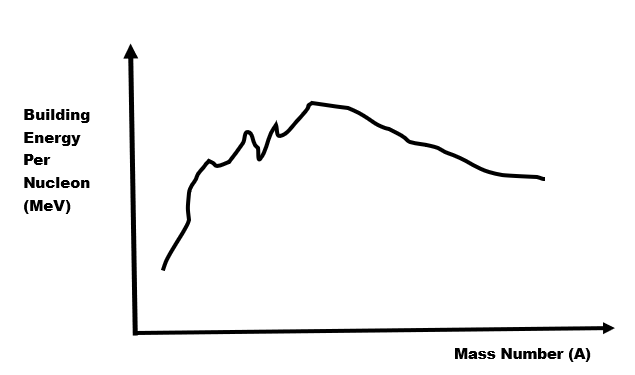
increases with mass number at high mass numbers
decreases with mass number at high mass numbers
increases with mass number at low mass numbers
decreases with mass number at low mass numbers
c+a-b
c-a-b
a+b+c
a+b-c
less than 1
greater than 1
equal to 1
depends on the mass of parent nucleus
216 MeV
0.9 MeV
9.4 MeV
804 MeV
About Nuclei - NEET-UG
Nuclei is a vital chapter for NEET-UG aspirants. Mastering the concepts covered in this chapter is essential for securing a top rank.
By rigorously practicing the previous year questions associated with this chapter, you can identify high-yield topics, understand the examiner's perspective, and boost your confidence during the actual exam.
Frequently Asked Questions
Why focus on Nuclei PYQs?
Analyzing PYQs for this specific chapter reveals the most frequently tested concepts and the typical complexity of questions, allowing you to tailor your study plan efficiently.
How to best use this analysis?
Review the topic breakdown to see which sub-topics within Nuclei carry the most weight. Then, tackle the questions iteratively to solidify your understanding.