Waves And Oscillations
51 previous year questions.
High-Yield Trend
Chapter Questions 51 MCQs
A particle executes S.H.M. along x-axis. The force acting on it is given by (A, k>0)
&
&
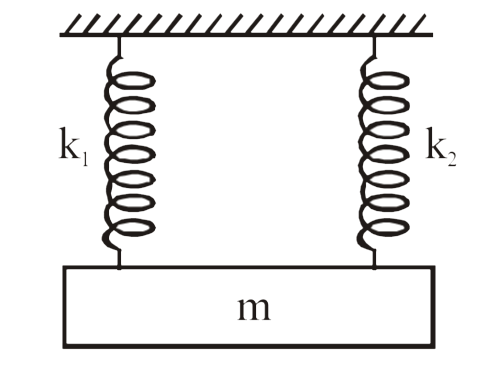
A mass is suspended separately by two different springs in successive order then time periods is and respectively. If it is connected by both spring as shown in figure then time period is , the correct relation is
Two bar magnets having the same geometry with magnetic moments M and 2M are firstly placed in such a way that their similar poles are same side then their time period of oscillation is T1. Now the polarity of one of the magnets is reversed the time period of oscillation is T2, then
T1 < T2
T1 = T2
T1 > T2
T2 = ∞
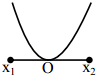
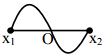
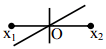
A particle of mass m oscillates with simple harmonic motion between points x1 and x2, the equilibrium position being O. Its potential energy is plotted. It will be as given below in the graph:

Value of a is zero, whatever may be the value of 'v'
When 'v' is zero, a is zero
When 'v' is maximum, a is zero
When 'v' is maximum, a is maximum
simple harmonic but not periodic
periodic and simple harmonic
neither periodic nor simple harmonic
periodic but not simple harmonic
2 Hz
1.5 Hz
0.5 Hz
1 Hz
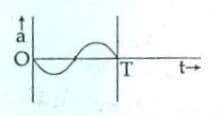
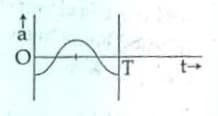
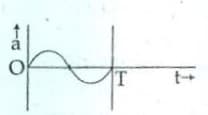
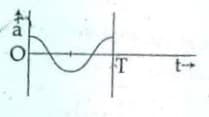
X = A cos (\omega t)
where X = displacement at time t
\omega = frequency of oscillation
Which one of the following graphs shows correctly the variation 'a' with 't'?
Here a acceleration at time t
T = time period
0.628 s
0.0628 s
6.28 s
3.14 s
4n
n
2n
3n
In an oscillating spring mass system, a spring is connected to a box filled with sand. As the box oscillates, sand leaks slowly out of the box vertically so that the average frequency ω(t) and average amplitude A(t) of the system change with time t. Which one of the following options schematically depicts these changes correctly? 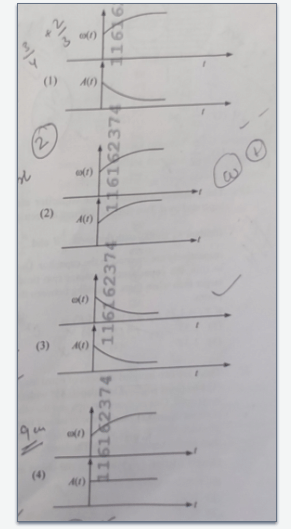
About Waves And Oscillations - NEET-UG
Waves And Oscillations is a vital chapter for NEET-UG aspirants. Mastering the concepts covered in this chapter is essential for securing a top rank.
By rigorously practicing the previous year questions associated with this chapter, you can identify high-yield topics, understand the examiner's perspective, and boost your confidence during the actual exam.
Frequently Asked Questions
Why focus on Waves And Oscillations PYQs?
Analyzing PYQs for this specific chapter reveals the most frequently tested concepts and the typical complexity of questions, allowing you to tailor your study plan efficiently.
How to best use this analysis?
Review the topic breakdown to see which sub-topics within Waves And Oscillations carry the most weight. Then, tackle the questions iteratively to solidify your understanding.