Magnetic Effects Of Current And Magnetism
40 previous year questions.
High-Yield Trend
Chapter Questions 40 MCQs
What are the Bohr's Postulates for the hydrogen atom? Write down the following for electrons in the ground state of hydrogen atom:
(i) Binding energy
(ii) Angular momentum
(iii) Total energy
What is the value of resistance of ideal ammeter and ideal voltmeter? Why are an ammeter and a voltmeter respectively connected in series and parallel in a circuit?
Determine the nature of force acting between two parallel current-carrying conductors when:
(i) Current is in the same direction in conductors,
(ii) Current is in the opposite direction in conductors.
Define interference. Mention the condition for constructive and destructive interference.
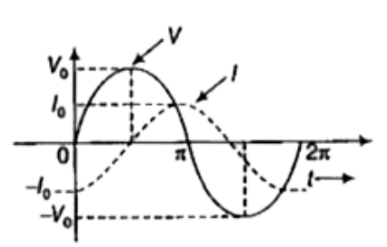
Explain Maxwell's displacement current and write its equation. What is the phase difference between it and the conduction current?
(i) Due to each length of straight portion, (ii) Due to radius R of semi-circle ?
\includegraphics[width=0.5\linewidth]{1.png}
About Magnetic Effects Of Current And Magnetism - UP-BOARD-XII
Magnetic Effects Of Current And Magnetism is a vital chapter for UP-BOARD-XII aspirants. Mastering the concepts covered in this chapter is essential for securing a top rank.
By rigorously practicing the previous year questions associated with this chapter, you can identify high-yield topics, understand the examiner's perspective, and boost your confidence during the actual exam.
Frequently Asked Questions
Why focus on Magnetic Effects Of Current And Magnetism PYQs?
Analyzing PYQs for this specific chapter reveals the most frequently tested concepts and the typical complexity of questions, allowing you to tailor your study plan efficiently.
How to best use this analysis?
Review the topic breakdown to see which sub-topics within Magnetic Effects Of Current And Magnetism carry the most weight. Then, tackle the questions iteratively to solidify your understanding.