Electric Dipole
High-Yield Trend
Questions 7 MCQs
Three-point charges , and are placed at points , and , respectively. The magnitude and direction of the electric dipole moment vector of this charge assembly are:
| 1. | along direction |
| 2. | along the line joining points and |
| 3. | along the line joining points and |
| 4. | along direction |
| 1. | 2. | ||
| 3. | 4. |
( separation of two charges forming the dipole, permittivity of free space)
| 1. | 2. | ||
| 3. | 4. |
Polar molecules are the molecules:
| 1. | that acquires a dipole moment only when the magnetic field is absent. |
| 2. | has a permanent electric dipole moment. |
| 3. | has zero dipole moment. |
| 4. | that acquire a dipole moment only in the presence of an electric field due to displacement of charges. |
A dipole is placed in an electric field as shown. In which direction will it move?
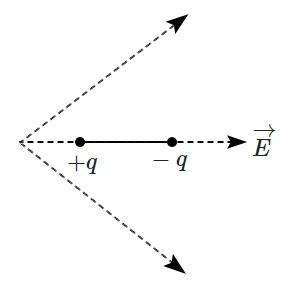
| 1. | towards the left as its potential energy will decrease. |
| 2. | towards the right as its potential energy will increase. |
| 3. | towards the left as its potential energy will increase. |
| 4. | towards the right as its potential energy will decrease. |
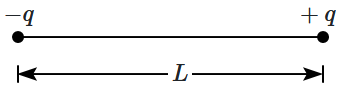
The magnitude of electric field intensity at a distance varies as:
| 1. | 2. | ||
| 3. | 4. |
| 1. | 2. | ||
| 3. | 4. |
Preparing Electric Dipole for NEET
Electric Dipole is a specific sub-topic that frequently appears in the NEET examination. Understanding the underlying principles and practicing targeted questions is key to mastering this concept.
The questions compiled above are previous year questions (PYQs) directly related to Electric Dipole. Practicing these specific questions helps you understand the difficulty level and the examiner's approach to this topic.
Topic Frequently Asked Questions
Is Electric Dipole a high-weightage topic?
You can refer to the priority and consistency badges at the top of this page. High priority topics should be thoroughly revised multiple times before the exam.
Should I memorize the solutions?
No, it is highly recommended to understand the core concept and methodology behind each solution rather than memorizing them, as exact questions are rarely repeated, but the concepts definitely are.