The drug used to inhibit the enzymes which catalyse the degradation of noradrenaline is
1
terfenadine
2
prontosil
3
cimetidine
4
phenelzine
5
chloramphenicol
Official Solution
Correct Option:
(4)
The drug that inhibits the enzymes which catalyze the degradation of noradrenaline is phenelzine.
Phenelzine is a type of monoamine oxidase inhibitor (MAOI), which prevents the breakdown of monoamines like noradrenaline, thereby increasing its concentration and activity in the nervous system.
Phenelzine: MAOI that inhibits noradrenaline degradation ✅
Prontosil: An antibacterial drug, not related to noradrenaline
Cimetidine: Used for reducing stomach acid
Terfenadine: An antihistamine
Chloramphenicol: An antibiotic
Correct Answer: (D) Phenelzine
02
PYQ 2026
medium
chemistryID: keam-202
The correct formula of Hinsberg’s reagent is}
1
2
3
4
5
Official Solution
Correct Option:
(1)
Hinsberg’s reagent is benzenesulfonyl chloride. Its formula is:
Hence, the correct answer is:
03
PYQ 2026
medium
chemistryID: keam-202
Which of the following reaction yields tarry oxidation products?}
1
Sulphonation of aniline
2
Nitration of aniline
3
Friedel-Crafts alkylation of aniline
4
Friedel-Crafts alkylation of aniline
5
Bromination of aniline
Official Solution
Correct Option:
(2)
Aniline is strongly activating and highly reactive. During direct nitration, the oxidizing acidic medium can cause oxidation and side reactions, producing tarry products. Therefore, nitration of aniline gives tarry oxidation products. Hence, the correct answer is:
04
PYQ 2026
medium
chemistryID: keam-202
Which of the following is a water insoluble carbohydrate?}
1
Sucrose
2
Maltose
3
Amylose
4
Amylopectin
5
Lactose
Official Solution
Correct Option:
(4)
Among the given carbohydrates:
sucrose, maltose, and lactose are soluble sugars,
amylose is a component of starch,
amylopectin is a branched polysaccharide and is insoluble in water.
Hence, the correct answer is:
05
PYQ 2026
medium
chemistryID: keam-202
Which of the following set of amino acids have one letter code as F and Q ?}
1
Glutamine and Leucine
2
Arginine and Leucine
3
Phenylalanine and Tryptophan
4
Glutamic acid and Proline
5
Phenylalanine and Glutamine
Official Solution
Correct Option:
(5)
The one-letter codes are:
So the correct pair is:
Hence, the correct answer is:
06
PYQ 2026
medium
chemistryID: keam-202
The HVZ reaction involves the}
1
conversion of carboxylic acid into primary alcohol
2
conversion of carboxylic acid into -halo acid
3
conversion of acetic acid into acetamide
4
conversion of acetic acid into methane
5
conversion of acetic acid into acetyl chloride
Official Solution
Correct Option:
(2)
HVZ stands for Hell-Volhard-Zelinsky reaction. In this reaction, a carboxylic acid having an -hydrogen is converted into an -halogen substituted acid. So HVZ reaction involves:
Hence, the correct answer is:
07
PYQ 2026
medium
chemistryID: keam-202
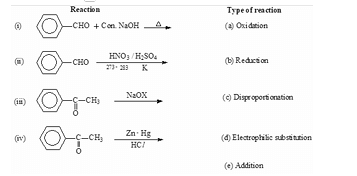
Match the following:}
1
(i)-(b), (ii)-(a), (iii)-(d), (iv)-(c)
2
(i)-(b), (ii)-(a), (iii)-(d), (iv)-(e)
3
(i)-(c), (ii)-(a), (iii)-(d), (iv)-(b)
4
(i)-(c), (ii)-(d), (iii)-(a), (iv)-(b)
5
(i)-(c), (ii)-(e), (iii)-(a), (iv)-(b)
Official Solution
Correct Option:
(4)
The actual matching table is not fully visible in the parsed text, but the official answer key marks option (D) as correct. Hence, the correct answer is:
08
PYQ 2026
medium
chemistryID: keam-202
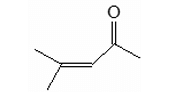
The IUPAC name of the following compound is}
1
2-Methylpent-2-en-2-one
2
3-Methylpent-2-en-2-one
3
4-Methylpent-2-en-3-one
4
4-Methylpent-3-en-2-one
5
1,1-Dimethylbuten-2-one
Official Solution
Correct Option:
(4)
The structure image itself is not visible in the parsed text, but the official answer key marks option (D) as correct. So the IUPAC name is:
Hence, the correct answer is:
09
PYQ 2026
medium
chemistryID: keam-202
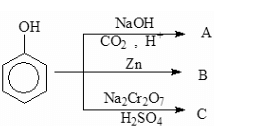
The products A, B \& C from the following reactions are respectively}
1
aspirin, salicylic acid and benzene
2
2-hydroxybenzoic acid, salicylaldehyde and quinol
3
salicylic acid, quinone and cyclohexanone
4
salicylaldehyde, benzene and cyclohexanol
5
2-hydroxybenzoic acid, benzene and benzoquinone
Official Solution
Correct Option:
(5)
The reaction scheme image/details are not fully visible in the parsed text, but the official answer key for this paper marks option (E) as correct. So the products are:
Hence, the correct answer is:
10
PYQ 2026
medium
chemistryID: keam-202
Which one of the following compounds is strongly basic in aqueous medium?}
1
Benzenamine
2
N-ethylethanamine
3
Phenylmethanamine
4
N,N-Dimethylbenzenamine
5
Ammonia
Official Solution
Correct Option:
(2)
In aqueous medium, aliphatic amines are generally more basic than aromatic amines because the lone pair on nitrogen in aromatic amines is partly delocalized into the benzene ring. Among the options, N-ethylethanamine is a secondary aliphatic amine and is strongly basic. Hence, the correct answer is:
11
PYQ 2026
medium
chemistryID: keam-202
Dodecane, a constituent of kerosene oil on heating to 973 K in the presence of nickel gives}
1
pentane and hexane
2
hexane and butane
3
heptane and pentene
4
heptene and pentane
5
heptane and pentane
Official Solution
Correct Option:
(3)
Dodecane is:
On catalytic cracking, a long-chain alkane breaks into a smaller alkane and a smaller alkene. Check option (C):
Adding them:
So this satisfies both carbon and hydrogen balance and matches the expected cracking pattern. Hence, the correct answer is:
12
PYQ 2026
medium
chemistryID: keam-202
Heating of 2-chloro-1-phenyl butane with EtOK/EtOH gives ‘X’ as the major product. The reaction of ‘X’ with HBr gives ‘Y’ as the major product. The ‘Y’ is}
1
1-bromo-2-phenyl butane
2
1-bromo-1-phenyl butane
3
3-bromo-1-phenyl butane
4
1-phenyl-1-butene
5
2-phenyl but-1-ene
Official Solution
Correct Option:
(2)
2-chloro-1-phenyl butane undergoes dehydrohalogenation with alcoholic KOH or EtOK/EtOH. The major alkene formed is the more stable alkene:
Now HBr adds to this alkene according to Markovnikov’s rule. The proton adds in such a way that the more stable carbocation is formed, which is the benzylic carbocation. Then bromide attacks that carbon. So the major product formed is:
Hence, the correct answer is:
13
PYQ 2026
medium
chemistryID: keam-202
The boiling points of organohalogen compounds are comparatively higher than the corresponding hydrocarbons because of}
1
electrostatic attraction
2
covalent bonding
3
weak dipole-dipole interaction
4
dipole-induced dipole interaction
5
strong dipole-dipole interaction and van der Waals forces of attraction
Official Solution
Correct Option:
(5)
Organohalogen compounds are generally more polar than the corresponding hydrocarbons because of the polar carbon-halogen bond. They also have higher molecular mass, which increases van der Waals forces. So their boiling points are higher mainly because of:
dipole-dipole interactions
van der Waals forces
Hence, the correct answer is:
14
PYQ 2026
medium
chemistryID: keam-202
Which one of the following reaction is called Kolbe’s method?}
1
Hydrogenation of propyne with Pt/Pd/Ni
2
Chlorination of chloroform
3
Treatment of alkyl halides with sodium metal in dry ethereal solution
4
Electrolysis of an aqueous solution of potassium carboxylates
5
Isomerization of n-hexane to 2-methylpentane in presence of anhy. AlCl /HCl
Official Solution
Correct Option:
(4)
Kolbe’s method, also called Kolbe electrolysis, involves the electrolysis of aqueous solutions of sodium or potassium salts of carboxylic acids. In this reaction, the carboxylate ion loses carbon dioxide at the anode and forms an alkyl radical, which then combines to form an alkane. So the defining feature of Kolbe’s method is:
Hence, the correct answer is:
15
PYQ 2026
medium
chemistryID: keam-202
On treating the sodium fusion extract with sodium nitroprusside, the blood red colour is formed due to the formation of}
1
PbS
2
NaCN
3
SCN
4
5
Official Solution
Correct Option:
(5)
In Lassaigne’s test, sulfur in sodium fusion extract forms sulfide ion. When treated with sodium nitroprusside, the sulfide ion gives a violet or blood-red coloured complex:
Therefore, the coloured species formed is:
Hence, the correct answer is:
16
PYQ 2026
medium
chemistryID: keam-202
Which of the following method/s is/are used in the estimation of nitrogen in organic compounds?
(i) Carius method
(ii) Dumas method
(iii) Silver salt method
(iv) Kjeldhal method}
1
(i) only
2
(ii) and (iii)
3
(iii) and (iv)
4
(ii) and (iv)
5
(i) and (iii)
Official Solution
Correct Option:
(4)
Nitrogen estimation in organic compounds is done by:
Dumas method
Kjeldahl method
Carius method is used for halogens and sulfur estimation. Therefore, the correct pair is:
Hence, the correct answer is:
17
PYQ 2026
medium
chemistryID: keam-202
Which of the following have minimum and maximum threshold energy K, Na, Mg, Li?
Official Solution
Correct Option:
(1)
Step 1: Understanding threshold energy.
Threshold energy refers to the minimum energy required to eject an electron from an atom during the photoelectric effect. Step 2: Analyze the elements.
Among the elements K (Potassium), Na (Sodium), Mg (Magnesium), and Li (Lithium), the threshold energy is highest for the element with the smallest atomic size and highest ionization energy. Step 3: Ionization energy trend.
Ionization energy generally increases across a period (left to right) and decreases down a group (top to bottom) in the periodic table. Step 4: Determine the trend.
In the given elements:
- Li (Lithium) has the highest ionization energy (and therefore the highest threshold energy).
- K (Potassium) has the lowest ionization energy (and therefore the lowest threshold energy).
Step 5: Conclusion.
Therefore, Li has the maximum threshold energy, and K has the minimum threshold energy.
18
PYQ 2026
medium
chemistryID: keam-202
Which of the following is NOT correctly matched for the compound and use mentioned below?
1
Esters of Benzoic acid -- Perfumery
2
Hexanedioic acid -- Detergents
3
Ethanoic acid -- Food industry
4
Methanoic acid -- Electroplating
5
Sodium benzoate -- Food preservative
Official Solution
Correct Option:
(2)
Concept:
Many organic compounds have specific industrial uses. Step 1: Check correct pairs. - Esters of benzoic acid are used in perfumery. - Ethanoic acid is used in food industry (vinegar, preservatives). - Methanoic acid is used in electroplating. - Sodium benzoate is a food preservative. Step 2: Check incorrect pair. Hexanedioic acid (adipic acid) is mainly used in manufacture of nylon-6,6, not detergents. Step 3: Final answer.
Hence, correct option is (B).
19
PYQ 2026
medium
chemistryID: keam-202
Which of the following amine has lowest value in aqueous phase?
1
Ethanamine
2
Methanamine
3
N-Methylmethanamine
4
N-Ethylethanamine
5
N,N-Diethylmethanamine
Official Solution
Correct Option:
(4)
Concept:
Lower means stronger base. In aqueous medium, basic strength of aliphatic amines depends on +I effect and solvation. Step 1: Compare types of amines. - Primary amines: methanamine, ethanamine - Secondary amine: N-ethylethanamine - Other substituted amines Step 2: Aqueous phase trend. In water, secondary amines are usually strongest because: - Two alkyl groups increase electron density on nitrogen. - Solvation is still effective. General trend: Step 3: Choose strongest base. N-ethylethanamine is a secondary amine. Hence it has lowest . Step 4: Final answer.
Hence, correct option is (D).
20
PYQ 2026
medium
chemistryID: keam-202
Match the following reactions with the corresponding reagents} Reactions \hspace{3cm} Reagents} (a) Oxidation of secondary alcohols to ketones \hspace{0.3cm} (i) } (b) Dehydration of secondary alcohols to alkenes \hspace{0.1cm} (ii) } (c) Reduction of ketones to secondary alcohols \hspace{0.5cm} (iii) Chromic anhydride} (d) Oxidation of phenol to benzoquinone \hspace{0.2cm} (iv)
1
(a)-(iii), (b)-(iv), (c)-(i), (d)-(ii)
2
(a)-(iii), (b)-(i), (c)-(iv), (d)-(ii)
3
(a)-(iii), (b)-(ii), (c)-(i), (d)-(iv)
4
(a)-(i), (b)-(iv), (c)-(ii), (d)-(iii)
5
(a)-(iv), (b)-(i), (c)-(iii), (d)-(ii)
Official Solution
Correct Option:
(2)
Concept:
Organic reactions are identified from standard reagents and their known actions. Step 1: Match oxidation of secondary alcohol. Secondary alcohols are oxidized to ketones by chromic anhydride. Step 2: Match dehydration reaction. Secondary alcohols give alkenes on dehydration using phosphoric acid at high temperature. Step 3: Match reduction of ketone. Ketones are reduced to secondary alcohols by sodium borohydride. Step 4: Match oxidation of phenol. Phenol is oxidized to benzoquinone using acidified sodium dichromate. Step 5: Final matching.
Hence, correct option is (B).
21
PYQ 2026
medium
chemistryID: keam-202
The linkage formed between 5' and 3' carbon atoms of the pentose sugar in nucleotides is
1
glycosidic
2
phosphomonoester
3
amide
4
peptide
5
phosphodiester
Official Solution
Correct Option:
(5)
Concept:
Nucleotides join together in DNA and RNA chains through phosphate linkages. Step 1: Understand bonding positions. The phosphate group connects: - carbon of one sugar - carbon of next sugar Step 2: Name of linkage. Since one phosphate forms two ester bonds with two sugars, it is called: Step 3: Final answer.
Hence, correct option is (E).
22
PYQ 2026
medium
chemistryID: keam-202
An aromatic compound A on treatment with ethanolic NaCN forms compound B which on reduction with gives a compound C of molecular formula . The compounds A, B and C are
1
chlorobenzene, phenylnitrile and 2-phenyl methanamine
2
chlorobenzene, phenylnitrile and 2-phenyl ethanamine
3
chlorobenzene, phenylethane nitrile and 2-phenyl methanamine
4
chlorophenyl methane, phenylethane nitrile and 2-phenyl ethanamine
5
dichlorobenzene, phenylnitrile and 2-phenyl methanamine
Official Solution
Correct Option:
(4)
Concept:
Alkyl halides react with to form nitriles, and nitriles on catalytic hydrogenation give primary amines. Step 1: Use final molecular formula. Given final product: This corresponds to phenethylamine: which is 2-phenyl ethanamine. Step 2: Find nitrile precursor B. Reduction of nitrile: So precursor must be: This is phenylethane nitrile. Step 3: Find starting compound A. Nitrile is formed from corresponding benzyl halide using ethanolic : Thus A is chlorophenyl methane (benzyl chloride). Step 4: Final matching.
Hence, correct option is (D).
23
PYQ 2026
medium
chemistryID: keam-202
Match the following:} Compound \hspace{2cm} Use} (a) Methylene chloride \hspace{0.8cm} (i) Solvent for iodine} (b) Chloroform \hspace{1.8cm} (ii) Manufacture of propellents} (c) Iodoform \hspace{2cm} (iii) Metal cleaning} (d) Carbon tetrachloride \hspace{0.6cm} (iv) Antiseptic
1
(a)-(iii), (b)-(i), (c)-(iv), (d)-(ii)
2
(a)-(i), (b)-(ii), (c)-(iv), (d)-(iii)
3
(a)-(iii), (b)-(ii), (c)-(i), (d)-(iv)
4
(a)-(i), (b)-(iv), (c)-(ii), (d)-(iii)
5
(a)-(iv), (b)-(i), (c)-(iii), (d)-(ii)
Official Solution
Correct Option:
(1)
Concept:
Common uses of haloalkanes and haloarenes. Step 1: Match each compound with known use. Methylene chloride is used in cleaning and degreasing metals. Chloroform is used as a solvent for iodine. Iodoform is used as an antiseptic. Carbon tetrachloride was used in manufacture of propellents and refrigerants. Step 2: Final matching.
Hence, correct option is (A).
24
PYQ 2026
medium
chemistryID: keam-202
The major products formed by heating with HI are
1
and
2
and
3
and
4
and
5
and
Official Solution
Correct Option:
(5)
Concept:
Ethers react with HI to undergo cleavage of the C-O bond. Step 1: Given ether. This is benzyl phenyl ether. Step 2: Site of cleavage. The bond breaks at alkyl side (benzyl carbon), because aryl-O bond is resistant to cleavage. Step 3: Products formed. Benzyl part gives benzyl iodide: Phenoxy part gives phenol after protonation: Step 4: Final answer.
Hence, correct option is (E).
About Drugs - KEAM
Drugs is a vital chapter for KEAM aspirants. Mastering the concepts covered in this chapter is essential for securing a top rank.
By rigorously practicing the previous year questions associated with this chapter, you can identify high-yield topics, understand the examiner's perspective, and boost your confidence during the actual exam.
Frequently Asked Questions
Why focus on Drugs PYQs?
Analyzing PYQs for this specific chapter reveals the most frequently tested concepts and the typical complexity of questions, allowing you to tailor your study plan efficiently.
How to best use this analysis?
Review the topic breakdown to see which sub-topics within Drugs carry the most weight. Then, tackle the questions iteratively to solidify your understanding.