KEAM SERIES Chemistry
Hydrocarbons
28 previous year questions.
Volume: 28 Ques
Yield: High
High-Yield Trend
6
2026 10
2025 3
2023 3
2022 1
2021 1
2018 1
2016 1
2015 2
2011 Chapter Questions 28 MCQs
01
PYQ 2011
medium
chemistry ID: keam-201
Which of the following compounds has least boiling point?
1
2-Methylbutane
2
n-Hexane
3
n-Pentane
4
2,2-Dimethylpropane
02
PYQ 2011
medium
chemistry ID: keam-201
Which one of the following is a non-benzenoid aromatic compound?
1
aniline
2
benzoic acid
3
naphthalene
4
tropolone
03
PYQ 2015
medium
chemistry ID: keam-201
Which one of the following is not an isomer of ?
1
Pent-1-yne
2
Buta- 1,3-diene
3
Pent-2-yne
4
Penta- 1,3-diene
04
PYQ 2016
medium
chemistry ID: keam-201
Which one of the following is a benzenoid aromatic compound?
1
Furan
2
Thiophene
3
Pyridine
4
Aniline
05
PYQ 2018
hard
chemistry ID: keam-201
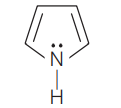
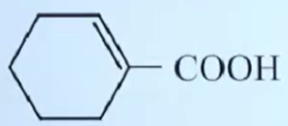
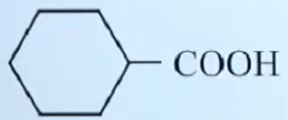
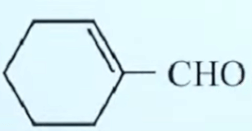
Which of the following compounds are aromatic?
1
A, B
2
A, B, C
3
B, C
4
B, C, D
06
PYQ 2021
medium
chemistry ID: keam-202
Match the substances and their uses.
Choose the correct options :
Column-I | Column-II | ||
|---|---|---|---|
| a | Silicones | i | Cracking of hydrocarbons |
| b | Zeolites | ii | Light composite material for aircraft |
| c | Quartz | iii | Flux for soldering metals |
| d | Borax | iv | Waterproofing of fabrics |
| e | Boron fibres | v | Piezoelectric material |
1
a)-(iv); b)-(ii); c)-(i); d)-(v); e)-(iii)
2
a)-(i); b)-(ii); c)-(iv); d)-(iii); e)-(v)
3
a)-(iv); b)-(i); c)-(iii); d)-(ii); e)-(v)
4
a)-(iii); b)-(ii); c)-(i); d)-(iv); e)-(v)
5
a)-(iv); b)-(i); c)-(v); d)-(iii); e)-(ii)
07
PYQ 2022
medium
chemistry ID: keam-202
Calculate the number of o and a bonds in 2-n-propylpent-1-ene.
1
22 \sigma bonds, 2\pi bonds
2
23 \sigma bonds, 1\pi bonds
3
21 \sigma bonds, 1\pi bonds
4
23 \sigma bonds, 2\pi bonds
5
20 \sigma bonds, 1\pi bonds
08
PYQ 2022
medium
chemistry ID: keam-202
Which one of the following molecules contains only primary and tertiary carbon atoms?
1
2,2-Dimethylbutane
2
3-Methylpentane
3
2,3-Dimethylbutane
4
n-Hexane
5
2-Methylhexane
09
PYQ 2022
medium
chemistry ID: keam-202
Match the following:
Choose the correct option:
| a) | Alkane | (i) | Phenol |
| b) | Alicyclic compound | (ii) | Tropolone |
| c) | Benzenoid aromatic compound | (iii) | Isobutane |
| d) | Non-benzenoid aromatic compound | (iv) | Furan |
| e) | Heterocyclic compound | (v) | Cyclohexene |
Choose the correct option:
1
a)-(iii); b)-(i); c)-(v); d)-(ii); e)-(iv)
2
a)-(iii); b)-(v); c)-(i); d)-(ii); e)-(iv)
3
a)-(i); b)-(ii); c)-(iii); d)-(iv); e)-(v)
4
a)-(iii); b)-(v); c)-(i); d)-(iv); e)-(ii)
5
a)-(iii); b)-(ii); c)-(i); d)-(v); e)-(iv)
10
PYQ 2023
easy
chemistry ID: keam-202
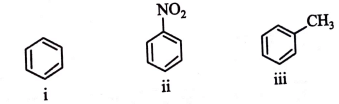
Which are the non-benzenoid aromatic compounds in the following?

1
iii and iv
2
i and iv
3
ii and iv
4
i and iv
5
ii and iii
11
PYQ 2023
easy
chemistry ID: keam-202
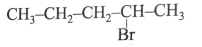
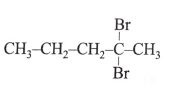
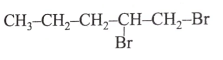
What is the major product in the following reaction?
CH3-CH2-CH2-CH=CH2+HBr
1
CH3-CH2-CH2-CH2-CH2-Br
2
3
4
5
CH3-CH2-CH2-CH2-CH3
12
PYQ 2023
easy
chemistry ID: keam-202
Which compound will not take part in the Friedel-Crafts acylation?
1
ii and iii
2
only ii
3
i and ii
4
only ii
5
only i
13
PYQ 2025
medium
chemistry ID: keam-202
When aryl halide is treated with in dry ether, biphenyl is formed. This reaction is called
1
Fittig reaction
2
Wurtz-Fittig reaction
3
Swarts reaction
4
Williamson’s synthesis
5
Kolbe’s reaction
14
PYQ 2025
medium
chemistry ID: keam-202
The correct decreasing order of acidity of alkynes is
1
2
3
4
5
15
PYQ 2025
medium
chemistry ID: keam-202
When toluene is treated with in the presence of in dark, the product formed is
1
Benzyl chloride
2
mixture of o- & p-Chlorotoluene
3
2,4,6-Trichlorotoluene
4
2,4-Dichlorotoluene
5
Benzal dichloride
16
PYQ 2025
medium
chemistry ID: keam-202
One mole of an alkene on ozonolysis gives one mole of propan-2-one and one mole of formaldehyde. What is the alkene?
1
2-Butene
2
1-Butene
3
Isobutene
4
2-Methyl-2-butene
5
2,3-Dimethyl-2-butene
17
PYQ 2025
medium
chemistry ID: keam-202
The hydrocarbon with molecular formula
1
Didodecane
2
Didecane
3
Dodecane
4
Didocene
5
Eicosane
18
PYQ 2025
medium
chemistry ID: keam-202
When n-hexane is passing over catalyst at 773 K and 10–20 atm pressure, the product formed is
1
1-hexene
2
3-hexene
3
cyclohexane
4
benzene
5
cyclohexene
19
PYQ 2025
medium
chemistry ID: keam-202
The number of sigma ( ) and pi ( ) bonds present in 3-Methylbut-1-ene are respectively
1
2
3
4
5
20
PYQ 2025
medium
chemistry ID: keam-202
The reagent/s employed in Etard reaction is/are
1
Cl hν, H O
2
CrO Cl CS , H O
3
CO, HCl, anhydrous AlCl CuCl
4
SnCl , HCl
5
DIBAL-H
21
PYQ 2025
medium
chemistry ID: keam-202
The hydrocarbon that forms disodium salt with excess metallic sodium is
1
ethane
2
ethene
3
ethyne
4
propene
5
propane
22
PYQ 2025
medium
chemistry ID: keam-202
When bromoethane is treated with metallic Na in dry ethereal solution, n-butane is formed. This reaction is known as
1
Kolbe's reaction
2
Wurtz reaction
3
Williamson reaction
4
Fittig reaction
5
Friedel-Crafts reaction
23
PYQ 2026
medium
chemistry ID: keam-202
Which of the following are carcinogenic hydrocarbons? (i) 1,2-Benzanthracene
(ii) Pent-1-yne
(iii) 1,2-Benzpyrene
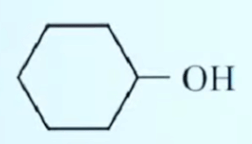
(iv) Cyclohexane
(v) 3-Methylcholanthrene
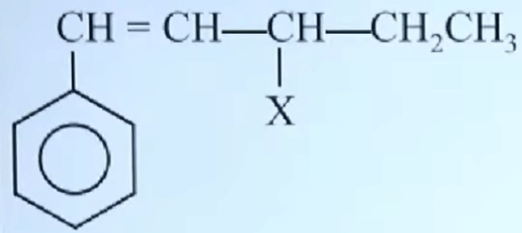
(ii) Pent-1-yne
(iii) 1,2-Benzpyrene
(iv) Cyclohexane
(v) 3-Methylcholanthrene
1
(i), (ii), (v)
2
(ii), (iii), (iv)
3
(i), (ii), (v)
4
(i), (iii), (v)
5
(ii), (iii), (iv)
24
PYQ 2026
medium
chemistry ID: keam-202
One mole of an alkene on ozonolysis gives a mixture of one mole pentan-3-one and one mole methanal. The alkene is
1
3-ethylbut-1-ene
2
2-methylpent-1-ene
3
2-ethylbut-1-ene
4
4-methylpent-2-ene
5
4-methylpent-1-ene
25
PYQ 2026
medium
chemistry ID: keam-202
Complete the following reaction :


1

2

3

4

5
26
PYQ 2026
medium
chemistry ID: keam-202
An organic compound (X) on reductive ozonolysis gave 1 mole of propanal-pent-3-one. Name the organic compound X.
27
PYQ 2026
medium
chemistry ID: keam-202
Which one of the following is not an allylic halide?
1
4-bromopent-2-ene
2
3-bromo-2-methylbut-1-ene
3
1-bromobut-2-ene
4
4-bromobut-1-ene
5
3-bromo-2-methylpropene
28
PYQ 2026
medium
chemistry ID: keam-202
An example of electrophilic substitution reaction is :
1
Chlorination of methane
2
Conversion of methyl chloride to methyl alcohol
3
Nitration of benzene
4
Formation of ethylene from ethyl alcohol.
5