Aldehydes Ketones Preparation Properties
High-Yield Trend
Questions 21 MCQs
A carbonyl compound reacts with hydrogen cyanide to form cyanohydrins, which form a racemic mixture of \alpha -hydroxy acid on hydrolysis. The carbonyl compound is:
1. Acetaldehyde
2. Acetone
3. Diethyl ketone
4. Formaldehyde
The self-condensation product of two moles of ethyl acetate in the presence of sodium ethoxide yield is:
1. Ethyl butyrate
2. Acetoacetic ester
3. Methyl acetoacetate
4. Ethyl propionate
Reduction of aldehydes and ketones into hydrocarbons using amalgam and conc. HCl is called:
1. Clemmensen reduction
2. Cope reduction
3. Dow reduction
4. Wolff-Kishner reduction
A compound with the molecular formula C5H10 that yields acetone on ozonolysis is:
1. 2-Methyl-2-butene
2. 2-Methyl-1-butene
3. Cyclopentane
4. 3-Methyl-1-butene
The product formed in aldol condensation is:
| 1. | A -hydroxy acid |
| 2. | A -hydroxy aldehyde or a -hydroxy ketone |
| 3. | An -hydroxy aldehyde or ketone |
| 4. | An - unsaturated ester |
1. Alkene
2. Amine
3. Ketone
4. Alkane
The correct order of decreasing acid strength of
trichloroacetic acid (A), trifluoroacetic acid (B), acetic acid (C), and formic acid (D) is:
1. B > A > D > C
2. B > D > C > A
3. A > B > C > D
4. A > C > B >D
The esters that get hydrolyzed most easily under alkaline conditions is?
| 1. | |
| 2. | |
| 3. | |
| 4. |
In the below reaction, the structure of "A" is:
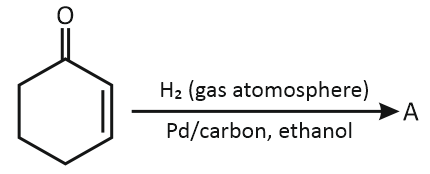
| 1. | 2. | 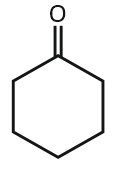 |
|
| 3. | 4. |
What is the correct order of the carboxylic acids' strength?
| I. | II. | III. |
| 1. | I > II > III | 2. | II > III > I |
| 3. | III > II > I | 4. | II > I > III |
A, X, Y, and Z in the above-mentioned reaction are:
| A | X | Y | Z | |
| 1. | Methoxy- methane |
Ethanol | Ethanoic acid | Semicarbazone |
| 2. | Ethanal | Ethanol | But - 2 - enal | semicarbazone |
| 3. | Ethanol | Acetaldehyde | Butanone | Hydrazone |
| 4. | Methoxy- methane |
Ethanoic acid | Acetate | Hydrazine |
1. Dichloromethyl cation
2. Formyl cation
3. Dichloromethyl anion
4. Dichlorocarbene (:CCl2)
Carboxylic acids have higher boiling points than aldehydes, ketones and even alcohols of comparable molecular mass. It is due to:
| 1. | Formation of intramolecular H-bonding |
| 2. | Formation of carboxylate ion |
| 3. | More extensive association of carboxylic acid via van der waals force of attraction |
| 4. | Formation of intermolecular H-bonding |
The intermediate compound 'X' in the following chemical reaction is :
| 1. | 2. | ||
| 3. | 4. |
| Statement I | The boiling points of aldehydes and ketones are higher than hydrocarbons of comparable molecular masses because of weak molecular association in aldehydes and ketones due to dipole-dipole interactions. |
| Statement II | The boiling points of aldehydes and ketones are lower than the alcohols of similar molecular masses due to the absence of H-bonding. |
| 1. | Statement I is incorrect but Statement II is correct. |
| 2. | Both Statement I and Statement II are correct. |
| 3. | Both Statement I and Statement II are incorrect. |
| 4. | Statement I is correct but Statement II is incorrect. |
The final product [C] is:
| 1. | 2. | ||
| 3. | 4. |
| 1. | 2. | ||
| 3. | 4. |
| List-I (Reaction) |
List-II (Reagents/ Condition) |
||
| A. | 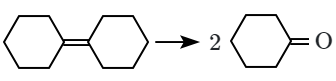 |
I. | 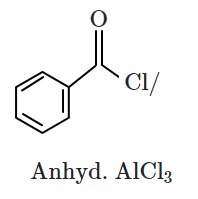 |
| B. | 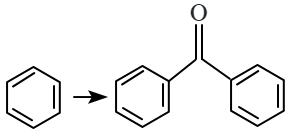 |
II. | |
| C. | 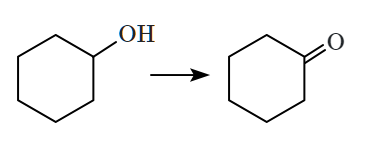 |
III. | |
| D. | 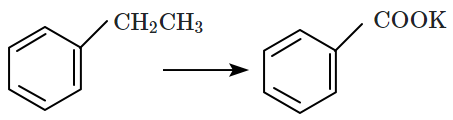 |
IV. |
| 1. | |
| 2. | |
| 3. | |
| 4. |
| 1. | Alkaline copper sulphate |
| 2. | Alkaline solution of sodium potassium tartrate (Rochelle's salt) |
| 3. | Aqueous sodium citrate |
| 4. | Aqueous copper sulphate |
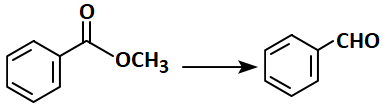
1. (i) , (ii)
2.
3. (i) , (ii)
4. (i) (ii)
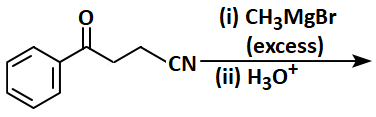
| 1. | 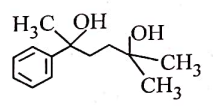 |
2. | 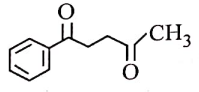 |
| 3. | 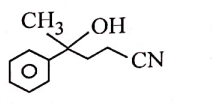 |
4. | 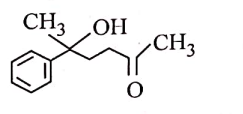 |
Preparing Aldehydes Ketones Preparation Properties for NEET
Aldehydes Ketones Preparation Properties is a specific sub-topic that frequently appears in the NEET examination. Understanding the underlying principles and practicing targeted questions is key to mastering this concept.
The questions compiled above are previous year questions (PYQs) directly related to Aldehydes Ketones Preparation Properties. Practicing these specific questions helps you understand the difficulty level and the examiner's approach to this topic.
Topic Frequently Asked Questions
Is Aldehydes Ketones Preparation Properties a high-weightage topic?
You can refer to the priority and consistency badges at the top of this page. High priority topics should be thoroughly revised multiple times before the exam.
Should I memorize the solutions?
No, it is highly recommended to understand the core concept and methodology behind each solution rather than memorizing them, as exact questions are rarely repeated, but the concepts definitely are.