Aliphatic Hydrocarbon Nomenclature Isomerism Mechanism
High-Yield Trend
Questions 8 MCQs
The correct IUPAC name of the given compound is:
1. 3-Ethyl-4-ethenylheptane
2. 3-Ethyl-4-propylhex-5-ene
3. 3-(1-Ethyl propyl) hex-1-ene
4. 4-Ethyl-3-propylhex-1-ene
The incorrect IUPAC name among the following is:
| 1. | |
| 2. | |
| 3. | |
| 4. |
The isobutyl group among the following is:
| 1. |  |
| 2. | CH3–CH2–CH2–CH2– |
| 3. | 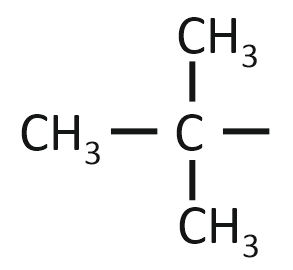 |
| 4. | 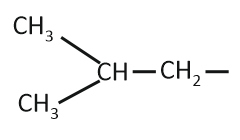 |
An alkene "A" on reaction with and gives propanone and ethanal in equimolar ratio. The addition of HCl to alkene "A" gives "B" as the major product. The structure of product "B" is:
| 1. | 2. | ||
| 3. | 4. |
The most suitable reagent for the following conversion is-
| 1. | Hg2+/ H+, H2O | 2. | Na/liquid NH3 |
| 3. | H2, Pd/C, quinoline | 4. | Zn/HCl |
Which of the following is a free radical substitution reaction?
1. Benzene with Br2/AlCl3
2. Acetylene with HBr
3. Methane with Br2/hv
4. Propene with HBr/(C6H5COO)2
Determine the IUPAC name of the compound with the molecular formula C₆H₁₄ that contains two tertiary carbon atoms.
1. 2-Methyl pentane
2. 2, 3-Dimethylbutane
3. 2, 2-Dimethylbutane
4. n-Hexane
1. 1, 1-Dimethycyclopropane
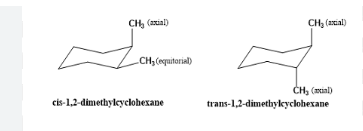
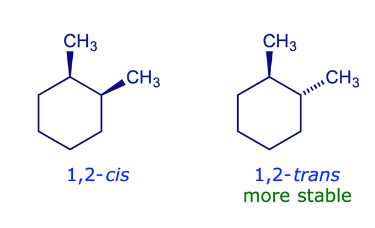
2. 1, 2-Dimethylcyclohexane
3. Pent-1-ene
4. 2-Methylhex-2-ene
Preparing Aliphatic Hydrocarbon Nomenclature Isomerism Mechanism for NEET
Aliphatic Hydrocarbon Nomenclature Isomerism Mechanism is a specific sub-topic that frequently appears in the NEET examination. Understanding the underlying principles and practicing targeted questions is key to mastering this concept.
The questions compiled above are previous year questions (PYQs) directly related to Aliphatic Hydrocarbon Nomenclature Isomerism Mechanism. Practicing these specific questions helps you understand the difficulty level and the examiner's approach to this topic.
Topic Frequently Asked Questions
Is Aliphatic Hydrocarbon Nomenclature Isomerism Mechanism a high-weightage topic?
You can refer to the priority and consistency badges at the top of this page. High priority topics should be thoroughly revised multiple times before the exam.
Should I memorize the solutions?
No, it is highly recommended to understand the core concept and methodology behind each solution rather than memorizing them, as exact questions are rarely repeated, but the concepts definitely are.