Order Molecularity And Mechanism
High-Yield Trend
Questions 7 MCQs
For the reaction,
the value of rate of disappearance of N2O5 is given as 6.25 x 10⁻³mol L-1s-1.The rate of formation of NO2 and O2 is given respectively as:
| 1. | 6.25 \times 10-3 mol L-1s-1 and 6.25 \times 10-3 mol L-1s-1. |
| 2. | 1.25 \times 10-2 mol L-1s-1 and 3.125 \times 10-3 mol L-1s-1. |
| 3. | 6.25 \times 10-3 mol L-1s-1 and 3.125 \times 10-3 mol L-1s-1. |
| 4. | 1.25 \times 10-2 mol L-1s-1 and 6.25 \times 10-3 mol L-1s-1. |
The rate Constant of reaction A → B is 0.6 \times 10–3 . If the Concentration of A is 5M, then the concentration of B after 20 min is:
1. 1.08M
2. 3.60M
3. 0.36M
4. 0.72M
The mechanism of a hypothetical reaction X2 + Y2 → 2XY is given below:
(i) X2 → X + X (Fast)
(ii) X + Y2 ⇄ XY + Y (slow)
(iii) X + Y → XY (Fast)
The overall order of the reaction will be:
1. 2
2. 0
3. 1.5
4. 1
When the initial concentration of the reactant is doubled, the half-life period of a zero-order reaction is:
| 1. | Halved | 2. | Doubled |
| 3. | Tripled | 4. | Unchanged |
The half-life for a zero-order reaction having 0.02 M initial concentration of reactant is 100 s. The rate constant (in mol L–1 s–1) for the reaction is:
1.
2.
3.
4.
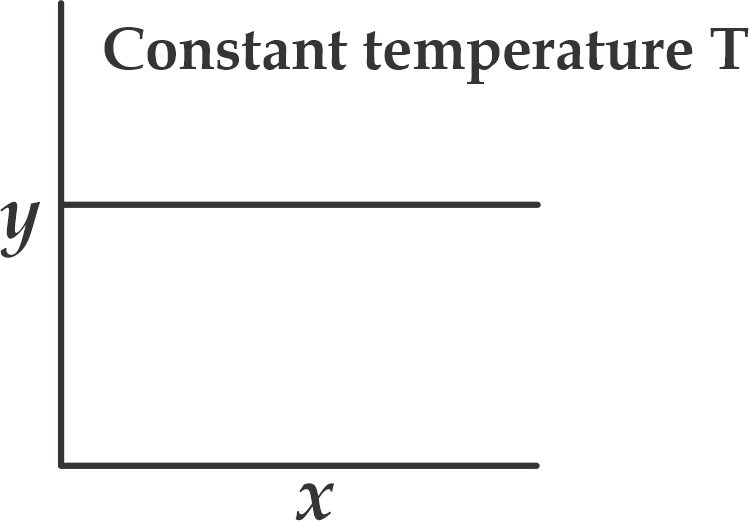
The y and x axes for zero and first-order reactions, respectively are:
| 1. | zero order (y=rate and x=concentration), first order (y=rate and x=t1/2) |
| 2. | zero order (y=concentration and x=time), first order (y=t1/2 and x = concentration) |
| 3. | zero order (y=concentration and x= time), first order (y=rate constant and x= concentration) |
| 4. | zero order (y=rate and x=concentration), first order (y=t1/2 and x = concentration) |
| 1. | Increase by a factor of three |
| 2. | Decrease by a factor of nine |
| 3. | Increase by a factor of six |
| 4. | Increase by a factor of nine |
Preparing Order Molecularity And Mechanism for NEET
Order Molecularity And Mechanism is a specific sub-topic that frequently appears in the NEET examination. Understanding the underlying principles and practicing targeted questions is key to mastering this concept.
The questions compiled above are previous year questions (PYQs) directly related to Order Molecularity And Mechanism. Practicing these specific questions helps you understand the difficulty level and the examiner's approach to this topic.
Topic Frequently Asked Questions
Is Order Molecularity And Mechanism a high-weightage topic?
You can refer to the priority and consistency badges at the top of this page. High priority topics should be thoroughly revised multiple times before the exam.
Should I memorize the solutions?
No, it is highly recommended to understand the core concept and methodology behind each solution rather than memorizing them, as exact questions are rarely repeated, but the concepts definitely are.