Flower Parts Of Flower I
High-Yield Trend
Questions 11 MCQs
1. lemon
2. mustard
3. sunflower
4. pea
Keel is characteristic of the flowers of:
1. Gulmohur
2. Cassia
3. Calotropis
4. Bean
Ovary is half-inferior in the flowers of:
1. guava
2. plum
3. brinjal
4. cucumber
1. Seeds of orchids have oil-rich endosperm
2. Placentation in primrose is basal
3. Flower of a tulip is a modified shoot
4. In tomato, fruit is a capsule
1. gulmohur
2. tomato
3. datura
4. mustard
1. cucumber
2. cotton
3. guava
4. peach
In china rose the flowers are:
1. Actiniomorphic, epigynous with valvel aestivation
2. Zygomorphic, hypogynous with imbricate aestivation
3. Zygomorphic, epigynous with twisted aestivation
4. Actinomorphic, hypogynous with twisted aestivation
Among bitter gourd, mustard, brinjal, pumpkin, china rose, lupin, cucumber, sunn hemp, gram, guava, bean, chilli, plum, petunia, tomato, rose, Withania, potato, onion, aloe and tulip how many plants have hypogynous flower?
| 1. | Ten | 2. | Fifteen |
| 3. | Eighteen | 4. | Six |
Among China rose, mustard, brinjal, potato, guava, cucumber, onion and tulip, how many plants have superior ovary?
| 1. | Five | 2. | Six |
| 3. | Three | 4. | Four |
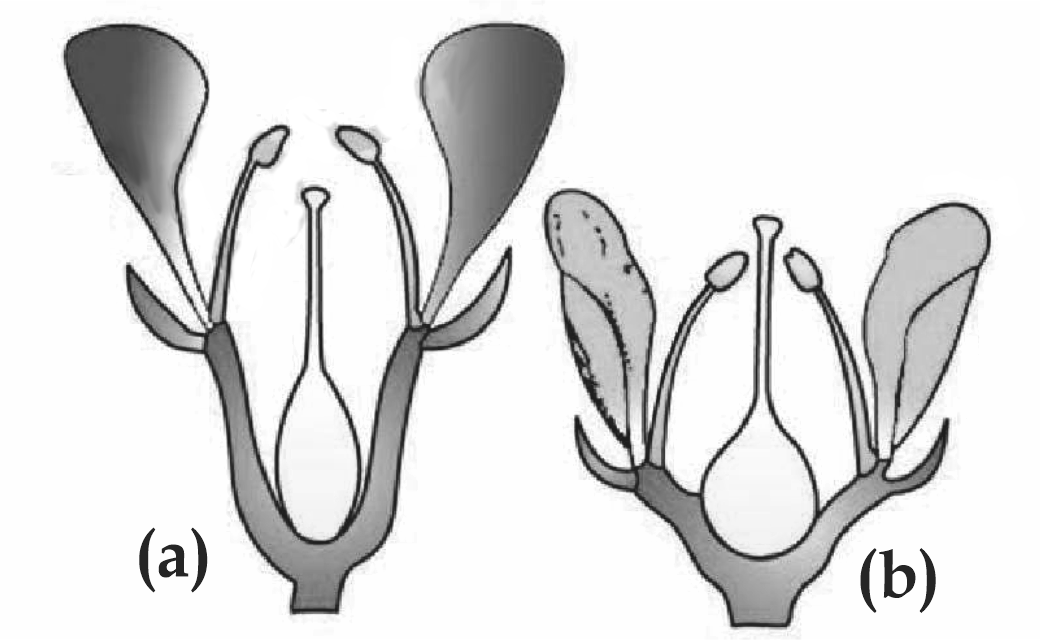
1. (a) Hypogynous; (b) Epigynous
2. (a) Perigynous; (b) Epigynous
3. (a) Perigynous; (b) Perigynous
4. (a) Epigynous; (b) Hypogynous
| List I (Types of stamens ) | List II (Example) | ||
| A. | Monoadelphous | I. | Citrus |
| B. | Diadelphous | II. | Pea |
| C. | Polyadelphous | III. | Lily |
| D. | Epiphyllous | IV. | China-rose |
| 1. | A-IV, B-I, C-II, D-III | 2. | A-I, B-II, C-IV, D-III |
| 3. | A-III, B-I, C-IV, D-II | 4. | A-IV, B-II, C-I, D-III |
Preparing Flower Parts Of Flower I for NEET
Flower Parts Of Flower I is a specific sub-topic that frequently appears in the NEET examination. Understanding the underlying principles and practicing targeted questions is key to mastering this concept.
The questions compiled above are previous year questions (PYQs) directly related to Flower Parts Of Flower I. Practicing these specific questions helps you understand the difficulty level and the examiner's approach to this topic.
Topic Frequently Asked Questions
Is Flower Parts Of Flower I a high-weightage topic?
You can refer to the priority and consistency badges at the top of this page. High priority topics should be thoroughly revised multiple times before the exam.
Should I memorize the solutions?
No, it is highly recommended to understand the core concept and methodology behind each solution rather than memorizing them, as exact questions are rarely repeated, but the concepts definitely are.