Pollination Outbreeding Devices
High-Yield Trend
Questions 25 MCQs
Long filamentous threads protruding at the end of a young cob of maize are:
| 1. | anthers | 2. | styles |
| 3. | ovaries | 4. | hairs |
1. autogamy, but not geitonogamy
2. Both geitonogamy and xenogamy
3. geitonogamy, but not xenogamy
4. autogamy and geitonogamy
Transfer of pollen grains from the anther to the stigma of another flower of the same plant is called:
1. xenogamy
2. geitonogamy
3. karyogamy
4. autogamy
Wind pollinated flowers are:
| 1. | small, brightly coloured, producing large number of pollen grains |
| 2. | small, producing large number of dry pollen grains |
| 3. | large, producing abundant nectar and pollen |
| 4. | small, producing nectar and dry pollen |
1. lilies
2. grasses
3. orchids
4. legumes
1. Xenogamy
2. Chasmogamy
3. Cleistogamy
4. Geitonogamy
Both, autogamy and geitonogamy are prevented in:
1. Papaya
2. Cucumber
3. Castor
4. Maize
Even in the absence of pollinating agents, seed-setting is assured in:
1. Commelina
2. Zostera
3. Salvia
4. Fig
Advantage of cleistogamy is:
1. More vigorous offspring
2. No dependence of pollinator
3. Vivipary
4. Higher genetic variability
Pollination in water hyacinth and water lily is brought about by the agency of:
| 1. | water | 2. | insects or wind |
| 3. | birds | 4. | bats |
Attractants and rewards are required for:
| 1. | Entomophily | 2. | Hydrophily |
| 3. | Cleistogamy | 4. | Anemophily |
Flowers which have single ovule in the ovary and are packed into inflorescence are usually pollinated by:
| 1. | Bee | 2. | Wind |
| 3. | Bat | 4. | Water |
A dioecious flowering plant prevents both:
1. Autogamy and geitonogamy
2. Geitonogamy and xenogamy
3. Cleistogamy and xenogamy
4. Autogamy and xenogamy
Winged pollen grains are present in:
1 Mustard
2. Cycas
3. Mango
4. Pinus
Which one of the following plants shows a very close relationship with a species of moth, where none of the two can complete its life cycle without the other?
| 1. | Hydrilla | 2. | Yucca |
| 3. | Banana | 4. | Viola |
Select the incorrect statement:
| 1. | Inbreeding helps in the accumulation of superior genes and the elimination of undesirable genes |
| 2. | Inbreeding increases homozygosity |
| 3. | Inbreeding is essential to evolve pure lines in any animal |
| 4. | Inbreeding selects harmful recessive genes that reduce fertility and productivity |
Which of the following is incorrect for wind-pollinated plants?
1. Well exposed stamens and stigma
2. Many ovules in each ovary
3. Flowers are small and not brightly colored
4. Pollen grains are light and non-sticky
The term used for transfer of pollen grains from anthers of one plant to stigma of a different plant which during pollination, brings genetically different types of pollen grains to stigma, is:
| 1. | Chasmogamy | 2. | Cleistogamy |
| 3. | Xenogamy | 4. | Geitonogamy |
| 1. | Moths and butterflies are the most dominant pollinating agents among insects |
| 2. | Pollination by water is quite rare in flowering plants |
| 3. | Pollination by wind is more common amongst abiotic pollination |
| 4. | Flowers produce foul odours to attract flies and beetles to get pollinated |
Given below are two statements:
| Statement I: | Cleistogamous flowers are invariably autogamous. |
| Statement II: | Cleistogamy is disadvantageous as there is no chance for cross pollination. |
In the light of the above statements, choose the correct answer from the options given below:
1. Statement I is incorrect but Statement II is correct.
2. Both Statement I and Statement II are correct.
3. Both Statement I and Statement II are incorrect.
4. Statement I is correct but Statement II is incorrect.
| 1. | To protect seeds | 2. | To attract insects |
| 3. | To trap pollen grains | 4. | To disperse pollen grains |
| 1. | wind pollinated plants | 2. | insect pollinated plants |
| 3. | bird pollinated plants | 4. | bat pollinated plants |
| A: | The flowers of Vallisneria are colourful and produce nectar. |
| B: | The flowers of waterlily are not pollinated by water. |
| C: | In most of water-pollinated species, the pollen grains are protected from wetting. |
| D: | Pollen grains of some hydrophytes are long and ribbon like. |
| E: | In some hydrophytes, the pollen grains are carried passively inside water. |
1. A, B, C and D only
2. A, C, D and E only
3. B, C, D and E only
4. C, D and E only
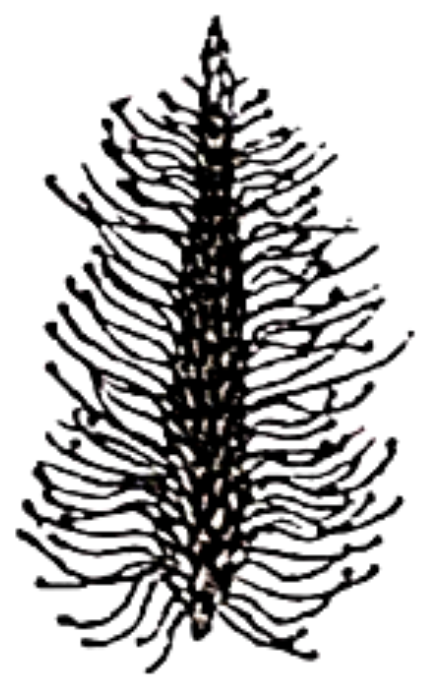
| 1. | Water pollinated flowers showing stamens with mucilaginous covering. |
| 2. | Cleistogamous flowers showing autogamy. |
| 3. | Compact inflorescence showing complete autogamy. |
| 4. | Wind pollinated plant inflorescence showing flowers with well exposed stamens. |
| Assertion (A): | Both wind and water pollinated flowers are not very colourful and do not produce nectar. |
| Reason (R): | The flowers produce enormous amount of pollen grains in wind and water pollinated flowers. |
| 1. | (A) is True but (R) is False. |
| 2. | (A) is False but (R) is True. |
| 3. | Both (A) and (R) are True and (R) is the correct explanation of (A). |
| 4. | Both (A) and (R) are True but (R) is not the correct explanation of (A). |
Preparing Pollination Outbreeding Devices for NEET
Pollination Outbreeding Devices is a specific sub-topic that frequently appears in the NEET examination. Understanding the underlying principles and practicing targeted questions is key to mastering this concept.
The questions compiled above are previous year questions (PYQs) directly related to Pollination Outbreeding Devices. Practicing these specific questions helps you understand the difficulty level and the examiner's approach to this topic.
Topic Frequently Asked Questions
Is Pollination Outbreeding Devices a high-weightage topic?
You can refer to the priority and consistency badges at the top of this page. High priority topics should be thoroughly revised multiple times before the exam.
Should I memorize the solutions?
No, it is highly recommended to understand the core concept and methodology behind each solution rather than memorizing them, as exact questions are rarely repeated, but the concepts definitely are.