Bioreactorsdownstream Processing
High-Yield Trend
Questions 6 MCQs
Stirred-tank bioreactors have been designed for:
1. Addition of preservatives to the product
2. Purification of the product
3. Ensuring anaerobic conditions in the culture vessel
4. Availability of oxygen throughout the process
Which of the following is not a component of downstream processing?
| 1. | Separation | 2. | Purification |
| 3. | Preservation | 4. | Expression |
The process of separation and purification of expressed protein before marketing is called:
1. Downstream processing
2. Bioprocessing
3. Post-product processing
4. Upstream processing
During the purification process for recombinant DNA technology, addition of chilled ethanol precipitates out:
| 1. | Histones | 2. | Polysaccharides |
| 3. | RNA | 4. | DNA |
| 1. | Most commonly used bio-reactors are of stirring type. |
| 2. | Bio-reactors are used to produce small scale bacterial cultures. |
| 3. | Bio-reactors have an agitator system, an oxygen delivery system and foam control system. |
| 4. | A bio-reactor provides optimal growth conditions for achieving the desired product. |
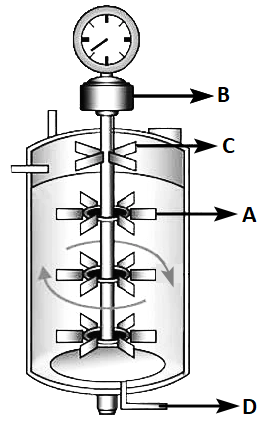
| 1. | D | 2. | C |
| 3. | A | 4. | B |
Preparing Bioreactorsdownstream Processing for NEET
Bioreactorsdownstream Processing is a specific sub-topic that frequently appears in the NEET examination. Understanding the underlying principles and practicing targeted questions is key to mastering this concept.
The questions compiled above are previous year questions (PYQs) directly related to Bioreactorsdownstream Processing. Practicing these specific questions helps you understand the difficulty level and the examiner's approach to this topic.
Topic Frequently Asked Questions
Is Bioreactorsdownstream Processing a high-weightage topic?
You can refer to the priority and consistency badges at the top of this page. High priority topics should be thoroughly revised multiple times before the exam.
Should I memorize the solutions?
No, it is highly recommended to understand the core concept and methodology behind each solution rather than memorizing them, as exact questions are rarely repeated, but the concepts definitely are.