Alcohols Phenols And Ethers
50 previous year questions.
High-Yield Trend
Chapter Questions 50 MCQs
(b) Reaction between Ethyl bromide and C2H5ONa
(c) Reaction between Dimethyl ether and Hydrogen iodide
Reason (R): –OH group in phenol is -directing.
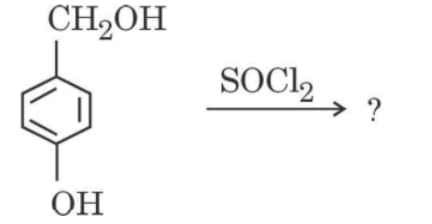
The major product obtained is:
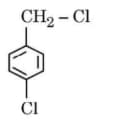
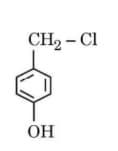
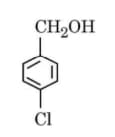
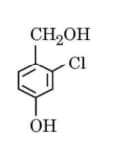
II. Butan-2-one to Butan-2-ol (q) 85% phosphoric acid at 440 K
III. Bromination of Phenol to 2, 4, 6- (r) PCC Tribromophenol
IV. Dehydration of propan-2-ol to (s) Bromine water propene
Reason (R): Nitro group is electron-withdrawing and helps in the stabilization of p-nitrophenoxide ion.
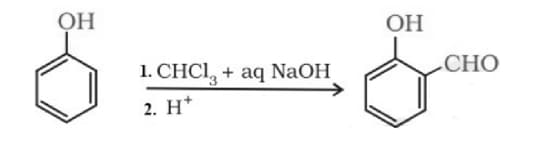
(i) Reimer-Tiemann reaction
(ii) Kolbe’s reaction
(b) Salicyaldehyde from phenol
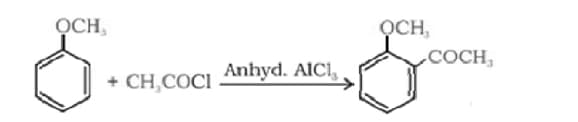
(c) 2-Methoxyacetophenone from anisole
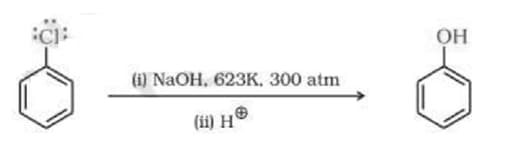
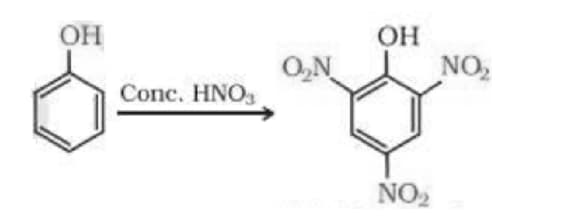
Reason (R): This reaction supports the acidic nature of phenol.
Both Assertion (A) and Reason (R) are true, but Reason (R) is not the correct explanation of the Assertion (A).
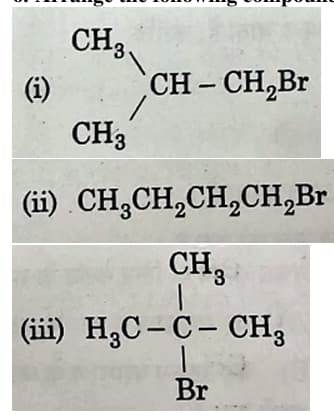
Arrange the following compounds in increasing order of their boiling points:
Reason (R): o-nitrophenol is steam volatile due to intermolecular hydrogen bonding.
In the reaction R–OH + HCl RCl + H O, what is the correct order of reactivity of alcohols?
The reaction 
suggests that phenol is :
Reason (R): There is intramolecular hydrogen bonding in ethanol.
(i) Toluene to benzoic acid
(ii) Ethanol to propan-2-ol
(iii) Propanal to 2-hydroxy propanoic acid
Arrange the following in increasing order of acid strength: phenol, ethanol, water.
Give a simple chemical test to distinguish between butan-1-ol and butan-2-ol.
Write chemical equations of the following reactions:
(i) Phenol is treated with conc. HNO
(ii) Propene is treated with B H followed by oxidation by H O /OH
(iii) Sodium t-butoxide is treated with CH Cl
Write the IUPAC name of the product formed in the Reimer-Tiemann reaction.
Answer the following questions:
(i) Phenol is treated with conc. HNO3.
(ii) Propene is treated with B2H6 followed by oxidation by H2O2/OH−.
(iii) Sodium t-butoxide is treated with CH3Cl.
C–O bond in ethers are cleaved under drastic conditions with excess of HI. When unsymmetrical ethers react with HI, the alkyl halide is formed from the smaller alkyl group. If one of the alkyl groups is tertiary, the alkyl halide is formed from the tertiary alkyl group because tertiary carbocation is more stable than primary carbocation. Cleavage of alkyl aryl ethers takes place at the alkyl–oxygen bond due to more stable alkyl–oxygen bond.
The order of reactivity of hydrogen halides is: Aromatic ethers undergo electrophilic substitution reactions. The alkoxy group attached to the aromatic ring activates the ring and directs the incoming group to ortho and para positions.
Reason (R) : group in phenols activates the aromatic ring towards electrophilic substitution reaction.
About Alcohols Phenols And Ethers - CBSE-CLASS-XII
Alcohols Phenols And Ethers is a vital chapter for CBSE-CLASS-XII aspirants. Mastering the concepts covered in this chapter is essential for securing a top rank.
By rigorously practicing the previous year questions associated with this chapter, you can identify high-yield topics, understand the examiner's perspective, and boost your confidence during the actual exam.
Frequently Asked Questions
Why focus on Alcohols Phenols And Ethers PYQs?
Analyzing PYQs for this specific chapter reveals the most frequently tested concepts and the typical complexity of questions, allowing you to tailor your study plan efficiently.
How to best use this analysis?
Review the topic breakdown to see which sub-topics within Alcohols Phenols And Ethers carry the most weight. Then, tackle the questions iteratively to solidify your understanding.